
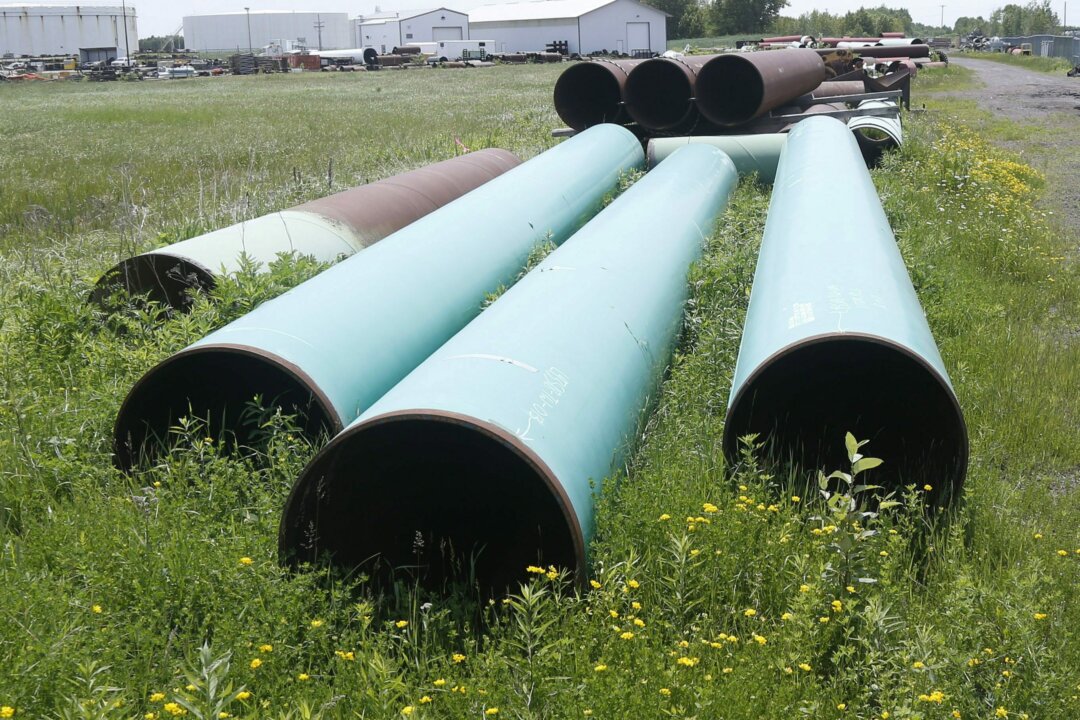

Pipeline used to carry crude oil lays at the Superior terminal of Enbridge Energy in Superior, Wis., on June 29, 2018. Minnesota Gov. Tim Walz says his administration will continue to appeal a regulatory commission’s approval of Enbridge Energy’s plan to replace its aging Line 3 crude oil pipeline. The commission approved the project last summer, but former Gov. Mark Dayton’s Department of Commerce appealed that decision, as did several environmental and tribal groups. An appeals court decision last week sent the challenges back to the commission for further proceedings. AP Photo/Jim Mone, File
The 3.3 million-mile network of interstate pipelines pumping natural gas, crude oil, gasoline, and other hazardous fuels across the United States has been operating on auto-pilot for nearly two years.
In 2023, Congress’ failed to reauthorize the Protecting Our Infrastructure of Pipelines and Enhancing Safety (PIPES) Act of 2020 as required every three years, meaning for the last 20 months, the U.S. Department of Transportation’s Pipeline and Hazardous Materials Safety Administration (PHMSA) pipeline safety program has been in limbo.










Ohio State Agrees to $2.1 Million Federal Settlement Over Undisclosed China Research Ties
Ohio State University has agreed to pay $2.1 million to resolve federal...

USDA Unveils New Support for Ranchers to Rebuild Cattle Herds
The U.S. Department of Agriculture has unveiled a new package of measures...

How Major US Stock Indexes Fared Aug. 31
Oil prices rose and U.S. stocks fell after American forces struck Iranian...



Trump Unveils New Drug Pricing Deals With 9 Pharmaceutical Companies
President Donald Trump on Aug. 31 announced agreements with nine midsize pharmaceutical...
