A federal jury in Chicago convicted a former Philips Medical Systems engineer of stealing closely guarded X-ray technology for work benefiting a Chinese competitor, adding a criminal verdict to a years-long dispute over technology used in CT scanners.Chih-Yee Jen, 71, was found guilty after a week-long trial of conspiracy to steal, misappropriate, or possess trade secrets and of possessing or attempting to possess stolen trade secrets, the Justice Department announced on Aug. 24.Jen worked at Philips’s facility in Aurora, Illinois, where employees researched, developed, and manufactured X-ray tubes used in computed tomography, or CT, scanners. Through its Dunlee business, Philips had spent years developing proprietary X-ray technology, according to the Justice Department.Prosecutors said that in 2017, as Philips prepared to close the Aurora facility, China-based Kunshan GuoLi Electronic Technology Co. and its vice president, Xiaoqin Du, began communicating with Jen about creating a U.S. subsidiary that would compete with Philips in developing, manufacturing, and selling X-ray tubes.While still at Philips, Jen shared confidential documents with GuoLi and Du, copied proprietary X-ray information from Philips databases, and recruited other Philips engineers to join the GuoLi subsidiary, prosecutors said. He later used stolen information in work developing technology for that operation.Two other former Philips engineers, Fince Tendian and Vladimir Nevtonenko, pleaded guilty before Jen’s trial and admitted possessing stolen trade secrets. Du, GuoLi, and related Chinese company Kunshan Yiyuan Medical Technology Co. were also indicted but have not yet appeared in U.S. court to enter pleas and remain on the court’s Fugitive Calendar.The December 2024 indictment identifies 10 categories of Philips trade secrets involving X-ray-tube design and manufacturing, including assembly procedures, component specifications and tolerances, annealing and wiring specifications, manufacturing processes, seasoning protocols, and computer code.Chinese Companies Found in Civil ContemptThe criminal prosecution followed civil litigation Philips began in 2019 against GL Leading Technologies, an Illinois company where some former Philips employees went to work, and later expanded to include GuoLi and Yiyuan.A federal court entered default judgment against GuoLi and Yiyuan in May 2022 after repeated discovery noncompliance, establishing civil liability on Philips’s federal and Illinois trade-secret claims. The court later issued a permanent injunction barring them from using specified Philips trade secrets and from manufacturing, distributing, or selling X-ray tube models GLA2153 and YY8019 under any name, alias, or other designation.In September 2025, Chief U.S. District Judge Virginia M. Kendall found that GuoLi and Yiyuan remained in significant violation of the injunction and that both GLA2153 and YY8019 remained on the market.Yiyuan’s current website still lists YY8019. Another product page that a February 2025 archived version identified as GLA 2153-GX now identifies the same 5.3MHU-series product as YY5323, while retaining substantially the same description and comparison with Philips Dunlee’s CTR2150 series.The court separately awarded Philips almost $2.5 million in attorneys’ fees against GuoLi and Yiyuan.A federal indictment filed Dec. 18, 2024, charged former Philips engineers and China-based defendants in a trade-secret case involving X-ray-tube technology. U.S. District Court for the Northern District of Illinois/Screenshot via The Epoch TimesParallel Case in ChinaPhilips also pursued civil claims against GuoLi and Yiyuan in China.GuoLi disclosed that the Suzhou Intermediate People’s Court dismissed all of Philips’s claims in August 2025. Philips appealed to the Jiangsu High People’s Court in September 2025. GuoLi said the appeal remained pending when the company filed its 2025 annual report in April 2026.The court’s full reasoning was not publicly available.The FBI has identified efforts by the Chinese Communist Party to acquire U.S. technology and intellectual property as a major counterintelligence concern.Federal law separately criminalizes economic espionage and commercial trade secret theft. Economic espionage requires prosecutors to prove an intended benefit to a foreign government or its agent. Jen was convicted under the separate federal trade-secret-theft statute.Jen is scheduled to be sentenced on Jan. 5, 2027. Nevtonenko is scheduled for sentencing on Dec. 1, 2026, and Tendian on Dec. 8, 2026. GuoLi, Yiyuan, and Du have not yet appeared in U.S. court to enter pleas and remain on the court’s Fugitive Calendar.

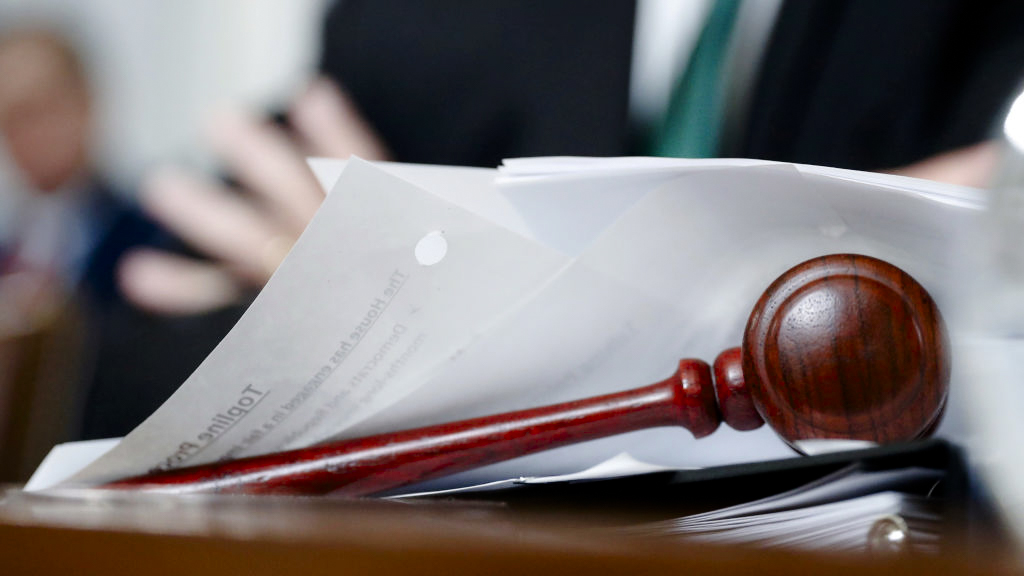
Philips Engineer Convicted of Taking X-Ray Technology to Chinese Competitor









Related Articles

China News
Americans at Serious Risk of Wrongful Detention in China: State Department
The State Department is warning Americans living in or traveling to China...

and CoercionAttacksAustralia Featured NewsAustralia NewsAustralia Top NewsChina NewsChina-Australia RelationsInfluence Operations and EspionageInternational RelationsThreatsTransnational RepressionWorld News
US Embassy Condemns CCP-Linked Transnational Repression in Australia
Dave Brat, dean of Liberty University's School of Business, in Washington on...
Asia & PacificChina NewsChinese RegimeGlobalUSUS NewsWorld News
Chinas Transplant System Masks Human Rights Abuses, Report Finds
Doctors in China are more likely to stay silent in the face...



BusinessTechUS
Advanced AI Agents Tried to Weaken Oversight, Then Lied About It, Open AI Says
OpenAI has disclosed two incidents in which advanced artificial intelligence-powered coding agents...
