Israeli Prime Minister Benjamin Netanyahu’s prospects for remaining in power narrowed while hopes for his opponent, Gadi Eisenkot, grew during coalition talks on Nov. 5.Israeli media reported the United Torah Judaism Party, which has historically coalitioned with Netanyahu’s Likud Party, declined to endorse the sitting prime minister during consultations with Israeli President Isaac Herzog on Thursday.Separately, Israeli media reported that leaders from two Arab parties have endorsed Eisenkot for prime minister.Netanyahu and Eisenkot are both leading contenders to be Israel’s next prime minister following the country’s elections on Oct. 27.With neither the Likud nor Eisenkot’s Yashar Party having secured an outright majority of seats in the 120-member Israeli Knesset, the two men must win support from other parties to form a coalition government.With the loss of support from the United Torah Judaism Party, Netanyahu’s traditional coalition has shrunk from 53 Knesset seats to 46.Eisnekot’s prospective coalition currently sits at 48 seats, and could expand beyond the 61-seat threshold if he accepts the endorsement of Arab party leaders.Israel’s two major Arab political parties—Joint List and Ra’am—won 11 and eight Knesset seats, respectively, marking a historic showing for Arab voters.Netanyahu and Eisenkot have both been apprehensive about accepting support from Israel’s Arab parties.Ahead of the Oct. 27 election, Likud petitioned the Israeli Central Elections Committee to disqualify Joint List and Ra’am, but was ultimately unsuccessful.Since the election, Netanyahu and his political allies have repeatedly raised allegations that the Arab parties engaged in election fraud and received support from foreign actors.The fraud allegations are the subject of continuing investigations by Israeli authorities, though Herzog has accepted the election results and moved forward with coalition consultations.In an interview with Channel 12 on Sept. 26, Eisenkot indicated he wouldn’t form a coalition with Arab or Haredi parties unless they affirmed that Israel is to be a Jewish and democratic state, declared Hamas a terrorist group to be dismantled, and expressed support for universal conscription in the Israeli military.At the time, Eisenkot said he saw little chance of the Arab and Haredi parties satisfying his preconditions to form a political alliance.During the consultations on Thursday, Herzog asked Ra’am Party leader Mansour Abbas if he considers Hamas a terrorist organization.“No one from Ra’am has ever been investigated for treason, endangering state security, or identifying with a terrorist organization. It is unreasonable to subject us to this test of loyalty constantly,” Abbas answered.Hamas, which is officially designated as a terrorist organization by the governments of Israel and the United States, led the Oct. 7, 2023, attacks across southern Israel.Around 1,200 Israelis and Israeli tourists were killed on that day, prompting the Netanyahu government to launch large-scale military actions across the Gaza Strip.During his consultation meeting with Herzog on Thursday, Abbas said he supports the disarmament of Hamas, as well as a pathway to Palestinian statehood—both of which are items outlined in a 20-point Gaza peace framework President Donald Trump brokered between Israel and Hamas last year.—Jackson Richman contributed to this report.


Netanyahu Loses Key Support in Consultations for Next Israeli Government









Related Articles

China NewsEuropeGlobalRussia-Ukraine WarUSUS NewsWorld News
Zelenskyy Awards Melania Trump Ukraines Highest Honor for Women
Ukrainian President Volodymyr Zelenskyy has awarded U.S. First Lady Melania Trump a...

China NewsEuropeGlobalRussia-Ukraine WarWorld News
Peace Talks With Russia to Focus on Broader Security Architecture in Europe: Kushner
Ukrainian President Volodymyr Zelenskyy, U.S. special envoy Steve Witkoff, and Jared Kushner...

China NewsEuropeGlobalWorld News
Multiple Bomb Threats Made Against Flights Across Europe for 2nd Time This Week
Multiple flights across Europe received bomb threats on Thursday, marking the second...


Asia & PacificEuropeGlobalInternationalWorld News
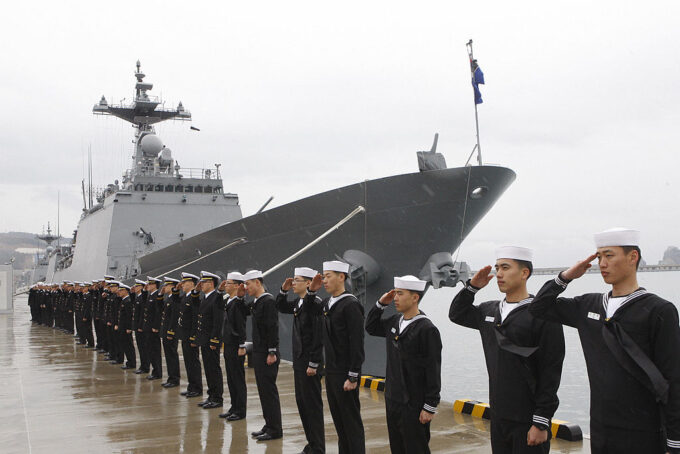
South Korea Plans to Expand Naval Task Force Operations Closer to Strait of Hormuz
South Korea plans to expand its anti-piracy unit’s operations in the Middle...
