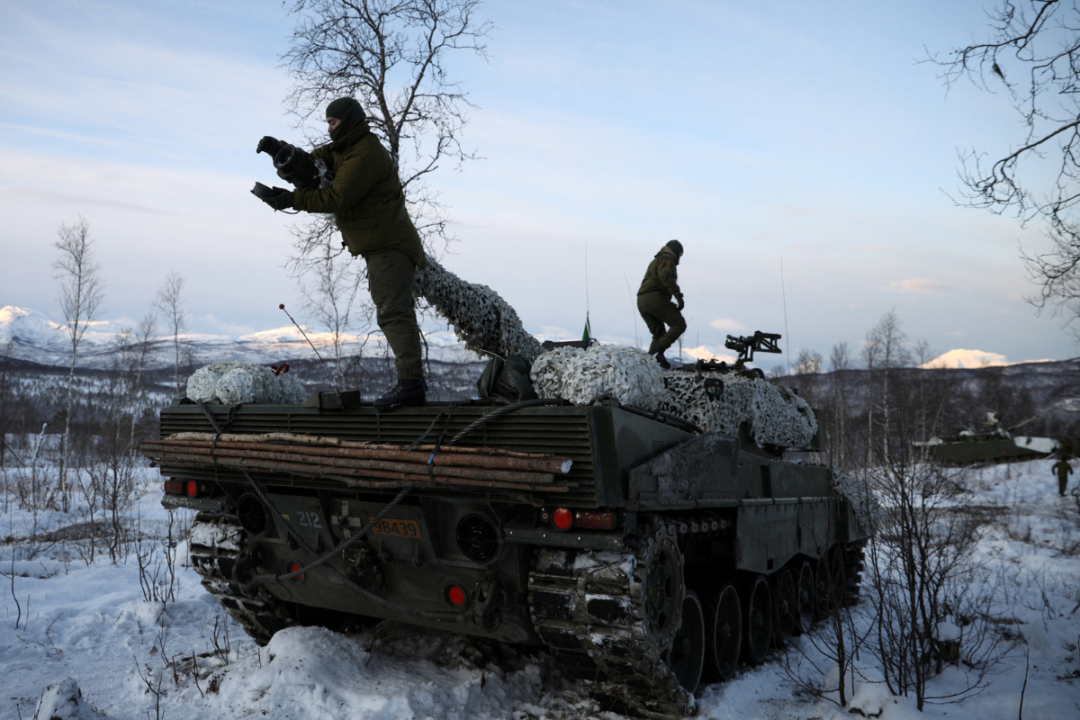
Norway has expanded its Arctic brigade with three new subdivisions as Oslo continues to expand its defensive footprint in support of the North Atlantic Treaty Organization (NATO).The Norwegian Armed Forces said in an Aug. 20 statement that it had added to the Finnmark Brigade an artillery battalion, an anti-aircraft battery, and a joint company.The first troops and some equipment were already in place, the Armed Forces said, adding that the Army is ahead of schedule in developing the artillery battalion, with the expectation that the most important elements would be in place in 2028.“Russia’s illegal war of aggression against Ukraine and the worsening security situation underline the need to build up the Finnmark Brigade as quickly as possible,” the Norwegian Armed Forces said, according to a translation.The Norwegian Armed Forces added that the creation of the three new subdivisions is a response to this worsening security situation “and will strengthen, among other things, the ability to lead, self-protect, and inflict losses on an adversary.”Moscow has previously dismissed allegations that it poses a threat to NATO, saying it would only take defensive action if European forces attack Russia first.Established last year, the Finnmark Brigade is headquartered in Porsangmoen in the Norwegian part of the Artic. It is the country’s second brigade and the first one set up since the end of the Cold War.Porsangmoen is around 110 miles from Norway’s border with the Russian Federation, near a region where Russia hosts major military assets, including for its Northern Fleet.One of the brigade’s main duties has been to patrol and surveil the 123-mile border that Norway shares with Russia.It is anticipated that the Finnmark Brigade will be fully formed by 2033, comprising 4,000 soldiers, both regular and reservist.European NATO Members Boosts SpendingDefense Minister Tore O. Sandvik said that Norway is building up its defense capabilities and, in developing the Finnmark Brigade, is strengthening is ability to provide deterrence in the north.“This is a milestone, and illustrates how the defense sector is now converting increased budgets into defense capability,” Sandvik said. “It is important for securing the country in turbulent times.”Like other Nordic countries, Norway has increased its military budget both in response to U.S. President Donald Trump’s call for Europe to contribute more to its own defense, and to the Ukraine–Russia war.Oslo’s spending on defense increased from 1.41 percent of gross domestic product in 2022 to 3.17 percent of GDP in 2026, according to the latest NATO figures.Denmark similarly raised its spending from 1.37 percent of GDP to 3.49 percent across the same time period.Training in the ArcticThe Norwegian Armed Forces announced on Aug. 21 that it would be training together with British and American forces on the island of Jan Mayen between Aug. 26 and Sept. 4.The exercise, dubbed Operation Atlantic City, is part of NATO’s Arctic Sentry and will see the allies complete drills to improve their ability to work together in tough Arctic conditions.“By operating together with our allies, we show that we have both the capacity and the will to defend Norwegian territory,” said Vice Admiral Rune Andersen, chief of the Norwegian Armed Forces Operational Headquarters. “This includes the Arctic islands, the highlands and territorial waters.”Arctic Sentry was launched in February and focuses on the collective defense of the Arctic and High North.NATO says that the Arctic is important for the alliance as it is a gateway to the North Atlantic, which is a vital route for trade, communications, and transport between Europe and North America.The alliance also recognizes it as a region of increased strategic competition with Russia, which it says has increased its military activity in the area.“China’s interest in the Arctic is also growing, as Beijing seeks to gain access to energy, critical minerals and sea lines of communication,” NATO said in a fact sheet on Arctic security. “Furthermore, increased Russia-China cooperation has strategic and operational implications for NATO’s deterrence and defence posture in the region.”“In this context, NATO is increasing its focus on the High North, ensuring that Allies in the Arctic are defended against all threats and that sea routes of communication and reinforcement remain open.”Reuters contributed to this report.










Related Articles

EuropeThe Final wakeup call
Lula wins a miracle election in Brazil. Now comes the hard part: putting the country back on the right track
Three weeks ago, Brazilian President Luiz Inácio Lula da Silva’s political obituaries...

EuropeThe Final wakeup call
US midterms: what a new Congress could and could not change for Europe
US midterm elections traditionally attract fewer voters than presidential contests. But this...

EuropeThe Final wakeup call
Political power without balance leads to the erosion of democracy, what Montesquieu can teach modern-day France
KEY TAKEAWAYS Democratic erosion does not start by doing away with elections;...


China NewsEuropeGlobalUK NewsWorld News
UK Must Be Ready for War in 1,000 Days, Says British Defense Secretary
British Defense Secretary Wes Streeting has said the country must be ready...
