CHICAGO–State lawmakers and local governments responding to the national backlash against data centers should proceed cautiously before imposing moratoriums, a panel of legislators, construction trade representatives, and utility executives warned during the first day of the July 27–29 National Conference of State Legislatures’ (NCSL) 51st annual summit.“Data centers are ubiquitous to everything we do in life, like, period–full stop. They are not going away,” Washington state Rep. April Berg said. “There’s no world that we’re going to live in, that or our kids are going to live in, or our grandkids are going to live in, that will not include data centers.”Berg, a Democrat who chairs Washington state’s House Finance Committee, and Utah Rep. Paul Cutler, a Republican who chairs Utah’s House Economic Development Committee, said much of the opposition to data centers is based on misinformation and that large hyperscalers are bringing jobs and economic benefits to rural communities.Associated Builders and Contractors senior director Brandon Ray said state and local governments have “undersold” the data center job generation, noting that the well-paid workforce building them learns skills that lead to careers.While the surge in data center development is generating renewed interest in construction and trade jobs, Dominion Energy senior vice president Bill Murray said rising angst over electricity costs is prompting long-overdue discussions about infrastructure.“Point being,” he told a standing room-only crowd of about 400 lawmakers, lobbyists, and legislative staffers from among the 7,700 attending the conference at McCormick Place, “energy now has a saliency in public policy that 20 years ago it did not have.”Opposition to data centers is mushrooming across the country despite President Donald Trump’s robust support for AI development as vital in winning what he and other administration officials say is an existential race with China.According to a March 2026 Pew Research poll, seven of 10 respondents nationwide do not want a data center in their community. Lawmakers in at least 10 states in 2026 considered repealing data center incentives, according to the NCSL, with Pennsylvania actually nixing them in June. Local governments in at least 14 states, including Kansas, Indiana, and Ohio, have placed moratoriums on data centers this year.Nebraska Gov. Jim Pillen signed a July 21 executive order pulling the state’s data center incentives. New York Gov. Kathy Hochul’s July 14 executive order made her the first to impose a statewide moratorium on data centers.As a result, Data Center Watch reports that at least 75 data center projects totaling an estimated $152 billion in value were denied, tabled, or withdrawn in the first quarter of 2026.Berg, who authored Washington state’s 2022 data center bill as a rural economic development measure, said moratoriums and preemptive bans are shortsighted, emphasizing data centers are foundational to the economy and have proven to be vital assets to local economies, especially in struggling communities.“So what does that mean as a policymaker? We actually have to make policies to address data centers,” she said.All four said state lawmakers and municipal planners—Congress and the president have no real role in local land-use decisions—must better explain the difference between a hyperscaler “AI factory” and earlier generation “cloud” data centers.They must also collaborate with developers to build “a workforce pipeline”; clarify cost allocations to protect residential ratepayers; ensure public utility commissions are well-funded; require extensive reporting, such as for water use, so there’s ample measurable data; tailor tax exemptions that can be rescinded if not earned; and thwart an online avalanche of bad information.This is where the conversation needs to go, Berg said.“Policymakers in states like mine pushing away from the table, saying we don’t want to talk about data centers? That’s not OK,” she said.Members of Southern Ohio Responsible Development pose with a sign opposing a planned data center in Mount Orab, Ohio, in March 2026. Courtesy of Danei Edelen/Southern Ohio Responsible Development‘Things Have Changed’Cutler said state and local governments must increase transparency in siting reviews and permitting approvals, which can be opaque to the unfamiliar, even without nondisclosure agreements some developers in some places impose on planners, which should not be allowed, he said.“There are some things [in Utah] that we’ve done well in data center policy, some things we’ve done poorly, and we agree, it’s time for all of us to do better as we go forward,” he said.Cutler said that when lawmakers don’t explain how to monitor data center reviews and where opportunities are for public input, they can lose the narrative to critics or TV celebrities with large platforms but little knowledge.“Somebody let a Canadian Shark Tank investor announce to the world he was building a data center on a space larger than Rhode Island [in Utah], and it was going to be the biggest, baddest thing in the whole world–whether it was true or not,” he said, referring to Kevin O’Leary’s 41,200-acre Stratos Project in Box Elder County that he touted before submitting it to planners.The project, whittled to about 20,000 acres, is proceeding, but when O’Leary made it sound like a done deal, it prompted Utah residents to excoriate their lawmakers and local planners, Cutler said.“Once it gets out there, it can be devastating, especially when this individual [O’Leary] accused any locals who had questions or environmental concerns of being Chinese operatives. That didn’t go over very well,” he said. “A lesson learned is to control the narrative and that the process matters.”Cutler said legislatures and local governments have not done a good job educating the public about hyperscalers and how they differ from earlier data centers.Up until about 2022, he said, most “were what you might call a cloud data center” that were close to metro areas because of “latency, or the time between when your device talks to the data center and you get a response. The incentive was to build smaller data centers close to metro areas. Things have changed.”The hyperscalers “you’re primarily hearing about” are better described as “AI factories,” Cutler said. “They have large amounts of compute power in them. They’re answering questions via AI inference. They’re not as latency sensitive, but they’re very energy hungry.”Which is why it “makes sense to build them in more rural areas where land is cheap, and to build larger complexes in one place,” he said.“The economies of scale make it so that it’s very attractive to do that in areas where energy is low cost, or land is low cost,” not because big corporations are taking advantage of small communities, he said.Cutler said Utah’s data center policies, like Washington’s, were crafted as rural economic development initiatives. He and Berg both agreed that tax incentives granted to data center developers in 38 states, such as sales tax exemptions on servers, are working to generate jobs and boost tax bases.But, Berg said, such incentives should be sparingly issued, case by case, and be “but for” exemptions—provisions that require “if they don’t do ‘X,’ they don’t get ‘Y.’”There are “but for” exemptions in Washington’s 2022 bill, “but I do not believe if we wrote that today that we would put in any type of tax exemptions because they’re not needed,” she said.“Things have changed. You do need the energy protection. You do need the labor standards. You do need transparency with community,” she said.One thing no one should do, Berg said, is complain to lawmakers and planners about data centers using the digital platform they sustain.“If you email me over a server about a data center and how you want it to go away, the hypocrisy speaks for itself,” she said.

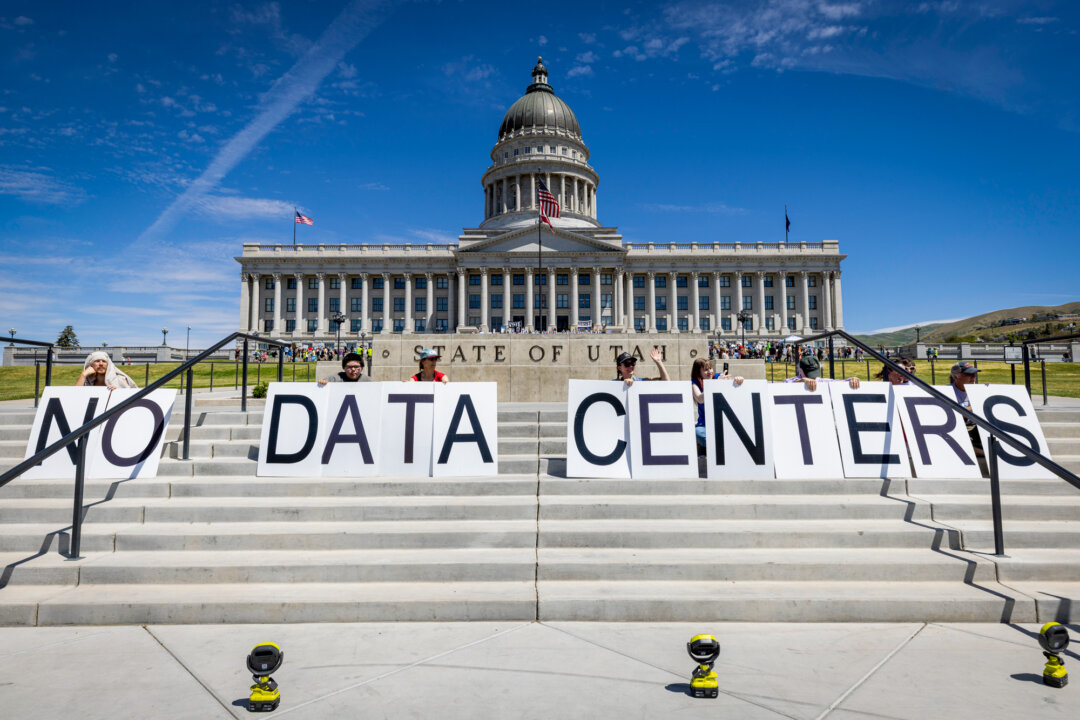
Lawmakers, Local Governments Warned Against Adopting Blanket Data Center Bans, Moratoriums








Related Articles
BusinessCompaniesEnergy
EQT to Buy Range Resources, Creating Largest US Natural Gas Producer
EQT Corp. has agreed to acquire rival Appalachian shale driller Range Resources...

BrightBusinessInvestingPersonal FinanceStocks
Wall Street Is Very NervousShould You Worry? Can You Repair Your Losses?
On Oct. 23, the Dow Jones Industrial Average fell 652.82 points, or...
BusinessMarkets
Nearly 3 in 10 New-Car Trade-Ins Are Underwater, Edmunds Finds
Almost three in 10 vehicles traded toward a new car are worth...



Asia & PacificChina NewsEuropeInternational RelationsNational SecurityPolicies & ImpactsUSUS NewsUS-China RelationsWorld News
Japan Defense Academy Chief Calls for 3 Red Lines in Competition With China
Japan’s former top uniformed military officer has called for establishing three “red...
