
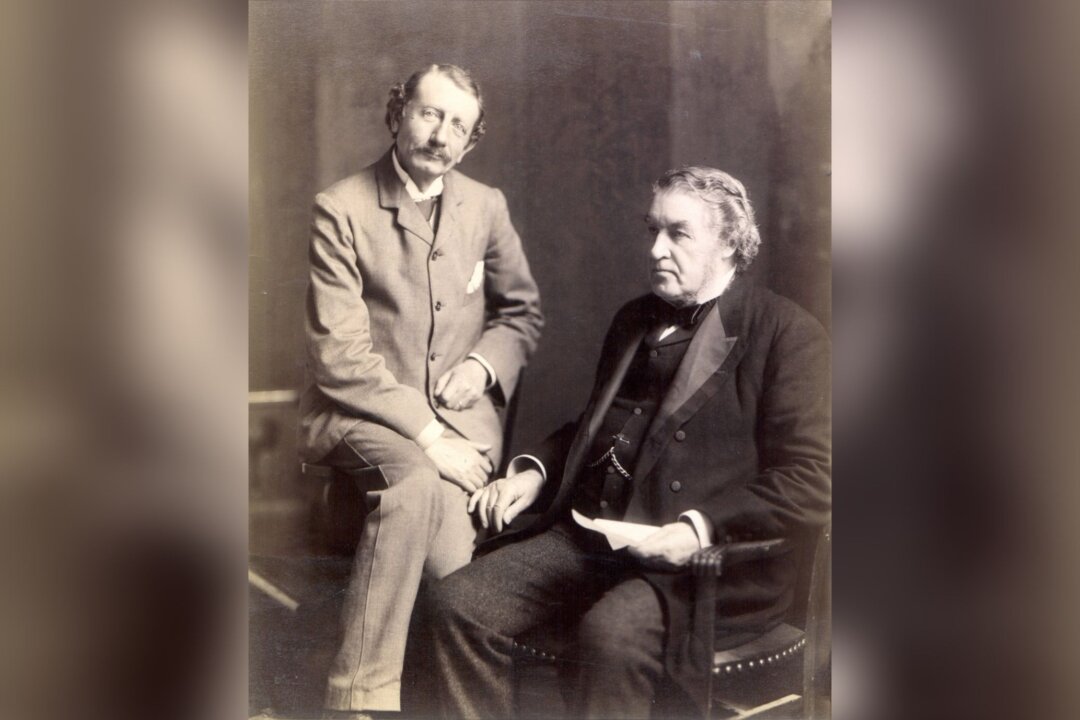
CommentarySir John A. Macdonald was a hard act to follow, as four successors in five years found out. No other prime minister has matched his expansive mastery or faith in the parliamentary system, let alone the profound public esteem he enjoyed.For his son, too, the legacy could be a burden, yet Sir Hugh John Macdonald went on to become the oak of his generation, described as a man of outstanding qualities and “Manitoba’s all time kindliest gentleman.”Hugh strove to be his own man, to strike out on his own. Between 1866 and 1885 he served three military tours on the front lines of Victorian Canada’s survival, much more, unfortunately, than any Canadian prime minister can say. Yet, says historian Hal Guest, “He bore the burden of heredity throughout his life,” and could never escape being “the old man’s son.”Hugh John Macdonald before 1929. Public DomainMany scribblers have been less than kind. He was “of only secondary importance,” wrote Guest. “His principal value lay in the surname he had inherited.” One rival, ex-Conservative Orange luminary D’Alton McCarthy, belittled him as “a weak young man with a nose.” The dual insult referred to his prominent nose (inherited) and his slim chance of winning. Actually he was re-elected in 1896 by 130 votes, but the Tupper Tories lost the election.Postmodernists have renewed the attack. Even a student hired as an intern at Sir Hugh’s splendid Winnipeg house, Dalnavert, wrote: “While we celebrate Dalnavert for its rich Victorian history, we must recognize the Macdonald’s complacency [sic] in Canada’s colonial narrative”—poisonous jargon spoon-fed by her professors.The Macdonalds were anything but complacent. Rather they strove, each according to his capacity, to prevent the failure of the Dominion. Canada could not have survived successful armed resistance in the West; America would have snatched up the pieces.Hugh John was the second son born to Isabella, Macdonald’s first wife, in 1850. Their first son, John Alexander, died by accident at just over a year old. (All his life, the longest-serving prime minister kept a box of the baby’s toys and occasionally handled them to remember.)Hugh grew up “virtually as an orphan” raised by his grandmother, his Aunt Louisa, and Aunt Margaret and her husband, Rev. James Williamson, a Presbyterian who imbued Hugh with “ritual anti-Catholicism” that he later overcame in 1876 to marry an older Catholic widow, Jean King, against their wishes.Depiction of the Fenian charge (L) under Gen. John O’Neill against the Canadian Militia at the Battle of Ridgeway near Fort Erie, Ont., on June 2, 1866. Universal History Archive/Getty ImagesWhen just 16 years old during the Fenian Crisis of 1866, Hugh enlisted as a private in the 14th Prince of Wales Own Rifles (Kingston), patrolling the St. Lawrence shore around Cornwall. Again, historian Guest belittles the youth, saying he “saw no action.” But this wrongly equates honourable service with the rarity of combat. In fact, the Fenians were planning an attack on Cornwall, which Canadian regular and reserve troops and gunboats successfully deterred. It is worth noting that Guest never enlisted in any branch of the services, nor did his father, Hewson, who was 19 when World War II began but became a teacher in Winnipeg.In 1868, Hugh Macdonald joined the Queen’s Own Rifles as a rifleman and rose to sergeant before being commissioned as an ensign (2nd lieutenant) in 1870. That year, he applied to join the Wolseley Expedition against the Red River Rebellion led by Louis Riel. When his father refused, Hugh appealed to family friend Sir George Cartier, Minister of Militia, to intervene. Sir John let him go.Joining 16 Coy, 1st Ontario Rifles, as a lieutenant, he took part in the epic summer bag-drive across northern Ontario. Disciplined and well-led, the force suffered no casualties, though there were many close calls on river rapids and many men (and horses) almost went mad from blackflies, mosquitoes, and sleep deprivation. Wolseley said the reservists performed as well as his regulars. They entered Winnipeg in “pouring rain and knee-deep mud” on Aug. 24. By then, Riel had run away.Louis Riel (C) and members of the Métis provisional government, circa 1869–1870. CP PhotoHugh would have pursued a military career but Ottawa kept defence spending low and, despite the withdrawal of the British garrison, did little to set the army on a stronger footing or to develop a professional officer corps. (Instead Sir John, in a stroke of genius, created the paramilitary North-West Mounted Police to protect the natives from American smugglers and to ensure that settlement, a vital necessity, occurred peacefully.)Before the Riel affair, Sir John had pressured Hugh to take up the law, and he was called to the bar in 1872.Hugh’s first wife, Jean, died in 1881, weakened by childbirth, leaving him with a daughter, Isabella Mary, known as Daisy. She was educated by religious sisters at St. Mary’s Academy and later in Brighton, England. Her son, Hugh Alexander George Macdonald Gainsford, served as a longtime volunteer at Dalnavert. He died in 2014.In 1882, Hugh decided to make a break with the past, becoming an Ontario colonist in Manitoba, where he partnered with James Tupper. He helped raise the 90th Battalion, Winnipeg Rifles, in 1883, today a reserve unit. That year he married Agnes Gertrude Vankoughnet (Gertie), the daughter of an old Toronto friend, and brought her out West.Print of the Battle of Batoche during the North-West Resistance, a.k.a. the Second Riel Rebellion, in Saskatchewan in 1885. Public DomainOn the outbreak of the Second Riel Rebellion in 1885, he again joined up (at age 35) as a lieutenant in the Winnipeg Rifles. At Fish Creek he led a series of section attacks against rebels holed up in the ravine. He volunteered to lead a bayonet charge but his senior officer demurred, probably preserving Hugh’s life.In May, when Gen. Middleton’s force entered Batoche, Hugh was unable to be with them having suffered a severe attack of erysipelas, a skin infection. He was ordered to recover aboard the steamer “Northcote” on the South Saskatchewan River. Hal Guest again belittles Macdonald, writing that he “amused himself by taking pot shots at rebels on the riverbank.”Lt. Macdonald was not just taking pot shots! Rather, even though seriously ill, he borrowed a Winchester rifle and joined “C” Company on deck. As the Metis “at once opened fire on us and kept it up until we had run about 5 miles below the Crossing,” he related to Gertie, “We of course returned with interest. … We know we killed 9 of them, one of whom I got, and I am happy to say we have as yet had none killed and only three wounded.” Contrary to Guest, Hugh put himself in harm’s way when he could have stayed safely below.Returning to the law, in 1890 Hugh was made a Q.C (Queen’s Counsel). On March 6, 1891, he was elected as a Conservative MP for Winnipeg and proudly sworn in alongside his father on April 29. Five weeks later, the great man was dead.Sir Charles Tupper in 1865. Public DomainDisliking public life and at odds with the government on some issues, Hugh gave up his seat in 1893. He returned in 1896, serving briefly as minister of the interior under Sir Charles Tupper. Hugh held his seat by 130 votes, but when the court invalidated the result—apparently because supporters had paid for cabs to convey voters to the polls—he lost the ensuing byelection.In 1899, Hugh became premier of Manitoba for 11 months, reforming immigration, vote-buying, and the franchise (requiring seven years’ residence before non-English speaking Manitobans could vote). He allowed a law to go through that banned the sale of alcohol—a strong Protestant tendency at the time. He was persuaded to re-enter federal politics but failed to win a seat.With Gertie he had a son named John Alexander (“Jack”), who suffered from diabetes, dying suddenly, age 20, in 1905. The loss broke his father’s heart and for a while he took solace, ironically, in the bottle. Gertie suffered two strokes after 1910 that limited her activities. She died in 1940.In 1911, at the age of 61, Hugh began a new career, being appointed Winnipeg’s police magistrate. Presiding over the police court, he gained a high reputation for dispensing impartial justice. He was never blasé or hurried. He listened courteously to all. “For the first time in any courtroom,” wrote one court reporter, “I actually felt that the prisoner was considered innocent until proved guilty and that on the Bench was a mind that could never be tainted with any touch of meanness.” He was knighted in 1913.By this time, the accomplished Hugh had “blossomed in the public’s eye.” However, in 1927 the erysipelas infection flared up and one of his legs was amputated. Now 77, he learned to walk with a prosthesis and returned to work. When the disease struck the other leg, he refused surgery.To the end, he kept his “bright eyes with the sparkle of mischievous youth,” George P. Macleod wrote for the Manitoba Historical Society. His face, with “a thousand mirthful wrinkles and creases,” was “rugged in profile as though chipped from granite seemingly still holding the leather tan of his pioneer days.”Sir Hugh John Macdonald died on Good Friday, March 29, 1929. “It has been said of him that he was Manitoba’s all time kindliest gentleman,” Macleod wrote, “and that he was the most loved man in Winnipeg.”Views expressed in this article are opinions of the author and do not necessarily reflect the views of The Epoch Times.








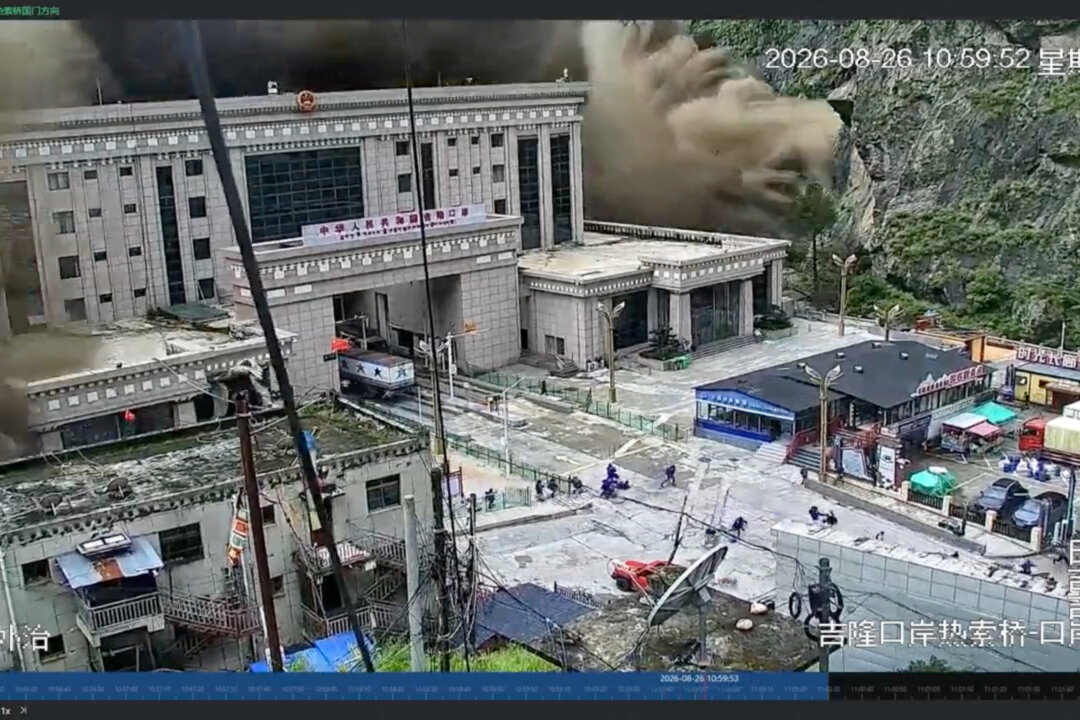
Chinese Scientists Flagged Glacial Flood Danger One Year Before Nepal Catastrophe
More than a year before the catastrophic flash flood devastated the China–Nepal...

How Major US Stock Indexes Fared Aug. 31
Oil prices rose and U.S. stocks fell after American forces struck Iranian...
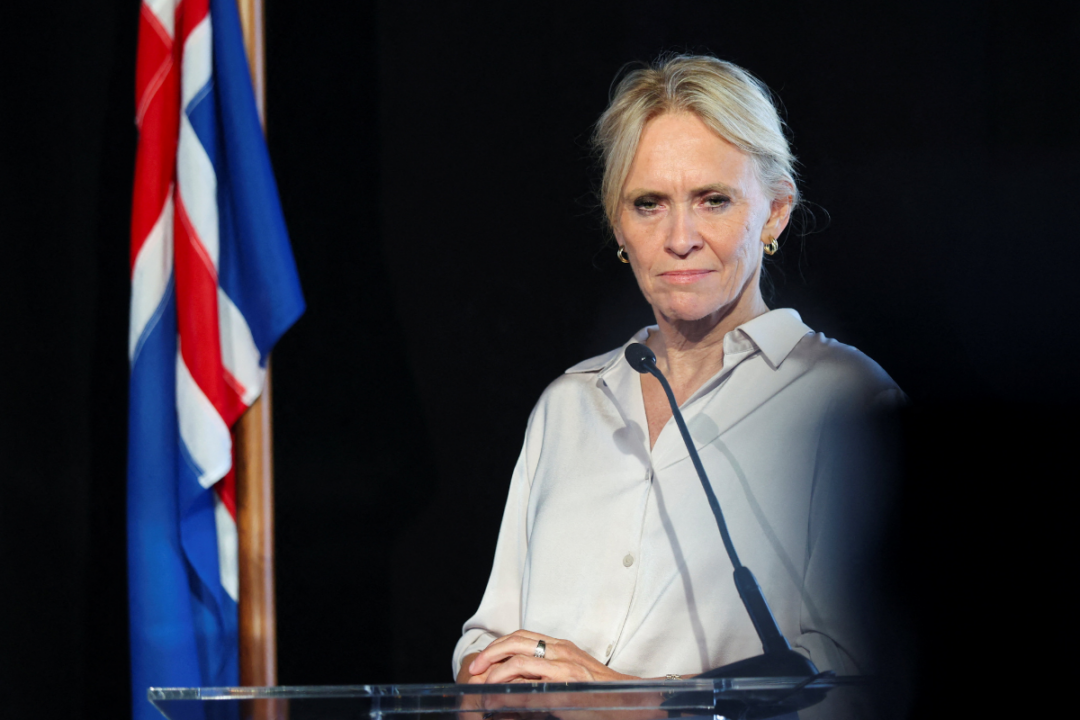
Iceland Focuses on Security Partnerships After Voters Reject Opening EU Membership Talks
Icelandic Minister for Foreign Affairs Thorgerdur Katrin Gunnarsdottir attends a press conference...
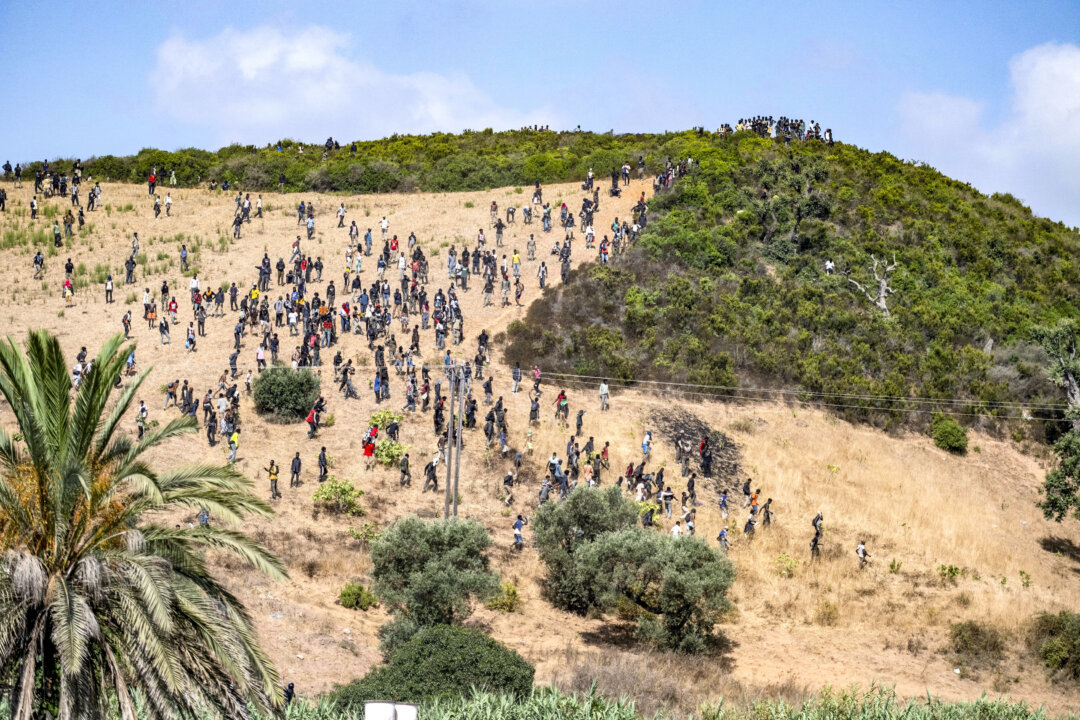


Italy, Spain Extend Tit-for-Tat Border Curbs After Ceuta Illegal Immigrant Crisis
Immigrants gather on a hill as they attempt crossing from the border...
