Hakeem Anwar discusses the global expansion of digital ID systems and the growing integration of biometric identification into everyday services, emphasizing that digital ID is not limited to an app but is created when legal identity and biometrics are combined (often through banks, financial services, or government processes). Nearly every country is developing some form of digital ID and moving towards even more centralized control. Anwar also highlights the emergence of surveillance frameworks in schools, where widespread device distribution has enabled continuous monitoring of students’ behaviour and communications. Watch the Full InterviewIn an era of digital surveillance, algorithmic bias, and growing censorship, privacy has never been more important. As centralized powers extend into every layer of our digital lives, those who value truth, freedom, and autonomy need tools they can trust. Above Phone delivers exactly that, and my core team relies on Above Phones and Above Books to run our operations securely.Save up to $150 on privacy-focused devices—including laptops, tablets, and phones—while supporting the educational and advocacy work of my team, Take Back Our Tech, and Above. Use discount code DRTROZZI or access the offer through the link below.Visit Above Phone StoreThis video featuring Hakeem Anwar is rich with insights, but we know time is limited. Below is a concise summary highlighting the key takeaways from our discussion for your convenience.Digital ID systems are being developed in nearly every country worldwide. An extensive global analysis found that almost all nations are implementing some form of digital identification, with only a few remote or unstable regions remaining outside the system.International institutions are driving adoption across both developed and developing nations. Organizations such as the World Bank and IMF are ensuring that even countries with major resource challenges prioritize citizen identification systems.Digital ID is created by combining legal identity with biometric data. Once identification documents are linked with biometrics such as facial images or scans, a persistent digital identity is effectively established.Financial institutions act as key collection points for biometric data. Banks and credit unions increasingly require identity verification that combines official ID with biometrics.Governments can access and consolidate identity data from private institutions. Examples show that biometric and identity data collected by banks can be integrated into national digital ID systems.Digital ID enables more precise and enforceable forms of surveillance. When biometric data is tied to legal identity, systems can confirm identity and this data will be more readily permitted in a court of law.Centralized identity systems can be used for direct state control. Cases such as AI surveillance linked to conscription enforcement in Russia demonstrates how these systems can be used to act on individuals in real time.Resistance requires limiting the sharing of biometric data where possible. Avoiding actions that require a combination of biometrics and legal identity is one of the few available safeguards against this system. Strategies include avoiding biometric scans, seeking alternative service providers, or asking to engage in non-biometric verification methods.Surveillance systems are increasingly embedded within educational environments. Large-scale funding during the COVID period enabled widespread distribution of monitored devices to students.Student activity is tracked both in school and at home. Monitoring software allows teachers and administrators to view screens, restrict activity, and even observe usage outside the classroom.Private communications between students are being analyzed. Systems scan messages and social interactions for keywords, flagging behaviour related to violence, sexual content, or mental health.Student data is categorized and stored across multiple systems. Platforms label students based on behavioural indicators, including suspected depression or risk profiles.Security vulnerabilities expose sensitive student data. Instances have shown that monitoring systems can be accessed externally, revealing detailed behavioural records. A thousand companies provide tools that track and analyze student behaviour, increasing data exposure risks.Continuous monitoring conditions children to accept surveillance as normal. Early exposure to constant observation normalizes the violation of privacy and reduces resistance to broader digital control systems.Data Centre Report. Above mapped over 3400 US data center locations, analyzed water stress, and shared solutions. Link↗ Digital ID Report. Above analyzed digital ID rollouts, mandates, and impacts, offering answers and solutions in a new report. Link↗Sovereign AI Guide. How AI works, its costs and risks, and practical, privacy-focused use grounded in critical thinking. Link↗Take Back Our Tech. A front-line public advocacy mission led by Hakeem, focused on reclaiming digital sovereignty: Link↗Save up to $150 on privacy-focused devices—including laptops, tablets, and phones—while supporting the educational and advocacy work of my team, Take Back Our Tech, and Above. Use discount code DRTROZZI or access the offer through the link below.Visit Above Phone Store

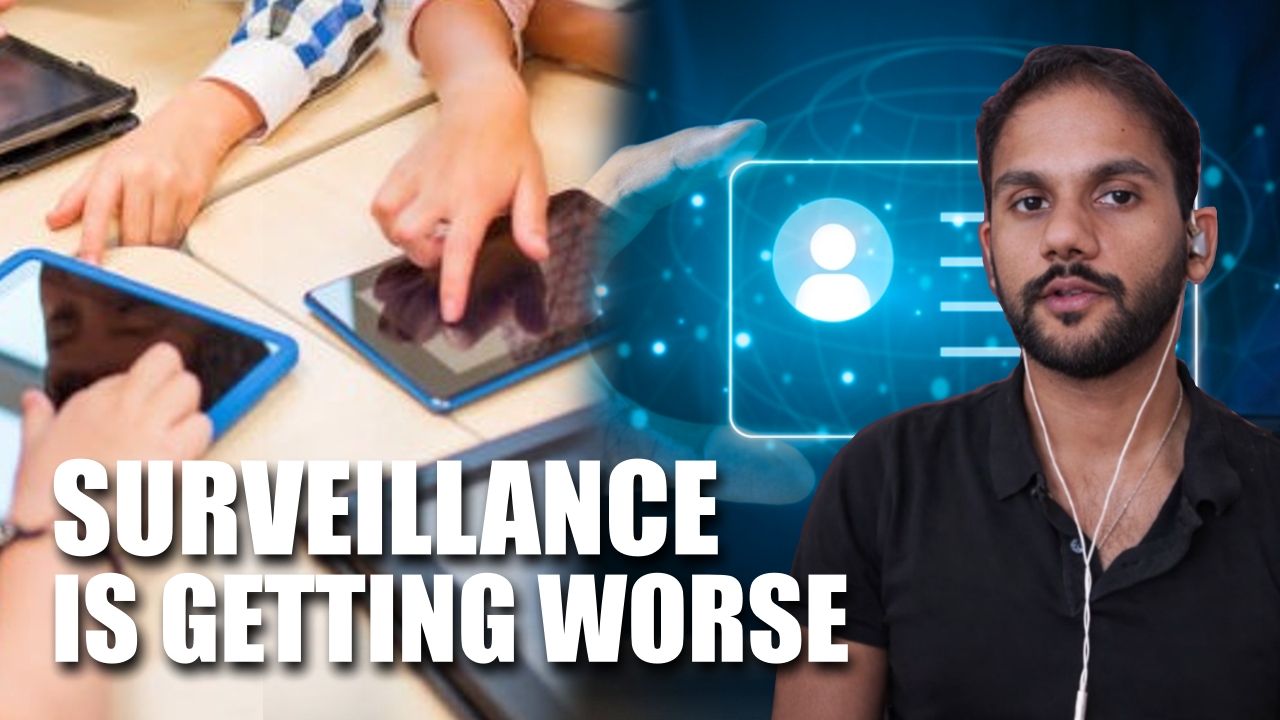
Hakeem Anwar: The Dangers of Digital ID and School Surveillance









Related Articles

Dr Mark Trozzi
Wins of the Week 148 with Glen Jung
This week’s developments highlight growing efforts to challenge institutional decisions, defend individual...

Dr Mark Trozzi
Influenza Season: What You Need to Know and How to Protect Yourself
Influenza season is upon us, and big pharma has lots of mistakes...

Dr Mark Trozzi
Wins of the Week 147 with Ted Kuntz
This week’s victories reflect growing efforts to expose conflicts of interest, strengthen...



Dr Mark Trozzi
Dr. Angus Dalgleish Warns of Aggressive Cancers After COVID Injection
COVID shots are causing aggressive cancers that are difficult to treat, including...
