
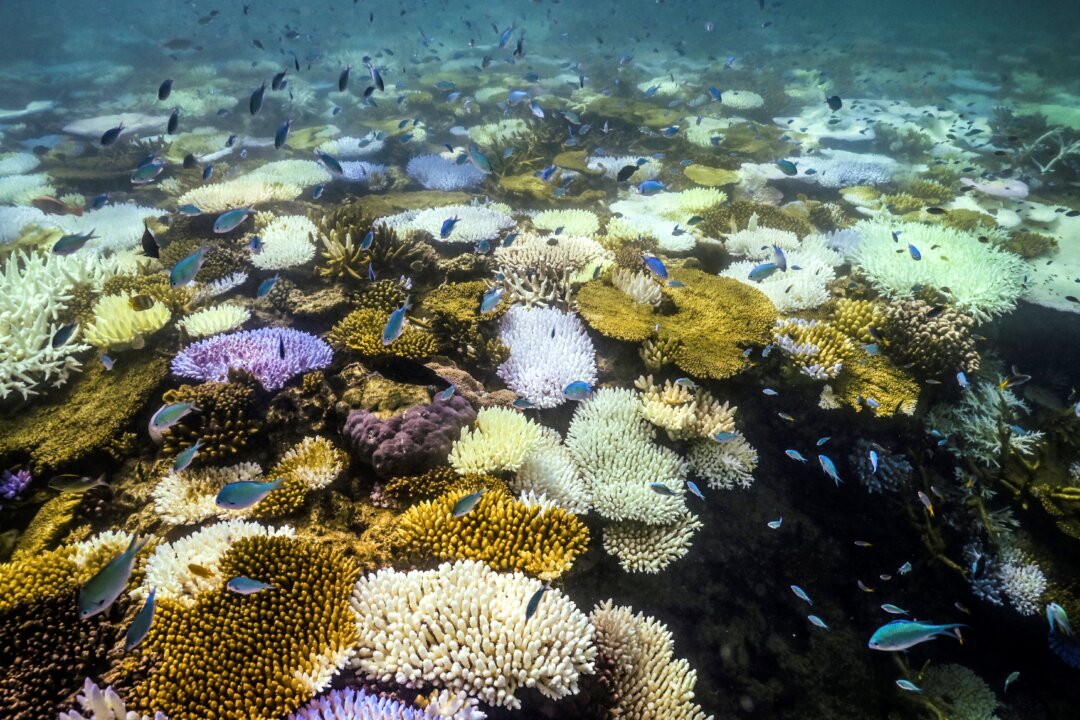
This underwater photo taken on April 5, 2024, shows fish swimming near bleached and dead coral around Lizard Island on the Great Barrier Reef, located 270 kilometres (167 miles) north of the city of Cairns in Australia. David Gray/AFP via Getty ImagesThe Australian Institute of Marine Science has released findings showing the Great Barrier Reef is starting to show promising signs of recovery.The most recent data released by the Institute shows hard coral cover increased in the northern section of the reef, from Cape York to Cooktown, from 30 percent in 2025, to 35.1 percent in 2026.The central part of the reef, from Cooktown to Proserpine, showed an increase from 28.6 to 31.6 percent from 2025-26.And southern part of the reef saw, from Proserpine to Gladstone, saw a slight increase from 26.4 percent to 26.9 percent.The findings were released on Aug. 11 as part of the Institute’s 40th annual report into the reef’s condition, which studied 192 areas.Scientists said there were still challenges ahead, including a predicted El Nino season ahead.There were also concerns that a fifth wave of crown-of-thorns starfish have emerged in the north and are expected to move south in coming seasons.Crown-of-thorns are large marine invertebrates which feed on coral as adults and are native to the reef.“Our ability to assess threats to the Great Barrier Reef has vastly improved in the past decade,” the Institute’s reef fish ecologist Daniela Ceccarelli said.“Global forecast systems can now predict ocean temperatures weeks to months in advance, providing early warnings of marine heatwaves and coral bleaching risks around Australia.”In 2024, the reef endured a mass bleaching event when a record heatwave impacted coral from the Caribbean to the Indian and Pacific oceans, leading to the largest single-year coral decline ever measured in two regions.Then in 2025, the reef went through its sixth coral bleaching event since 2016, according to the Institute.Reef scientist Peter Ridd said the latest findings suggest previously grim predictions for the health of the reef were not accurate.“In fact, the [reef] has had more coral in all of the last six years than in any of the previous 35 years, since record began,” he told The Epoch Times.“It just shows those bleaching events were massively exaggerated. How can we have so much coral if it was all devastated?”Ridd says aggregate data shows that, over time, coral was increasing in the reef.“There is a constant dynamic as cyclones, starfish plagues and bleaching events dramatically kill lots of coral in small areas, while it patiently regrows elsewhere.”










Chinese Scientists Flagged Glacial Flood Danger One Year Before Nepal Catastrophe
More than a year before the catastrophic flash flood devastated the China–Nepal...

Iceland Focuses on Security Partnerships After Voters Reject Opening EU Membership Talks
Icelandic Minister for Foreign Affairs Thorgerdur Katrin Gunnarsdottir attends a press conference...
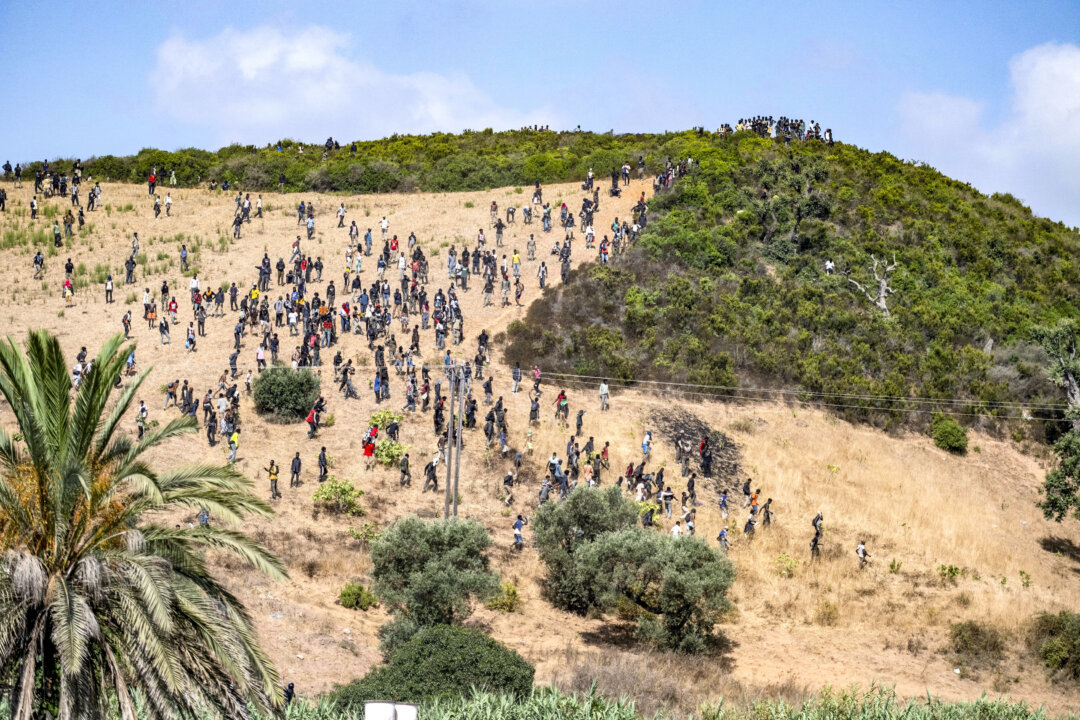
Italy, Spain Extend Tit-for-Tat Border Curbs After Ceuta Illegal Immigrant Crisis
Immigrants gather on a hill as they attempt crossing from the border...



Vaccine Maker Halts Trial on mRNA Cancer Shot
A pharmacist administers the Pfizer-BioNTech vaccine in Los Angeles, Calif., on October...
