Germany’s domestic intelligence agency has named China alongside Russia and Iran as the main actors in transnational repression, warning that people who leave authoritarian states can remain targets of surveillance, threats, and intimidation in Germany.The Federal Office for the Protection of the Constitution, known as the BfV, said in a publication released on Aug. 20 that those affected by China-linked activity include Chinese activists and German critics of China’s one-party state, as well as Uyghurs, Tibetans, Falun Gong practitioners, and supporters of Hong Kong’s democracy movement or Taiwan.China’s political leadership uses intelligence services and other actors under its direction or acting on its behalf to monitor and intimidate critics abroad, the BfV said.Germany has also added a criminal tool aimed at foreign state-directed wrongdoing. Section 87a of the German Criminal Code, in effect since April 2, carries penalties of up to five years in prison for certain unlawful acts committed in Germany on behalf of a foreign state.German courts and government records have documented some of the conduct now described by the BfV.Pressure Follows Critics AbroadIn September 2025, the Dresden Higher Regional Court convicted Jian G. of particularly serious intelligence activity for China and sentenced him to four years and nine months in prison.The court found that Jian, a German citizen of Chinese descent, had worked for a Chinese intelligence service since 2007. One focus of his work was spying on and identifying Chinese opposition figures.A 2025 report by Bremen’s domestic intelligence agency said Jian posed online as a critic of the Chinese leadership to obtain information about genuine dissidents.He also collected information on Germany’s Alternative for Germany party and, while working for a member of the European Parliament, on the Parliament’s activities.Judge Hans Schlueter-Staats (L) stands in the courtroom of the higher regional court in Dresden, eastern Germany, on the last day of the high-profile espionage trial of two suspected spies for China, defendants Jian G (2nd R), a former assistant to then-member of the European Parliament Maximilian Krah, of the right-wing Alternative for Germany (AfD) party, and Yaqi X (unseen), accused of spying on German defence companies, on Sept. 30, 2025. Odd Andersen/POOL/AFP via Getty ImagesChinese security authorities have also used relatives who remain in China as leverage against Uyghurs living in Germany.In a 2021 response to lawmakers, the German government said Chinese security officials repeatedly contacted Uyghurs seeking protection in Germany and pressed them for information about the Uyghur diaspora.Some were offered benefits for relatives in China. When they refused to cooperate, Chinese authorities threatened or carried out reprisals against family members, according to the government.In some cases, security officials called people in Germany from a relative’s phone while that relative was present.Those contacted were also asked to provide their current German phone numbers and addresses, stop political activity against the Chinese Communist Party, and return to China.Communities Targeted by BeijingChinese intelligence has also obtained information through people with access inside communities Beijing seeks to monitor.In 2011, the Celle Higher Regional Court convicted John Zhou of acting as an intelligence agent for a foreign power.According to the judgment, Zhou had access to internal Falun Gong communications and information about practitioners in Germany.Falun Gong is a spiritual discipline based on the principles of truthfulness, compassion, and tolerance. Introduced to the public in 1992, the practice quickly grew in popularity to reach an estimated 70 million to 100 million practitioners in China by the end of the decade.In July 1999, the Chinese Communist Party started a brutal persecution campaign aimed at eradicating the practice. Since then, untold numbers of practitioners have been subjected to arbitrary detention, forced labor, torture, and forced organ harvesting.The court found that Zhou produced a roughly 300-page report on Falun Gong’s network, forwarded internal emails, collected information at conferences, and reported to his handler about contacts German intelligence authorities had made with him.The embassy official who initially dealt with Zhou was an operative of China’s Ministry of State Security, according to the judgment.Falun Dafa practitioners at a rally at Marktplatz in Dusseldorf, Germany, on July 23, 2022. Mihut Savu/The Epoch TimesThe BfV’s current warning extends beyond professional intelligence officers.Its new publication says foreign services can use proxies—people or organizations acting for, or in the interests of, a foreign intelligence service or other state body without formally belonging to it.Depending on the operation, the agency said, those can include private investigators, students, colleagues, cultural associations, or others with access to targeted communities. Some may also be pressured into cooperating.The BfV has described a broader Chinese network around overseas communities.Its 2024 annual report said China had built a “close knit extraterritorial infrastructure” to identify potential dissenters, isolate them within Chinese origin communities, and intimidate them.The agency said Chinese diplomatic missions are used to gather information and to exert political control over overseas Chinese communities. It also cited institutional ties involving Chinese companies, student organizations, hometown associations, clubs, and institutes.Germany has separately identified two Chinese “overseas police station” structures that had operated in the country.In a 2025 government response to lawmakers, Berlin described the structures as part of an extraterritorial network established by the Chinese state. One had contacts across several parts of Germany; the other was based in Frankfurt.According to the government, Chinese official websites listed gathering information about diaspora members—including their views—among the stations’ functions. Other listed activities included administrative assistance, mediating disputes, helping pursue suspects, and promoting political and ideological directives.Germany had demanded that China end such activities, which it said violate German sovereignty.The government said in 2025 that it had no evidence the two previously identified stations were still operating in the same form.Germany Adds New ToolsThe BfV is responsible for determining whether a foreign state or intelligence service stands behind suspected transnational repression. Reports from affected people can be combined with the agency’s own intelligence work to identify actors and recurring methods.If suspected activity reaches the level of a possible crime, police state-security units investigate and prosecutors determine whether charges can be brought.Diplomatic immunity can block prosecution of a suspected foreign official. In those cases, German authorities can instead seek the person’s expulsion, the BfV said.Section 87a of the German Criminal Code now gives prosecutors an additional criminal provision for certain unlawful acts carried out in Germany at the direction of a foreign state.The Aug. 20 publication also urges people who believe they are being approached, pressured, or threatened by a foreign intelligence service to contact the BfV through its existing confidential reporting channel.The guidance tells people to contact the BfV if someone seeks sensitive information or offers money or other benefits for it, pressures them or people close to them, or threatens relatives in Germany or abroad.The reporting line operates around the clock. People facing an immediate threat are told to contact police.

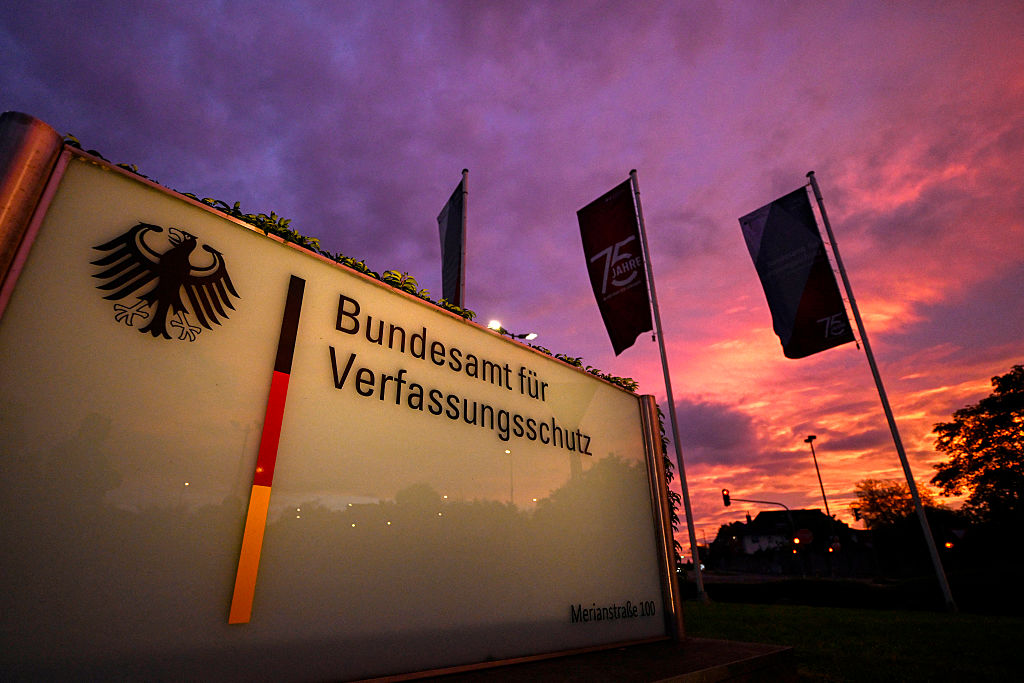
Germany Names China Among Main Actors in Transnational Repression









Related Articles

EuropeThe Final wakeup call
Lula wins a miracle election in Brazil. Now comes the hard part: putting the country back on the right track
Three weeks ago, Brazilian President Luiz Inácio Lula da Silva’s political obituaries...

EuropeThe Final wakeup call
US midterms: what a new Congress could and could not change for Europe
US midterm elections traditionally attract fewer voters than presidential contests. But this...
EuropeThe Final wakeup call
Political power without balance leads to the erosion of democracy, what Montesquieu can teach modern-day France
KEY TAKEAWAYS Democratic erosion does not start by doing away with elections;...


China Business & EconomyChina NewsChina Technology
China Tech Index Plunges More Than 40 Percent From July Peak
China’s technology-heavy STAR 50 index has fallen by more than 40 percent...
