German Chancellor Friedrich Merz has reshuffled his Cabinet following the resignation of a senior minister over controversy about his use of a surrogate mother in the United States.A member of the Christian Democratic Union (CDU), Merz leads an uneasy coalition government between his conservative group and the center-left Social Democrats, while attempting to push through reforms to revive Europe’s largest economy.His July 24 Cabinet reset follows the abrupt resignation of CDU heavyweight Jens Spahn as parliamentary leader following a row over his decision to use a surrogate mother despite his party’s staunch opposition to the practice.Surrogacy is banned in Germany, although it is not illegal to raise a child obtained through paying for a surrogate abroad, as Spahn and his partner did.Spahn, 46, was heavily criticized after news of his surrogacy arrangement emerged, with members of his own party as well as opposition politicians calling for him to step down and accusing him of hypocrisy.‘A Rented Womb’As Minister of Health, Spahn rejected the lifting of the surrogacy ban (Embryo Protection Act) in 2020, and voiced no objection when the CDU voted to uphold the ban on surrogacy inside Germany at its party conference in February.Spahn, who at one time was seen as a potential challenger to Merz, stood down on Saturday, saying in his resignation letter, “I have come to realise that my personal happiness—starting a family with my husband and becoming a father—is incompatible with my political office.”Germany’s then-Health Minister Jens Spahn speaks during a press conference at the German national agency and research institute for disease control and prevention, Germany, on Nov. 12, 2021. Tobias Schwarz/AFP via Getty ImagesEconomic WoesMerz is under pressure after a testing first year in office, and faces the prospect of the Alternative for Germany party (AfD) gaining power for the first time at the state level amid widespread discontent over immigration policy.He took office less than 15 months ago with pledges to reform and turn around Germany’s export-driven economy, which is under threat from rising costs at home and competition abroad.Market ructions caused by the imposition of tariffs and the soaring costs of energy due to wars in the Middle East and Ukraine have contributed to a stagnant economy, which the coalition government has so far failed to revive.“We are a reform-oriented government, and we intend to continue demonstrating that,” Merz told reporters in Berlin, vowing to “hit the ground running” when parliament reconvenes after its summer recess.He named Health Minister Nina Warken as his new chief of staff, the first woman to be appointed to the role.The health brief will now fall to another party heavyweight, Carsten Linnemann, who will be tasked with implementing reforms to rein in soaring healthcare costs.Merz is expected to replace Transport Minister Patrick Schnieder amid public frustration over the state of Germany’s rail network and crumbling infrastructure, with train delays a national topic of conversation.German Chancellor Friedrich Merz, (2R), arrives with Nina Warken, (L), Philipp Amthor, (2L) and Carsten Linnemann, (R), to give a statement about planned personnel changes in his government in Berlin on July 24, 2026. AP Photo/Markus SchreiberPlummeting Approval RatingsThe Chancellor’s outgoing chief of staff, Thorsten Frei, will succeed Spahn as head of Merz’s parliamentary faction in parliament, a powerful role leading the Bundestag members of both the CDU and its Bavarian sister party, the Christian Social Union.Frei, regarded as a Merz ally, has been responsible for coordinating government business from the Chancellor’s office, a role that has drawn scrutiny during the coalition’s rocky first year.German media have reported criticism within the ruling parties that coordination between the chancellery, ministries, parliamentary groups, and coalition partners has often been poor.Frei’s supporters see him as better suited to the parliamentary post, saying he has strong backing in the faction and is well connected there.Discussions regarding who will succeed Frei as head of the chancellery are continuing, officials said.Merz’s popularity is at an all-time low, according to a RTL/ntv Trendbarometer poll this week, with only 14 percent of respondents satisfied with his performance compared to 85 percent who are dissatisfied.The same poll shows the AfD leads nationally with 26 percent, ahead of the CDU at 22 percent, with elections in the eastern states of Saxony-Anhalt and Mecklenburg-Vorpommern just two months away.AfD co-leader Alice Weidel said that Merz had caused “yet more chaos” with his reshuffle and that the government’s “self-absorption does no justice to the varied and self-inflicted problems in the country.”“Germany needs new elections,” she wrote in a July 24 post on X. The next national election is not due until early 2029.Reuters contributed to this article.

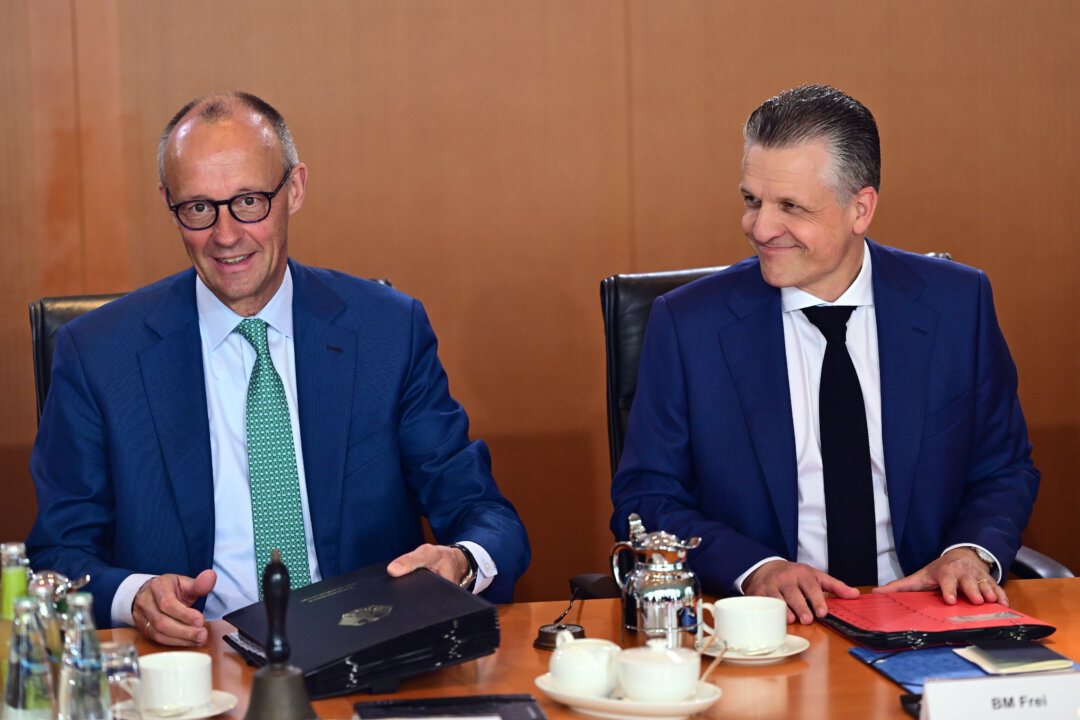
German Chancellor Merz Shuffles Cabinet Amid Political Pressure and Surrogacy Scandal









Related Articles

EuropeThe Final wakeup call
Lula wins a miracle election in Brazil. Now comes the hard part: putting the country back on the right track
Three weeks ago, Brazilian President Luiz Inácio Lula da Silva’s political obituaries...

EuropeThe Final wakeup call
US midterms: what a new Congress could and could not change for Europe
US midterm elections traditionally attract fewer voters than presidential contests. But this...

EuropeThe Final wakeup call
Political power without balance leads to the erosion of democracy, what Montesquieu can teach modern-day France
KEY TAKEAWAYS Democratic erosion does not start by doing away with elections;...



China Business & EconomyChina NewsChina Technology
China Tech Index Plunges More Than 40 Percent From July Peak
China’s technology-heavy STAR 50 index has fallen by more than 40 percent...
