The European Union may need additional safeguards against surging Chinese industrial imports, the bloc’s chief trade enforcement officer said on July 14, identifying machinery and electrical and electronic goods as areas of increasing pressure on European manufacturers.Denis Redonnet, the European Commission’s chief trade enforcement officer, told the European Parliament’s Committee on International Trade that contingency trade-protection tools could become “legitimate and necessary on a case-by-case basis” because of rising imports.He did not announce an investigation or identify products that the commission had selected for tariffs or quotas.Redonnet later said the commission was seeing product-level import spikes under customs Chapters 84 and 85, which cover machinery and a wide range of electrical and electronic equipment.“Now we can see, code by code, spikes, surges in imports, with a volume effect and a price effect, which require an adjustment,” he said.Redonnet described those industries as part of the core of Europe’s manufacturing base and said they were traditionally areas where European companies competed successfully in global markets.Safeguards Could Accompany NegotiationsThe commission is pursuing negotiations with Beijing while keeping unilateral trade measures available.Redonnet said talks alone could not resolve the structural problems in the relationship.He said the EU would probably have to pursue moderation of Chinese exports alongside “elements of unilateral protection” on the European side.Safeguards differ from the anti-dumping and anti-subsidy duties the EU has frequently imposed on Chinese goods.Anti-dumping and anti-subsidy cases address alleged unfair pricing or government support.Safeguards can temporarily restrict imports when a sudden increase causes or threatens serious injury to domestic producers, even without a finding of dumping or subsidization.Under the EU’s general safeguard regulation, measures can include additional duties, quotas, or tariff-rate quotas.A formal investigation and a finding of serious injury or its threat would be required before definitive measures could be imposed.Redonnet said a Commission safeguard proposal would need support from a majority of EU member states.That could prove difficult when manufacturers seeking protection are concentrated in a few countries while companies elsewhere benefit from lower-cost imported parts and equipment.He said member states would need a shared view of which parts of Europe’s industrial base they were prepared to preserve.Trade Deficit Nears RecordThe comments came as the EU’s goods-trade deficit with China remained close to its record level.Eurostat reported that the EU imported 559.4 billion euros ($640 billion) in goods from China in 2025 while exporting 199.6 billion euros ($228 billion) in goods.That produced a 359.8 billion-euro ($412 billion) deficit, the second-highest annual figure on record after 2022.EU exports to China fell by 6.5 percent in 2024, while imports increased by 6.4 percent.Redonnet told lawmakers that the imbalance was more pronounced when measured by physical volume.He said the deficit had increased roughly fivefold in volume and more than doubled in value since 2015, while European exports to China had declined by about 30 percent in volume over roughly the same period.The latest Eurostat data in an extract reviewed by The Epoch Times cover January through April 2026.EU imports from China rose to approximately 191.9 billion euros ($220 billion) during the four months, up 4 percent from the same period in 2025.EU exports to China fell by about 5.5 percent to 62.4 billion euros ($71 billion).The resulting deficit increased by approximately 9.4 percent to 129.5 billion euros ($148 billion).The figures remain provisional and do not cover May or June.Commission Seeks Export ModerationRedonnet attributed the imbalance to structural features of China’s state-directed economy, including policies that favor industrial production over household consumption, subsidized capital, barriers to market access for foreign companies, and falling Chinese producer prices.He said China accounts for about 37 percent of global manufacturing but 13 percent of global consumption.China’s production model, therefore, depends increasingly on exports to absorb industrial output, according to Redonnet.He described the resulting pressure as a “global macro-industrial challenge,” rather than a problem limited to EU–China trade.The commission is asking Beijing to begin moderating exports in affected sectors before an expected ministerial review in October.Redonnet did not say whether Brussels was seeking production reductions, changes to subsidies or export incentives, voluntary export restraints, or other product-specific commitments.The Epoch Times asked the commission which tariff codes under Chapters 84 and 85 had the largest volume increases or price declines, and what forms of export moderation Brussels was seeking.The commission was also asked when it would publish the updated import-surveillance figures Redonnet referenced during the hearing.EU Seeks Better Access to ChinaThe EU is also asking China to expand access for European products.European demands include possible tariff reductions and the removal of non-tariff barriers affecting pharmaceuticals, medical devices, cosmetics, and agricultural goods.Redonnet said Brussels may also seek direct purchase commitments in sectors involving government procurement or state-controlled trading.The discussions follow the June 29 launch of the China–EU Trade and Investment Consultation Mechanism by EU Trade and Economic Security Commissioner Maroš Šefčovič and Chinese Commerce Minister Wang Wentao.According to Redonnet, the talks cover four areas: balancing trade and investment, export controls, intellectual-property protections, and reform of the World Trade Organization.Beijing’s account of the meeting said the two sides wanted to make the economic relationship more balanced.The statement did not announce numerical import targets, tariff reductions, subsidy changes, or other specific measures.At a July 14 press conference, Chinese customs spokesman Lü Daliang referred to the consultation mechanism when asked about EU–China trade.He did not identify a concrete measure China had agreed to implement.Talks Move Toward October ReviewRedonnet said EU and Chinese officials would meet before the end of July to compare their trade data, including figures Brussels associates with abnormal flows and import surges.He said he planned a vice-ministerial stocktaking with his Chinese counterpart in mid-August and could travel to Beijing in early September for further discussions.Redonnet said Šefčovič was also likely to contact Wang in early September before traveling to Beijing in early October to assess the talks.The commission’s updated import-surveillance figures are expected to help guide those discussions, but Redonnet did not say when the data would be published.He said the structural imbalance would not be resolved by October.The immediate test would be whether Chinese exports had begun to moderate in particular industrial sectors.

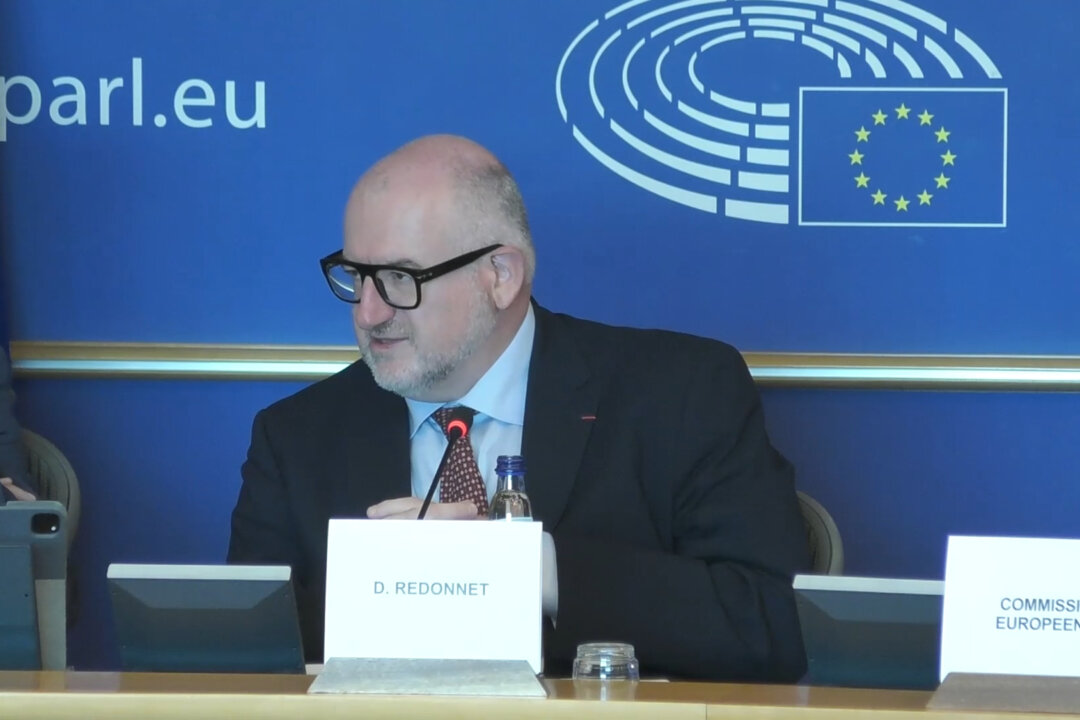
EU Trade Chief Raises Prospect of Safeguards Against Chinese Industrial Import Surges









Related Articles

EuropeThe Final wakeup call
Lula wins a miracle election in Brazil. Now comes the hard part: putting the country back on the right track
Three weeks ago, Brazilian President Luiz Inácio Lula da Silva’s political obituaries...

EuropeThe Final wakeup call
US midterms: what a new Congress could and could not change for Europe
US midterm elections traditionally attract fewer voters than presidential contests. But this...

EuropeThe Final wakeup call
Political power without balance leads to the erosion of democracy, what Montesquieu can teach modern-day France
KEY TAKEAWAYS Democratic erosion does not start by doing away with elections;...


China Business & EconomyChina NewsChina Technology
China Tech Index Plunges More Than 40 Percent From July Peak
China’s technology-heavy STAR 50 index has fallen by more than 40 percent...
