Four countries hoping to join the European Union took steps forward in their membership quests on Tuesday, in the bloc’s biggest expansion push in more than 20 years.Brussels staged conferences between governments to formally open or close negotiating tracks for Albania, Montenegro, Moldova and war-torn Ukraine, which are the top four candidates to join the 27-nation bloc. The joining process is long and protracted, meaning it could be years before any of them are admitted.“We have not seen this in more than two decades,” Enlargement Commissioner Marta Kos told reporters. “The last time, it was in 2002. This is a Super Tuesday for EU enlargement and Ukraine is part of it.”Ten countries, including eight former communist states as well as the Mediterranean islands, Cyprus and Malta, were granted admission to the bloc following the Copenhagen Summit of 2002, eventually joining in 2004.Croatia, the last country to be admitted into the world’s largest trading bloc, joined in 2013.In 2019, French President Emmanuel Macron said he would block any attempt at enlargement until the EU itself had undergone deep reforms, but geopolitical events, including the Russia–Ukraine War, may have made leaders more expansion minded.Leaders in Brussels have frequently referenced the growing influence of China and Russia while they have sought to encourage reform in the candidate nations, who have to fulfill strict criteria in order to be admitted.All EU member states have to agree before a new country is admitted, and any member can use its veto to block an application. Unanimous agreement is required for each negotiating chapter to be opened, and then again for it to be closed.Ukraine applied for membership in 2022, four days after its ongoing conflict with Russia escalated when Moscow launched a full-scale invasion.Ukraine’s President Volodymyr Zelenskyy and European Commission President Ursula von der Leyen pose for a picture ahead of an EU summit in Kyiv, Ukraine, on Feb. 2, 2023. Ukrainian Presidential Press Service/Handout via ReutersHungarian Opposition EndsHungary’s previous long-serving prime minister, Viktor Orban, maintained cordial relations with Russian President Vladimir Putin and was considered an obstacle to the EU expansion project.Orban was strongly opposed to Ukraine joining the bloc, citing endemic corruption as well as its economic dependence as reasons why it did not meet the strict criteria.Orban’s nationalist party, Fidesz, lost the Hungarian election in April, and the premier for 16 consecutive years was succeeded by pro-EU prime minister Peter Magyar.Ukrainian prime minister Volodymyr Zelenskyy has said he sees EU membership as a “security guarantee” for a stable future once the war ends. He would also like NATO membership for Ukraine, which Russia considers a red line, but the United States insists that cannot happen, and other NATO members are also wary of it joining while fighting continues due to the clause of mutuality, which considers an attack on one member an attack on all.Some European leaders have expressed fears that Putin could target them in coming years, particularly if Russia ultimately takes the territory it claims as its own from Ukraine.“The case for Ukraine’s EU membership is very strong,” Kos said.“The future security architecture of our continent is unimaginable without Ukraine,” she added. “Ukrainians have turned their country into a military powerhouse with capabilities few other nations can match, especially with its rapidly evolving drone technologies.”Pro-EU candidate Maia Sandu won the Moldovan presidential election in 2025, defeating the incumbent president, Igor Dodon, who was widely regarded as Russia-leaning and favored closer ties with Moscow.Joining the bloc has boosted trade and created jobs, most notably in the volatile Balkans region, where a series of wars in the 1990s tore apart the former socialist nation of Yugoslavia. The prospect of EU membership is a powerful driver for reforms demanded of candidate states, most of which are in the Balkans.Moldovan President Maia Sandu attends a joint press conference with EU High Representative for Foreign Affairs and Security Policy and Vice-President of the European Commission Kaja Kallas following their meeting in Chisinau, Moldova, on May 8, 2026. Vladislav Culiomza/ReutersStrict CriteriaCandidate nations must complete negotiations across 35 different policy areas, known as chapters, covering topics including agriculture, taxation, energy, and trade. That process can take years.Ukraine and Moldova last month opened negotiations on a cluster of five chapters linked to the values and principles on which the EU was founded, including the rule of law, the upholding of fundamental rights and the functioning of democratic institutions.The two nations each opened a second cluster on Tuesday focused on foreign relations, security, and defense, as well as trade policy, development cooperation, and humanitarian aid.Albania’s meeting aimed to provisionally wrap up negotiating tracks on education and culture, science and research, and external relations.Montenegro, a former Yugoslav state that hopes to join in 2028, was aiming to do the same in the areas of competition policy and customs rules.Hungary’s Prime Minister Peter Magyar addresses the media at EU headquarters in Brussels, Friday, May 29, 2026. AP Photo/Virginia Mayo9 Candidate StatesNine countries are officially candidates to join the EU: The former Yugoslav states of Bosnia, Montenegro, North Macedonia, and Serbia; the former Soviet Union states of Georgia, Moldova, and Ukraine; and Turkey, which has 97 percent of its land mass in Asia.Accession talks for Turkey and Georgia are on hold due to concerns about democratic standards.Kosovo, another former Yugoslav state, has also applied to join but has not been granted candidate status.The European Union began in the years following World War II, when leaders on the continent sought a way to make another major conflict between European powers less of a threat.Following the creation of the European Coal and Steel Community in 1951, the project expanded in 1957, when six founding countries signed the Treaties of Rome, creating the European Economic Community, known as the Common Market.Over the following decades, membership grew, and common trade policies expanded into areas such as agriculture, the environment, and justice, and European institutions took on greater powers.The Maastricht Treaty established the EU in 1993, marking a broader political and economic partnership that went considerably beyond a free trade area, introducing closer cooperation in foreign policy, citizenship rights, and the path toward the Euro single currency.The UK in 2020 became the only country to have ever left the EU following the Brexit vote of 2016.

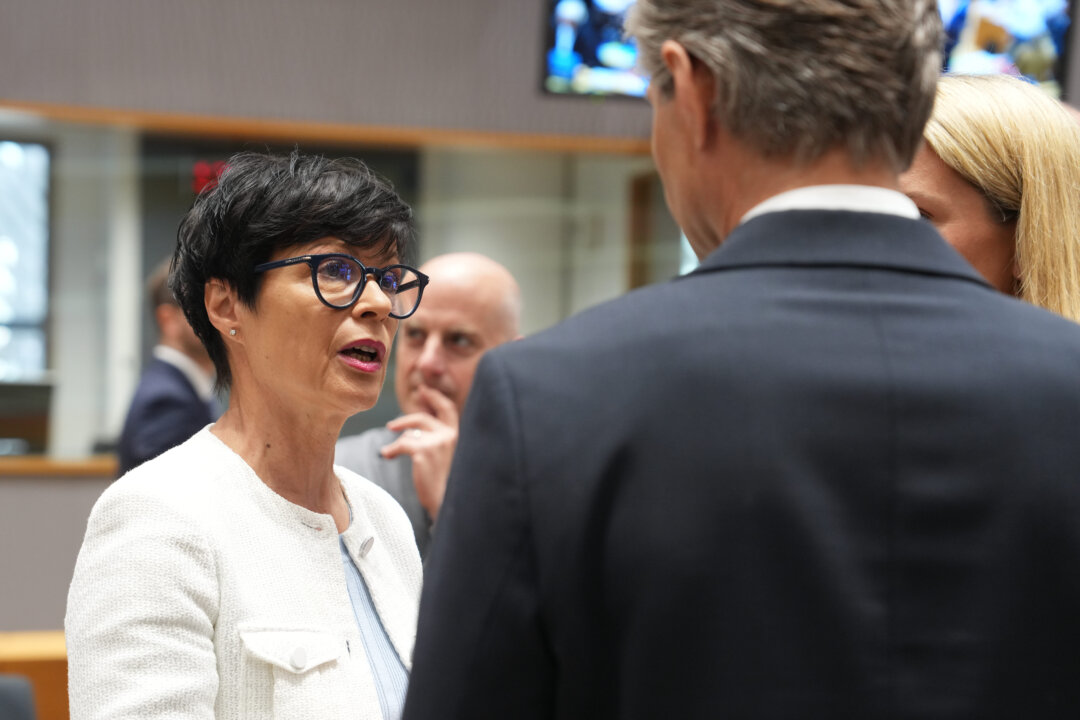
EU Expansion Moves Closer with Super Tuesday for Candidate Countries








Related Articles
EuropeThe Final wakeup call
Lula wins a miracle election in Brazil. Now comes the hard part: putting the country back on the right track
Three weeks ago, Brazilian President Luiz Inácio Lula da Silva’s political obituaries...
EuropeThe Final wakeup call
US midterms: what a new Congress could and could not change for Europe
US midterm elections traditionally attract fewer voters than presidential contests. But this...
EuropeThe Final wakeup call
Political power without balance leads to the erosion of democracy, what Montesquieu can teach modern-day France
KEY TAKEAWAYS Democratic erosion does not start by doing away with elections;...


China NewsEuropeGlobalUK NewsWorld News
UK Must Be Ready for War in 1,000 Days, Says British Defense Secretary
British Defense Secretary Wes Streeting has said the country must be ready...
