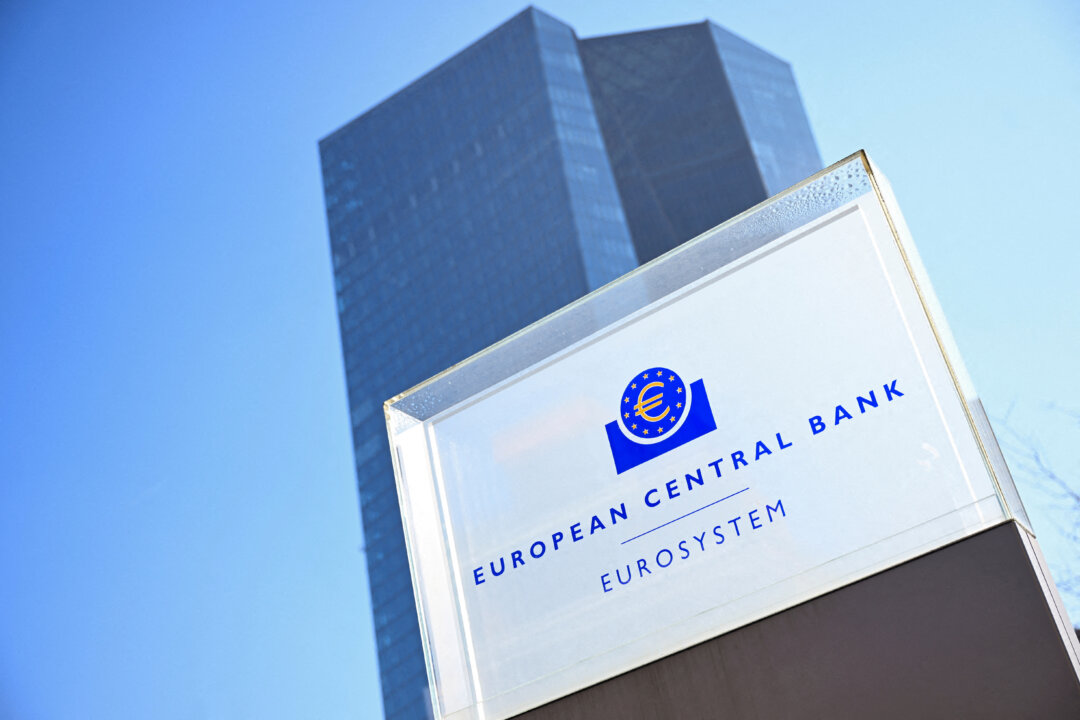
The European Central Bank headquarters in Frankfurt, Germany, on March 6, 2025. Jana Rodenbusch/ReutersThe European Central Bank (ECB) has told the euro area’s largest banks to submit cybersecurity defense plans by Oct. 31, warning that advances in artificial intelligence are making cyberattacks harder to stop.Chair of the ECB Supervisory Board Claudia Buch told the chief executives of banks under the ECB’s direct supervision in a July 7 letter that new AI systems are changing the cyber threat landscape.“Emerging AI models are capable of identifying software vulnerabilities and generating functioning exploits at unprecedented speed, compressing the timeline between vulnerability discovery and exploitation,” Buch said.She said banks should respond immediately by strengthening existing cyber defenses and addressing weaknesses that supervisors have already identified.The ECB’s warning follows similar concerns raised during the International Monetary Fund (IMF) and World Bank Spring Meetings in April, where financial leaders discussed how advanced AI could reshape cyber risks across the banking system.One focus of those discussions was Claude Mythos Preview, an experimental AI model developed by Anthropic. In an April 7 statement, the company said the model had identified “thousands of zero-day vulnerabilities … many of them critical” across major operating systems and web browsers.Anthropic said on April 16 that it was taking a cautious approach to deploying the Claude Mythos Preview model, adding that it would limit its release while testing additional cybersecurity safeguards on less capable AI systems first.Cyber Defense PlansThe ECB instructed euro zone banks to submit a detailed action plan by Oct. 31. The plans must explain how each bank will strengthen security controls, assign responsibilities, provide resources, and establish implementation timelines.Each institution should build the plan around its existing cybersecurity strategy while addressing both immediate threats and long-term resilience, the ECB said.The banks were asked to install security updates more quickly, improve cyber monitoring, and ensure that external technology providers can respond to growing cyber threats. The letter also aids internet-facing systems, cloud services, and third-party software, which were priority areas because they are more exposed to attacks.In this illustration, the Claude AI app is seen in the app store on a phone in New York City on Feb. 16, 2026. Michael M. Santiago/Getty ImagesBuch said bank leaders are responsible for protecting their institutions from evolving cyber threats and may need to spend more on technology and hire more staff.The ECB also reminded banks that the Digital Operational Resilience Act remains the main regulatory framework for managing technology risks and said unresolved supervisory findings could become more serious as AI accelerates cyber threats.Financial Cyber RisksThe ECB’s warning follows similar concerns raised by global financial leaders. The Bank of England Governor Andrew Bailey said in April that the rapid development of advanced AI marked a turning point for financial-sector cybersecurity.He said the main concern was whether advanced AI systems could rapidly identify vulnerabilities in other software that attackers could exploit.ECB President Christine Lagarde has also raised concerns, saying policymakers must carefully balance AI’s potential benefits against its risks.European Central Bank (ECB) President Christine Lagarde speaks to the media following the Governing Council’s monthly monetary policy meeting in Frankfurt, Germany, on March 6, 2025. Jana Rodenbusch/Reuters“What risks are we opening ourselves to with the artificial intelligence that is currently being developed?” she said in April.“Recent developments have alerted all of us about the latest software development and the risk that can be identified, for good or the risk that can be identified for bad.”Lagarde added that economists remain divided over AI’s long-term impact on productivity, employment, and financial stability.The ECB letter said the bank is coordinating with international organizations, including the G7, the Basel Committee on Banking Supervision, and the Financial Stability Board, to strengthen global cooperation against AI-enabled cyber threats.

ECB Tells Banks to Prepare for AI-Driven Cyber Threats









Related Articles

EuropeThe Final wakeup call
Lula wins a miracle election in Brazil. Now comes the hard part: putting the country back on the right track
Three weeks ago, Brazilian President Luiz Inácio Lula da Silva’s political obituaries...

EuropeThe Final wakeup call
US midterms: what a new Congress could and could not change for Europe
US midterm elections traditionally attract fewer voters than presidential contests. But this...
EuropeThe Final wakeup call
Political power without balance leads to the erosion of democracy, what Montesquieu can teach modern-day France
KEY TAKEAWAYS Democratic erosion does not start by doing away with elections;...



China Business & EconomyChina NewsChina Technology
China Tech Index Plunges More Than 40 Percent From July Peak
China’s technology-heavy STAR 50 index has fallen by more than 40 percent...
