Australia has one of the world’s most efficient and competitive banking systems, but only wealthier households can take advantage of the interest rate competition it provides.Jonathon Mott, head of banks research at investment banking firm Barrenjoey, made the above comments during a parliamentary inquiry into productivity.He said the housing finance market had undergone a dramatic transformation over the past 20 years, but one area of concern was the distribution of credit, with average households finding it harder to access bank finance amid current economic conditions.“Higher interest rates since 2023 have materially reduced borrowing capacity under the responsible lending criteria enforced by APRA (Australian Prudential Regulation Authority) and ASIC (Australian Securities and Investment Commission),” Mott told the Senate Committee on Productivity in Australia.“Combined with house price appreciation over this period, especially outside Sydney and Melbourne, borrowing has become increasingly skewed to the rich. To put this into perspective—based on numbers from Commonwealth Bank of Australia through to December 2025—twice as much money is now being lent to investors who earn more than $500,000 (US$350,000) per annum than to all households who earn less than $125,000 per annum to buy their own home.“Housing credit is freely available, but in a high inflation and high interest rate environment, buying a house has become increasingly a luxury good.”Committee Chair, Senator Andrew Bragg, called those figures “shocking” and asked whether Mott had a remedy for the problem.“Given the rapid growth in the population that Australia’s experiencing, we need to build more houses, we need to build more apartments, we need to turn over more. The velocity of housing needs to improve so that older Australians who are now in the ‘empty nester’ stage can move on and free up bedrooms for other Australians,” the Barrenjoey representative said.“The ability of first home buyers to enter the market comes down to housing affordability and availability. That’s the supply issue that we’ve all been talking about. The price of housing has become extremely difficult, which makes it harder for first home buyers to get into the market.”According to the latest ABS data, the mean price of residential dwellings rose to $1,111,100 in the March 2026 quarter, up from $1,002,500 in the March 2025 quarter and $959,300 in the March 2024 quarter.In April, it was revealed that more than 300,000 people had accessed the federal government’s 5 percent deposit scheme, amid concerns that the increased demand could be driving up the prices of entry-level homes.Banks Are Not at Fault: Barrenjoey RepresentativeThe fault was not with the banks, Mott said, as competition in the housing finance market has never been greater than it has been in the last few years.“If we also look at the availability of credit, based on ABS [Australian Bureau of Statistics] statistics for the quarter to the end of March, we can see that over the last three years, owner-occupied credit has risen 42 percent and investor finance is up by 85 percent.“Over the last year alone, the banks have lent $400 billion in new credit to the housing market, and housing credit growth is running at about 7½ percent per annum.”However, banks were not only facing increased competition but also external shocks that were dampening demand.“Since February—following three rate hikes, a war and the tax changes with the budget—housing lending has fallen quite sharply,” Mott said.Barrenjoey had recently published research based on data from Loan Market Group—Australia’s largest mortgage aggregator—which shows that home loan applications are down by around 23 percent since the start of February.Mott said mortgage applications from first-home buyers were down 19 percent, owner-occupier upgraders were down 15 percent, and investors were down 35 percent, all on a seasonally adjusted basis, with none of the decline attributable to banks’ underwriting standards.“The banks are lending very freely at the moment. They’re trying as best they can to lend. The problem is that housing affordability has become so stretched that a lot of young Australians, first home buyers, and people on median incomes are struggling to get into the housing market because of housing affordability,” he said.

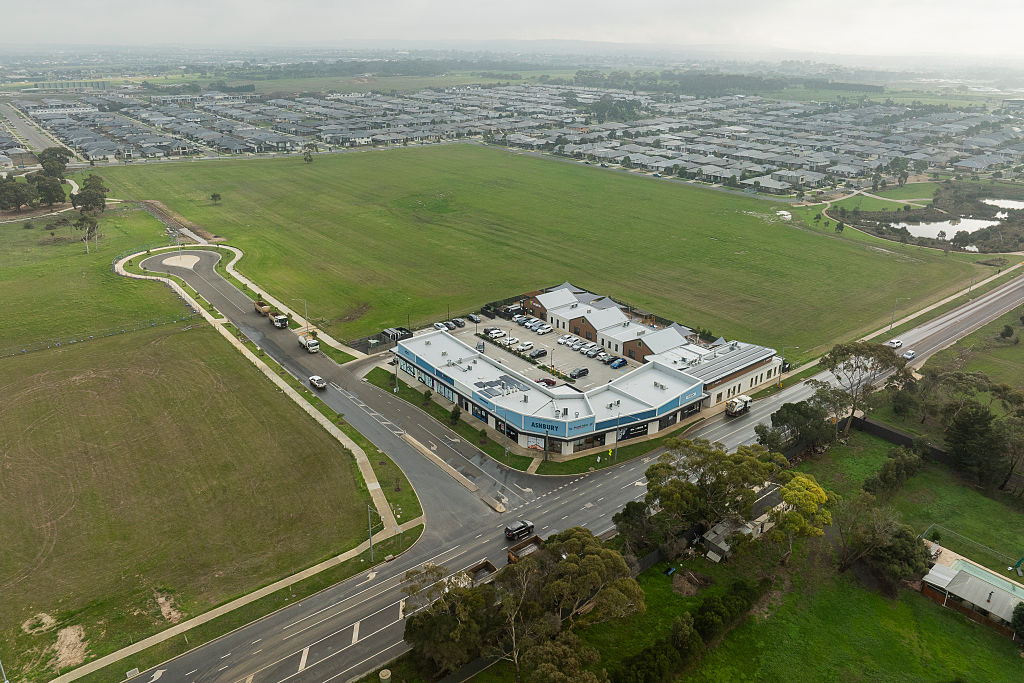
Earn $500,000 a Year: The New Reality of Getting a Home Loan in Australia









Related Articles
BusinessCompaniesEnergy
EQT to Buy Range Resources, Creating Largest US Natural Gas Producer
EQT Corp. has agreed to acquire rival Appalachian shale driller Range Resources...

BrightBusinessInvestingPersonal FinanceStocks
Wall Street Is Very NervousShould You Worry? Can You Repair Your Losses?
On Oct. 23, the Dow Jones Industrial Average fell 652.82 points, or...

BusinessMarkets
Nearly 3 in 10 New-Car Trade-Ins Are Underwater, Edmunds Finds
Almost three in 10 vehicles traded toward a new car are worth...



China NewsEuropeGlobalUK NewsWorld News
UK Must Be Ready for War in 1,000 Days, Says British Defense Secretary
British Defense Secretary Wes Streeting has said the country must be ready...
