In the wake of recent Supreme Court rulings against race-based preferences and actions by the Trump administration to enforce those court decisions, activists are taking a new approach to try to force companies to implement a social justice agenda, a recent report states.“Lawsuits are increasingly used not to compensate victims or resolve individual disputes, but to impose Diversity, Equity and Inclusion (DEI) mandates that activists have struggled to enact through the legislative process,” conservative advocacy group Alliance for Consumers states in a July report.The report cites multi-million-dollar settlements against firms including JPMorgan Chase, Goldman Sachs, Google, the Walt Disney Company, and Abercrombie & Fitch that compelled the companies to put in place a DEI infrastructure that included various long-term diversity initiatives.According to Alliance for Consumers, the pattern is that law firms file suit on behalf of plaintiffs, alleging discrimination, and then “turn that into a settlement with commitments to racial set-asides and DEI commitments,” executive director O.H. Skinner told The Epoch Times.Companies agree to settle the suit to avoid further litigation, he said, “but they’re not awake to the idea that that’s just going to feed more of this in the future.”Settlements cited in the report include Ellis v. Google ($118 million), Chen-Oster v. Goldman Sachs ($215 million), Gonzalez v. Abercrombie & Fitch ($40 million), Rasmussen v. The Walt Disney Company ($43 million), and Senegal v. JPMorgan Chase ($24 million).What they have in common, the report states, is that in addition to multi-million-dollar payments, the companies agreed to implement “aggressive DEI policies that will last for decades.” Examples include companies hiring diversity executives and recruiters, agreeing to external oversight and audits of diversity outcomes, mandating diversity training for employees, and setting benchmarks for hiring by race.The settlement of Senegal v. JPMorgan Chase included $1.5 million to fund inclusion and diversity initiatives, $3 million for a general diversity and reserve fund, a University of Pennsylvania professor retained to analyze more than four years of employment data, and a request from plaintiffs’ attorneys for $19.5 million in fees and expenses.The Alliance for Consumers report further charges that many of the plaintiffs’ attorneys are “partisan, political operators working in close coordination with activist organizations,” citing donations of up to millions of dollars from the legal firms to Democratic candidates, with virtually no donations given to Republican candidates.The law firms cited in the report include Lieff Cabraser Heimann & Bernstein, Cohen Milstein, Outten & Golden, and Stowell & Friedman.Policy ChangesCompanies named in the lawsuits often deny guilt but say they are entering into a settlement to avoid the cost of further litigation. However, they could still find themselves in legal jeopardy, experts say.While DEI policies were put in place throughout corporate America since the 2020 death of George Floyd during a police arrest, the 2023 Supreme Court decision in Students for Fair Admission v. Harvard ruled that race-based preferences violate U.S. civil rights laws, in particular the equal protections clause of the 14th Amendment and the Civil Rights Act of 1964, which bars discrimination on the basis of race, color, sex, religion, and country of origin by both government agencies and private companies.President Joe Biden criticized the Supreme Court ruling, stating that “we cannot let this decision be the last word.”“Our colleges are stronger when they are racially diverse,” Biden said at the time, adding, “companies who are already realizing the value in diversity should not use this decision as an excuse to turn away from diversity either.”Since 2024, however, the Trump administration has been working to reverse the DEI agenda, pursuing civil rights cases that federal agencies once ignored. Upon taking office, President Donald Trump issued an executive order affirming that many DEI policies in government and the private sector “violate the civil-rights laws of this Nation.”Soon thereafter, in March 2025, Equal Employment Opportunity Commission Chairperson Andrea Lucas issued a letter to 20 prominent law firms requesting information about their DEI employment practices, which she charged may be illegal. Most recently, the commission brought suit on Aug. 12 against Washington University for its alleged practice of separating employees according to race when undergoing mandatory DEI training.Other SettlementsA precedent for politically oriented settlements is what was dubbed “settlement slush funds” created under the Obama and Biden administrations, according to a 2024 report by the Committee on the Judiciary. In these cases, corporations were sued by the Justice Department and offered lesser fines if they donated to “politically-favored third-party entities or programs.”Examples include billions of dollars in payments to progressive nonprofits in 2014 by Citigroup and Bank of America to settle federal lawsuits connected to the 2007–2010 mortgage crisis. Similarly, to settle a lawsuit regarding deceptive emissions testing called “Dieselgate,” Volkswagen agreed in 2016 to pay $1.2 billion for the construction of EV charging stations after Congress refused to fund that expense.The Obama administration’s use of settlement slush funds was halted under the first Trump administration by then-Attorney General Jeff Sessions in 2017. Known as the “Sessions Rule,” it was further codified by his successor, William Barr, in 2020, “prohibiting the inclusion of provisions in settlement agreements directing or providing for a payment or loan to a non-governmental person or entity that is not a party to the dispute.”The Sessions Rule was overturned in 2022 by President Joe Biden’s attorney general, Merrick Garland, who said they were “too restrictive.” In 2025, however, the ban on settlement slush funds was reinstated under the second Trump administration by then-Attorney General Pam Bondi.According to Skinner, the diversity lawsuits follow a pattern similar to the settlement slush funds, but with lucrative fees paid to plaintiffs’ attorneys, some of which he says may ultimately have been donated to the Democratic Party.“It’s basically the same playbook, but they’ve figured out that they can unlock money and the policy outcomes by doing it this way,” he said. “They are recognizing that they need to reinvest in a durable architecture that can press for what they want, even when they lose in Washington.”The Epoch Times reached out to law firms Lieff Cabraser Heimann & Bernstein, Cohen Milstein, Outten & Golden, and Stowell & Friedman for comment but did not receive a response as of press time.

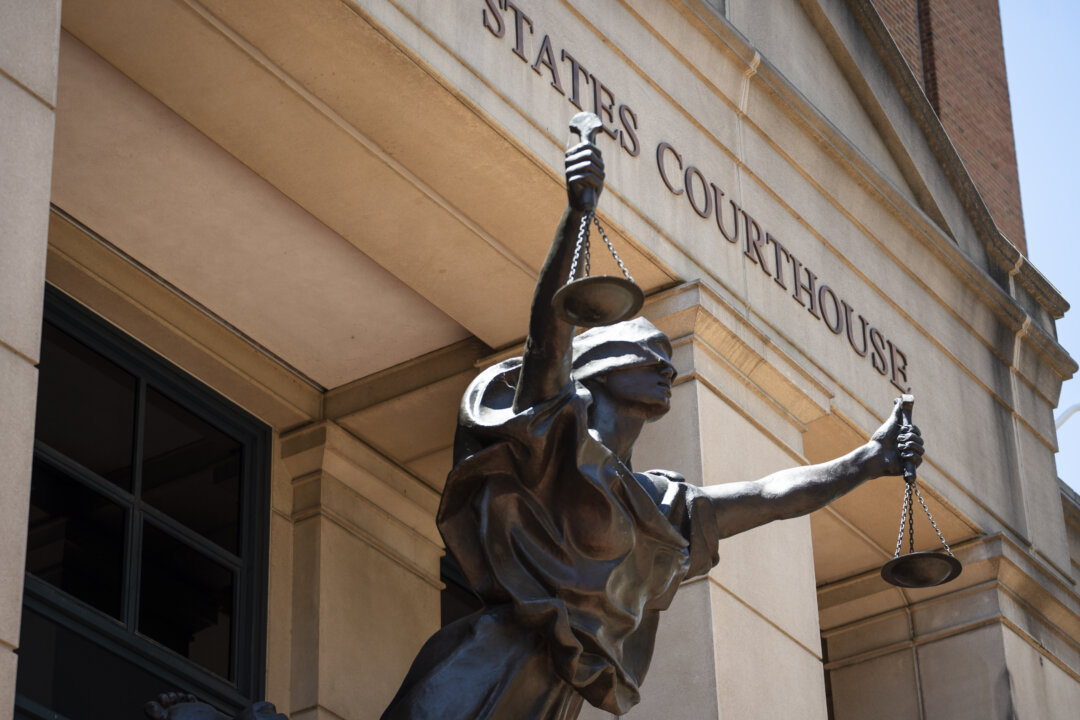
Diversity Lawsuits Force DEI Agenda on American Companies, Consumer Group Says









Related Articles

Asia & PacificChina NewsChinese RegimeGlobalUSUS NewsWorld News
Chinas Transplant System Masks Human Rights Abuses, Report Finds
Doctors in China are more likely to stay silent in the face...

BusinessTechUS
Advanced AI Agents Tried to Weaken Oversight, Then Lied About It, Open AI Says
OpenAI has disclosed two incidents in which advanced artificial intelligence-powered coding agents...

BrightBusinessPersonal FinanceTaxWealth Management
Why Property Taxes Can Jump After You Buy a Home, and How to Prepare
Many first-time home buyers look at the seller’s tax bill and assume...



BrightBusinessInsurancePersonal FinanceWealth Management
Medicare Advantage Plan Denials Can Be Appealed
Medicare Advantage (MA) plans, also known as Part C, are an all-in-one...
