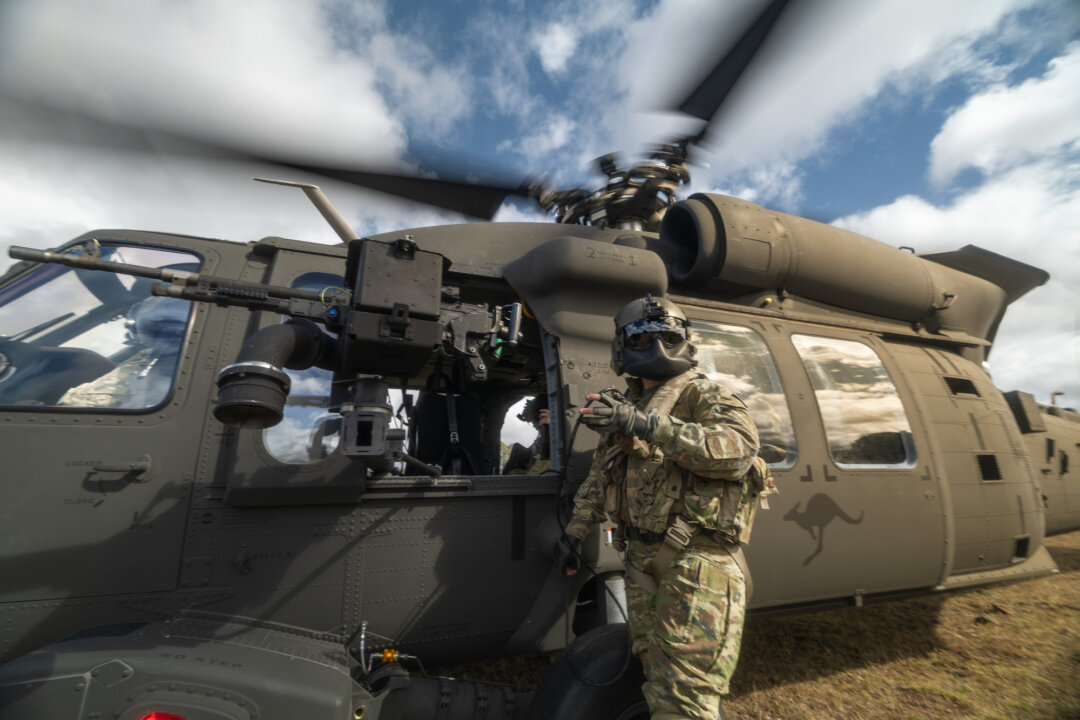
Australian Army soldiers from the 2nd Combat Engineer Regiment embark an Australian Army UH-60M Black Hawk from the 16th Aviation Brigade during a Land Training Activity in Oakey, Queensland. Courtesy of the Department of DefenceAustralia could build a larger and better-equipped military while saving taxpayers up to $160 billion by abandoning its preference for highly customised weapons and domestic shipbuilding in favour of proven overseas equipment, a new report says.The Centre for Independent Studies has challenged decades of defence procurement policy, arguing Australia’s acquisition system has become increasingly expensive and slow.Governments and military planners have consistently sought the most sophisticated equipment, often demanding unique modifications and local production even when comparable systems are available overseas.The report, Spending Better for a Stronger Defence (pdf), estimates reforms could significantly reduce the cost of planned acquisitions and deliver capability years earlier.Author Victor Abramowicz, a former Defence official with 13 years’ experience in strategic policy and capability development, says savings should be reinvested to expand the Australian Defence Force, develop new technologies, and boost domestic production of guided weapons and munitions.Australia faces its most dangerous strategic environment since World War II, but is not getting maximum value from a defence budget expected to almost double over the next decade—from about $60 billion to $112 billion annually by 2035-36, with $425 billion earmarked for new equipment.Major projects have suffered chronic delays and cost overruns. An Australian National Audit Office review of 21 projects found they were collectively more than 33 years behind schedule.“The question is not whether Australia should spend more or less on defence,” Abramowicz writes. “The question is whether taxpayers are receiving the maximum possible defence capability for every dollar spent.”The report is particularly critical of naval shipbuilding, citing the AUKUS nuclear-powered submarine program—forecast to cost more than $48 billion by 2035 and $360 billion by 2055—as an example of pursuing maximum capability regardless of cost and schedule.Purchasing submarines directly from U.S. production lines could save around $140 billion while reducing schedule risk, it argues.It also highlights that Australian-built warships typically cost 30 to 40 percent more than comparable overseas vessels, with government support for naval construction reaching up to $30 million per job.Among its recommendations are stronger independent oversight of capability requirements, a value-for-money review of the naval shipbuilding program, and focusing sovereign industry efforts on areas like equipment sustainment, research, and munitions production.The analysis comes as the Albanese government boosts defence spending, with Treasurer Jim Chalmers announcing a $53 billion boost to defence spending over the next decade, in addition to other acquisitions.The long-term aim is for defence spending to reach 3 percent of GDP, in line with the expectations of the Trump administration.

Defence Could Field More Assets While Saving $160 Billion, Think Tank Says









Related Articles

China NewsEuropeGlobalUK NewsWorld News
UK Must Be Ready for War in 1,000 Days, Says British Defense Secretary
British Defense Secretary Wes Streeting has said the country must be ready...
China NewsEuropeGlobalUK NewsUK Top NewsWorld News
UK Prime Minister Says He Agrees With Principle of Migration Reform
British Prime Minister Andy Burnham said on Oct. 26 that he agreed...

China NewsEuropeGlobalWorld News
Serbian President Concedes Election Defeat to Student-Led Coalition
Serbian President Aleksandar Vucic has conceded defeat in the Oct. 25 election...


Asia & PacificChina NewsEuropeInternational RelationsNational SecurityPolicies & ImpactsUSUS NewsUS-China RelationsWorld News
Japan Defense Academy Chief Calls for 3 Red Lines in Competition With China
Japan’s former top uniformed military officer has called for establishing three “red...
