
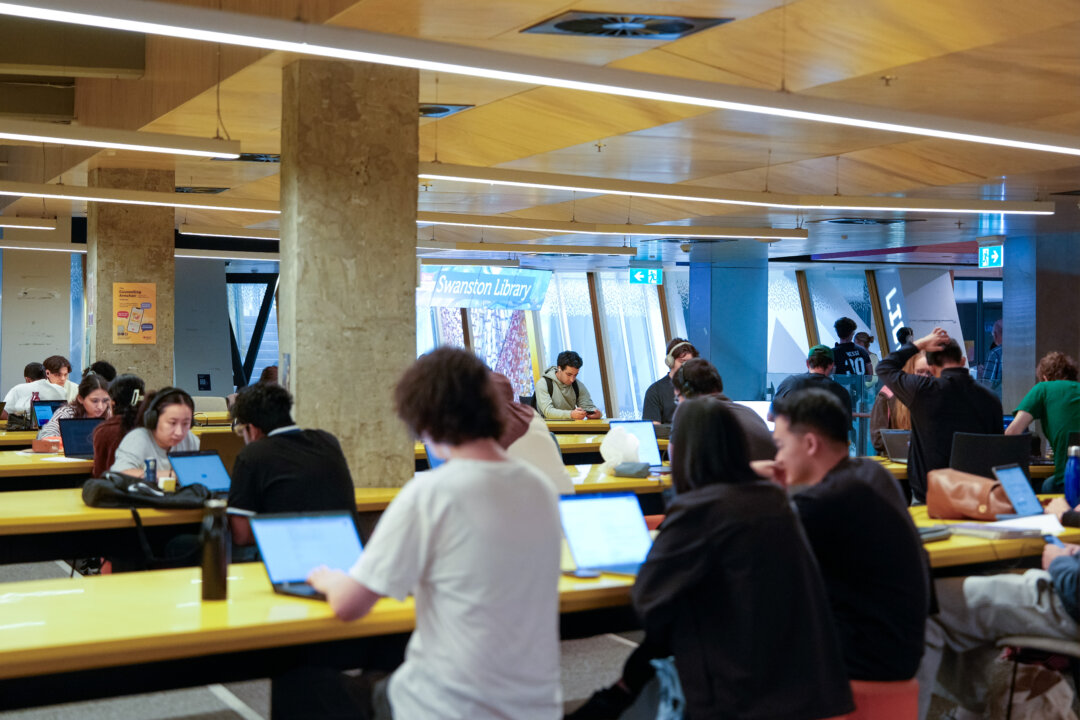
‘We hear the most distressing stories about the impact of overwork, and that has an impact … on our students who are also struggling,’ said NTEU President.
A tertiary education union has revealed that the sector lost around 35,000 jobs during the COVID-19 pandemic.
At a recent parliamentary inquiry hearing, Alison Barnes, president of the National Tertiary Education Union (NTEU), warned about a “well-being crisis” in the sector, caused by the recent wave of job losses.
“We also lost between 30,000 and 35,000 jobs during COVID. This has had a terrible impact on our universities,” she told the Education and Employment Legislation Committee.
“We see staff who are stretched and at breaking point.”
“Anecdotally, we hear the most distressing stories about the impact of overwork, and that has an impact … on our students who are also struggling.”
The president also noted that the job losses resulted in the abolishment of support services for students, which in turn led to a range of problems with learning or teaching and well-being.
Related Stories

“We need those people in our universities teaching our students, [and] providing that pastoral care,” Barnes said.
Meanwhile, Sarah Roberts, the Victorian Division Secretary of the NTEU, said there had been a dramatic increase in student numbers in the past 25 years.
While universities’ staffing also grew over time, she noted that it failed to keep up with the surge in students.
And with the decline in federal funding for tertiary education in the past years, Roberts said university staff were burdened with their workloads.
Enrolment Numbers
According to government data, total Australian university enrolments reached the one million milestone in 2007.
Fast forward to the current decade, total university enrolments peaked at 1.62 million in 2020.
While the number of students dropped during the COVID-19 pandemic, it regained momentum after the border closure was lifted and hit the 1.6 million mark again in 2023.
Overseas students accounted for nearly one-third (524,000) of total university enrolments in 2023, up from 449,000 in 2022.
Wage Theft
Barnes also raised the issue that over two-thirds, or 68 percent, of university staff were employed on an insecure basis, which subjected them to wage theft.
“Systemic wage theft totals $271 million (US$164 million),” she said.
“But this, we argue, is only the tip of the iceberg because we know universities have set aside another $168 million.”
Amid the prevalence of wage theft in the sector, Barnes questioned the high salaries enjoyed by university management and leadership, including the vice-chancellors.
“We’ve had over 150,000 people who work across our sector have their wages stolen,” she said.
“I have yet to encounter a vice-chancellor who’s had their wages stolen.”
“It’s not just vice-chancellor salaries. Look at those 306 people or university executives who earn more than state premiers.”
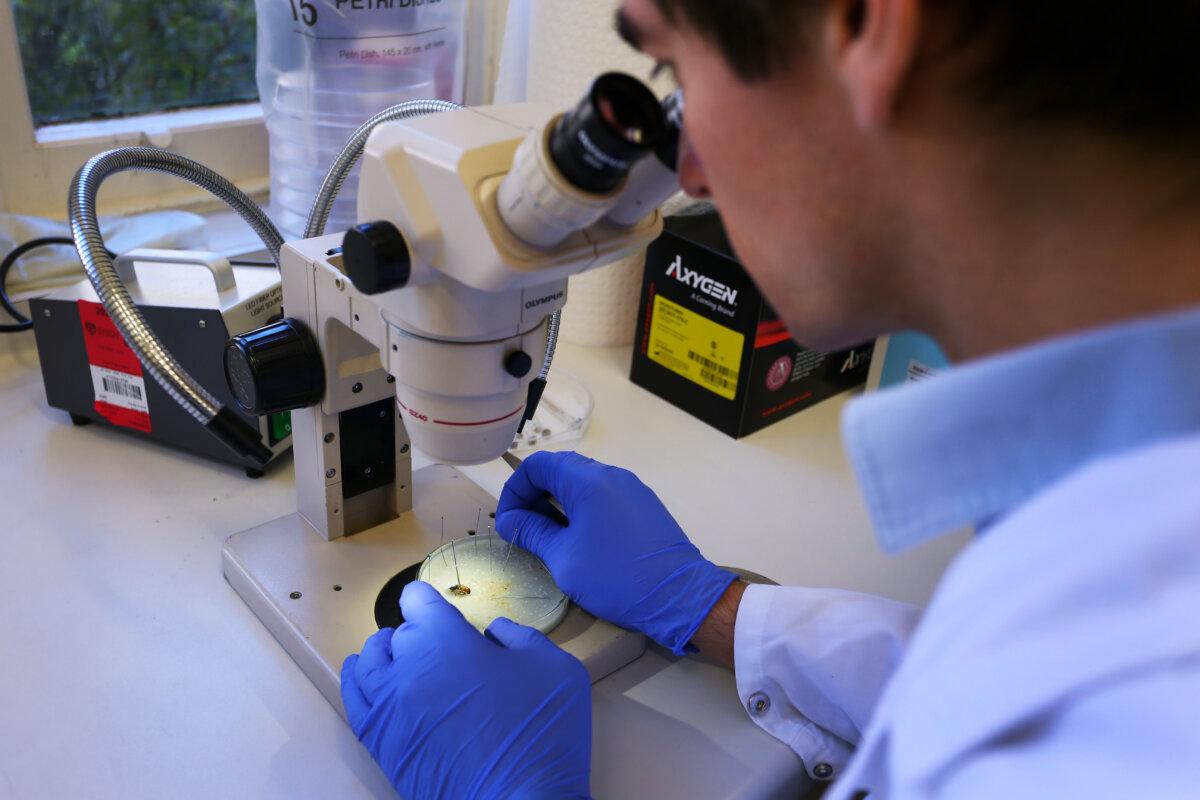
A PhD candidate conducts an experiment in Sydney, Australia, on May 18, 2021. Lisa Maree Williams/Getty Images
Stolen Salaries Recovered
Meanwhile, the Office of Fair Work Ombudsman told the Committee that it had recovered $180.9 million in stolen salaries for 99,000 employees as of Feb. 28.
“Our investigations have largely concerned casual professional and academic staff, and have largely included unpaid work–unpaid marking activities, lecture, tutorial attendance, and other student interactions, as well as the application of incorrect classifications, unpaid entitlements and the improper use of piece rates,” said Fair Work Ombudsman Anna Booth.
She also noted that universities’ trends related to wage theft included high engagement of casual academic staff, poor governance and management oversight practices, and a lack of centralised human resource functions.
“[This] resulted in entitlements being inconsistently applied across faculties and schools, coupled with human resource and pay-related issues commonly dealt with by academic managers who lack appropriate expertise and lack of investment in payroll and time recording systems,” she said.








Chinese Scientists Flagged Glacial Flood Danger One Year Before Nepal Catastrophe
More than a year before the catastrophic flash flood devastated the China–Nepal...
Iceland Focuses on Security Partnerships After Voters Reject Opening EU Membership Talks
Icelandic Minister for Foreign Affairs Thorgerdur Katrin Gunnarsdottir attends a press conference...
Italy, Spain Extend Tit-for-Tat Border Curbs After Ceuta Illegal Immigrant Crisis
Immigrants gather on a hill as they attempt crossing from the border...


Vaccine Maker Halts Trial on mRNA Cancer Shot
A pharmacist administers the Pfizer-BioNTech vaccine in Los Angeles, Calif., on October...
