Tuition hikes at public universities across China highlight mounting fiscal pressure on local governments, with experts warning that more education costs are being shifted onto households.With nearly two months remaining before Chinese universities begin their fall semester in September, public colleges across the country are announcing higher tuition rates for incoming students, particularly in medicine, engineering, and science, as well as in the country’s elite college programs, according to Chinese media outlet iFeng.The increases, which exceed 30 percent for some majors, come as China’s local governments are struggling with mounting fiscal pressures and colleges face rising operating costs, forcing schools to rely more heavily on tuition revenue.China’s top Fudan University recently announced that beginning with the 2026 academic year, annual undergraduate tuition for its disciplines will increase to 7,150 yuan ($1,053) for humanities majors, 7,700 yuan ($1,134) for science and engineering, and 8,140 yuan ($1,199) for medical programs, according to state-censored news portal Sohu. Shanghai Jiao Tong University has adopted nearly identical rates in its 2026 admissions guidelines.According to a previous notice from Sun Yat-sen University’s Sino-French Institute of Nuclear Engineering and Technology, undergraduate tuition for nuclear engineering majors will remain 45,000 yuan ($6,628) for students entering in 2026 and 2027 before rising to 65,000 yuan ($9,574) for the 2028 class.The tuition increases are not limited to China’s wealthiest cities.Other provinces have also approved new fee schedules for public universities. For example, in Henan Province, annual tuition for science and engineering majors is increasing by about 35 percent. Some specialized programs have seen much steeper increases.Fiscal Pressures Reaching UniversitiesSeveral insiders in China’s education system spoke to The Epoch Times on condition of anonymity out of fear of reprisal.A former university administrator in Sichuan Province told the publication that Chinese universities generally depend on three major revenue sources—government appropriations, tuition income, and private donations.For most public universities, however, donations contribute relatively little, leaving schools largely dependent on government funding and student tuition.“If student enrollment hasn’t declined and tuition wasn’t previously reduced, then the biggest variable affecting university finances is government funding,” the former administrator said.“Some local governments are already under severe financial strain. In many places, professors’ performance bonuses have stopped being paid. Governments have less money available for universities, so schools shift part of that pressure onto tuition, leaving students’ families to absorb the additional costs.”A Beijing-based scholar who studies China’s education policy told The Epoch Times the underlying cause is a reduction in the regime’s education funding available to universities.He said local governments’ worsening fiscal conditions have forced cuts to education spending.“Last year’s education budget was roughly 4.7 percent lower than the amount actually spent in 2024,” the scholar said. “Student enrollment hasn’t fallen, but government funding has. That breaks the long-standing expectation that universities could rely on steadily increasing state funding.”He expects tuition to continue rising throughout the remainder of the decade.“I don’t think tuition will come down before 2030,” the scholar said. “It will likely continue increasing every year. Around 2030, China is expected to reach a peak in both college entrance exam candidates and university graduates. After that, the number of students may decline because of lower birth rates, but I can’t say tuition will necessarily fall.”A former high school teacher in China told The Epoch Times that wealthier families in big cities may be able to absorb additional tuition fees, but the increases could prove much more difficult for low-income and rural households.He said that as local governments struggle financially and universities face higher operating expenses, the tuition increases effectively transfer more of the cost of higher education onto ordinary Chinese households.“The government shouldn’t pass its financial problems on to ordinary families,” he said. “Beyond tuition, students also have to pay for housing, food, and transportation. Many rural families earn very little. These higher costs could force parents and students to reconsider which universities or majors they choose.”Xue Xiaoguang contributed to this report.

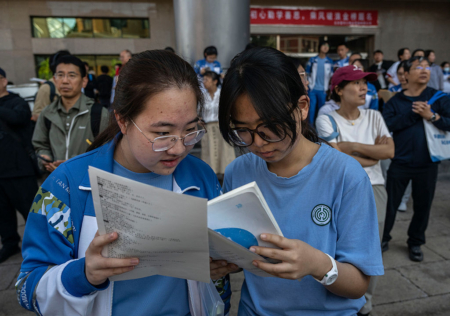
Chinas Universities Raise Tuition as Local Government Debt Pressures Mount









Related Articles
China Business & EconomyChina NewsChina Technology
China Tech Index Plunges More Than 40 Percent From July Peak
China’s technology-heavy STAR 50 index has fallen by more than 40 percent...
China Military NewsChina NewsChinese RegimeInside CCP OfficialdomSpecial TopicsZhang Youxia
Xi Opens CCP Plenum Amid Sweeping Purges, Record-Low Attendance Forecast
Chinese Communist Party leader Xi Jinping opened a four-day meeting of senior...

China Business & EconomyChina NewsChinese RegimeFinance & Business TiesInside CCP OfficialdomSpecial Topics
Chinas Economic Woes Deepen as CCP Plenum Focuses on Political Control
The Chinese Communist Party (CCP) opened a four-day leadership meeting in Beijing...



China NewsEuropeGlobalUK NewsWorld News
UK Must Be Ready for War in 1,000 Days, Says British Defense Secretary
British Defense Secretary Wes Streeting has said the country must be ready...
