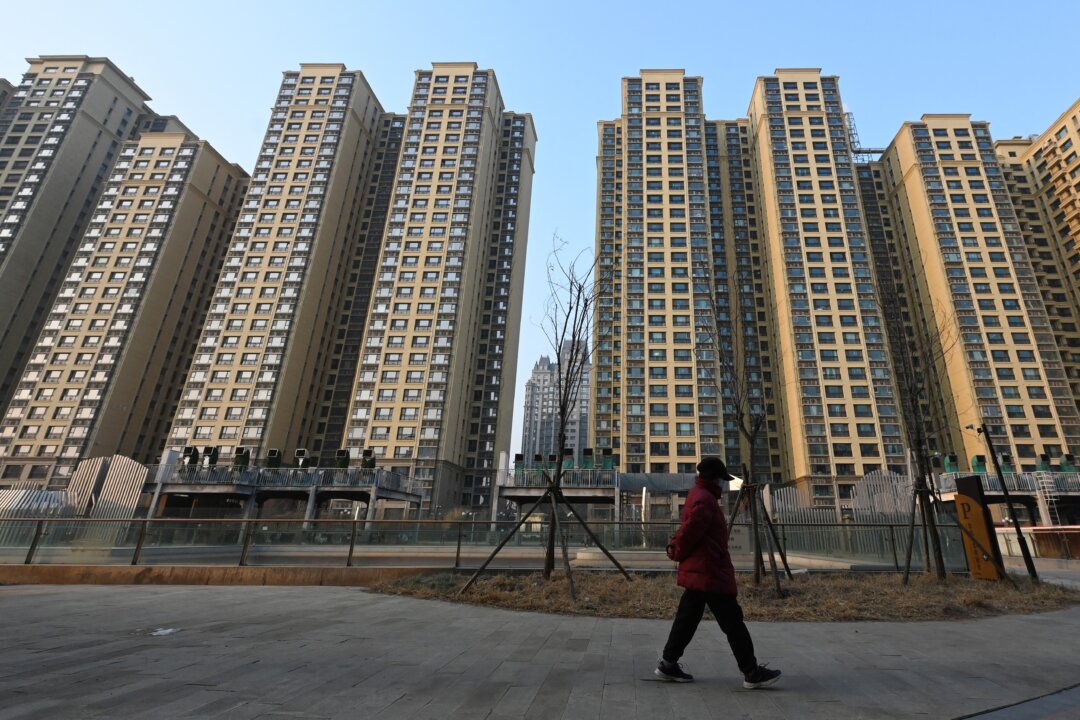
CommentaryRegular readers of this column will hardly be surprised by the disappointing economic picture emerging in China. Aside from exports, just about every other aspect of the economy—real estate, the consumer, capital investment—has shown pronounced weakness.And given the growing hostilities toward China trade in the United States, Europe, and even the so-called global south, the durability of this export strength comes into question.The latest reports from Beijing show that retail sales in July were barely 0.6 percent above year-ago levels. Even at China’s negligible rate of consumer price inflation, the figure announces no growth over the past 12 months, a far cry from the halcyon days of 10, 20 years ago.Consumers’ reluctance to spend is, of course, an old story. Slow-to-no consumer spending growth has been a long-standing fixture in China’s economy, and the reasons are clear. Living costs have risen faster than incomes, and job security has deteriorated, first with the interruptions to work schedules imposed by the pandemic’s lockdowns and quarantines, and then for years afterward under Beijing’s misplaced zero-COVID policies.With the economy’s pronounced slowdown, older, more secure employment patterns have struggled to return since. The sense of insecurity is reinforced by firm evidence that now some 40 percent of urban workers in China are involved in what Beijing calls “flexible employment,” read gig and part-time work.The ongoing property crisis has also had its ill effects on the economy. Its immediate effects center on the construction sector. Property investment of all sorts has dropped by 19 percent in the past year alone. Construction activity, already down since 2021 when the crisis began, fell another 5 percent or so during the first six months of this year from the same period in 2025.Home purchases during the 12 months through June were off by some 17 percent. But the effects do not end in construction. Possibly even more significant for China’s economy, residential real estate values have dropped by some 25 percent since the crisis began, cutting deeply into household net worth and, accordingly, into the consumers’ willingness to spend.With consumer spending and real estate on the ropes, it is hardly shocking to read that investments in fixed assets—factories, equipment, technology, and the like—have declined. Levels of such spending from January through July this year are 6.7 percent below levels over the same period in 2025.What is even more telling is that this overall decline has occurred even as Beijing has channeled billions of yuan into the industries favored by its “Made in China 2025” program—including electric vehicles, quantum computing, and advanced semiconductors. Though the data are hard to parse, the implication is that the rest of Chinese industry has cut back even more dramatically than is implied in the impressively bad aggregate number.What is more, the technology spending so favored by Beijing is proving to be far from an unalloyed positive. The buildup has raised Chinese productive capacity in these favored areas far beyond what the domestic economy needs and accordingly has made China more export-dependent than ever. So far, the exports have buoyed the overall economy, growing some 24 percent over the 12 months ended this past July, but there is reason to question the staying power of this trend.In one respect, this export growth is remarkable, since it has occurred even as Chinese exports to the United States have succumbed to the Trump administration’s tariffs and other restrictions, falling by some 30 percent in 2025. This year, they are running some 16 percent below 2025 levels.To make up for the relative loss of American markets, Beijing pushed into Europe and what is commonly referred to as the global south. While that push has clearly sustained strong momentum so far, the new targets for Chinese exports have begun to resist.The European Union has imposed tariffs, as has Mexico, while Vietnam, Malaysia, and Indonesia, among others, have complained of the Chinese wave and are investigating ways to limit the flow of Chinese goods.As this widespread resistance unfolds, it will clearly jeopardize the continued export growth, and the one growth engine China has going for it. To conclude from this that China’s economy is collapsing—as some more inflammatory commentators have suggested—goes too far, but it is very easy to conclude that China’s economic prospects are far from bright.Views expressed in this article are opinions of the author and do not necessarily reflect the views of The Epoch Times.










Related Articles

BusinessCompaniesEnergy
EQT to Buy Range Resources, Creating Largest US Natural Gas Producer
EQT Corp. has agreed to acquire rival Appalachian shale driller Range Resources...

BrightBusinessInvestingPersonal FinanceStocks
Wall Street Is Very NervousShould You Worry? Can You Repair Your Losses?
On Oct. 23, the Dow Jones Industrial Average fell 652.82 points, or...
BusinessMarkets
Nearly 3 in 10 New-Car Trade-Ins Are Underwater, Edmunds Finds
Almost three in 10 vehicles traded toward a new car are worth...



BusinessTechUS
Advanced AI Agents Tried to Weaken Oversight, Then Lied About It, Open AI Says
OpenAI has disclosed two incidents in which advanced artificial intelligence-powered coding agents...
