China is extending its control and influence beyond its borders through “fear, censorship, and coercion,” according to a new report by the Congressional-Executive Commission on China.Released on June 4, the report documents cases of the Chinese Communist Party’s (CCP’s) transnational repression and malign influence operations in 2025. It notes that what were once “scattered incidents” of China’s overseas coercion and influence efforts have become a “growing global challenge to human rights, democratic freedoms, institutional independence, and the ability of people outside China to speak and act without fear of retaliation.”Through these efforts, the CCP is trying to control the global narratives about itself and its policies.“The CCP seeks to control public narratives both at home and abroad, with the aim of ensuring the stability of the government and its own political survival,” the report states.The report was released in conjunction with a CECC hearing on Thursday examining China’s transnational repression and state-level responses.The Chinese regime’s targets have included Hong Kongers, Uyghurs, Tibetans, and former officials of the Chinese regime. Its tactics have ranged from physical assaults and AI-generated sexual harassment campaigns to threats against family members in China, pressure to return to the country, censorship, and lawfare.One of the sexual harassment cases involved Carmen Lau, a former district councilor in Hong Kong and current senior international advocacy associate with the Washington-based Hong Kong Democracy Council. Lau is currently on the Hong Kong Police Force’s wanted list for alleged national security offences.According to the report, unknown individuals sent a letter to Lau’s neighbors in the United Kingdom that included deepfake images falsely portraying her as a sex worker.Lau told the commission that the sexual harassment was “definitely gender-based,” noting that the wife of a fellow former Hong Kong politician had also been targeted similarly, along with other women in Tibetan and Uyghur communities.As an example of China’s tactics to subvert international organizations, the report named the Inter-Parliamentary Alliance on China, a global network of nearly 300 lawmakers from more than 40 legislatures whose mission is to address challenges posed by Beijing.In January, IPAC Executive Director Luke de Pulford told the commission he believed Chinese interference may have been responsible for the low attendance at the alliance’s summit at the European Parliament in November last year, where only two of 12 invited African delegates appeared.At the IPAC summit, Taiwanese Vice President Hsiao Bi-khim delivered a speech to the European Parliament, which prompted criticism from the Chinese Mission to the European Union. The CCP considers democratically governed Taiwan a Chinese province and rejects any words or actions that could be seen as legitimizing Taiwanese sovereignty.China’s interference also hindered IPAC’s expansion in parts of Africa, de Pulford told the commission. He said one of the alliance’s co-chairs from Zambia resigned after the summit due to Beijing’s pressure.The CCP has also been engaging in “frivolous lawsuits in [foreign] courts to impose financial and psychological costs on dissidents,” the report states, quoting a legal expert. One such case involved Ma Ju, a Hui Muslim, who was sued by a Chinese state-owned company in a U.S. court in 2023, alleging he owed $12.5 million. According to the report, Ma said the lawsuit was based on “fabricated facts” and was intended to “silence him and deplete his finances.”“Ma’s case illustrates the PRC’s extraterritorial abuse of U.S. courts to burden dissidents with financial penalties, as well as U.S. courts’ current lack of ability to counter such threats,” the report reads, referring to China’s official name, the People’s Republic of China.To illustrate China’s coercion tactics, the report points to Anna Kwok, a U.S.-based pro-democracy activist whose father, Kwok Yin-sang, was sentenced to eight months in prison for a national security offense in Hong Kong earlier this year.In her written testimony for the hearing, the younger Kwok urged Congress to pass necessary legislation.“We are at the tipping point of history: if the United States does not push back, the People’s Republic of China will further push the bottom line to intensify its transnational repression campaigns, more Americans can be silenced via intimidation, economic coercion, and most devastatingly, hostage taking,” the younger Kwok wrote.State ResponsesTexas, Arizona, Utah, and Nebraska have each enacted laws aimed at combating transnational repression, according to a document from the commission.Before Texas enacted its legislation, Gov. Greg Abbott signed an executive order in 2024 addressing the same concern.Other witnesses scheduled to appear at the hearing are Stephen Cox, counsel to Alaska Gov. Mike Dunleavy, and Nebraska state Sen. Eliot Bostar.Bostar noted in his prepared testimony that his state Legislature has passed several laws addressing challenges posed by Beijing, including transnational repression, critical infrastructure security, and land ownership. He also said that during the process, state officials were “contacted by the CCP.”“The People’s Republic of China is a threat to every state and every community in our country,” Bostar wrote.Nebraska Gov. Jim Pillen signed LB644 into law in June 2025. The legislation, introduced by Bostar at the governor’s request, created the Foreign Adversary and Terrorist Agent Registration Act and the Crush Transnational Repression in Nebraska Act. Together, the acts establish new registration requirements for agents of foreign adversaries, increasing transparency and addressing foreign influence and transnational repression.Specifically, the Crush Transnational Repression in Nebraska Act makes it a felony for agents of foreign adversaries to conduct law-enforcement activities in Nebraska, including operating secretive Chinese police stations, according to Bostar.The presence of a secretive Chinese police station in Manhattan came to light in April 2023, after federal prosecutors charged two Chinese men for running the facility in coordination with the Chinese regime’s Ministry of Public Security. One of the defendants, Chen Jinping, pleaded guilty in December 2024 to acting as an illegal Chinese agent.Cox said in his written testimony that Alaska has “not seen significant reported incidents” of transnational repression, but warned that such cases may not be easy to identify.“It may look like harassment. It may look like unusual pressure on a student. It may look like intimidation of a family after someone attends a protest or speaks publicly. It may involve digital surveillance, pressure campaigns, coercive phone calls, or threats directed at relatives overseas,” Cox wrote.Cox recommended educating law enforcement, training personnel to recognize such cases, and coordinating with federal authorities when they occur.He referenced the Trump administration’s 2020 decision to close the Chinese Consulate in Houston, made in response to espionage activities linked to the facility, saying it was evident China “was operating on American soil, targeting American institutions, businesses, and citizens.”As a former Alaska Attorney General, Cox added he would continue to work with the state’s new acting Attorney General, Cori Mills, on what he called counter-China initiatives.“Many of the CCP’s threats to Americans increasingly manifest themselves through areas traditionally governed by the states—public safety, consumer protection, licensing, and infrastructure,” Cox wrote.In line with those concerns, Alaska state Sen. Shelly Hughes reintroduced SB139 in April 2025, a bill that would prevent foreign adversaries from acquiring or leasing land within 100 miles of any military installation in the state.The commission’s document also highlights state laws on transplant tourism.Arizona, Arkansas, Idaho, Tennessee, Texas, and Utah have laws in place to combat the Chinese regime’s practice of forcibly harvesting organs from prisoners of conscience by restricting or banning the use of public funds or insurance coverage for organ transplants connected to China.In March, The Heritage Foundation released a report noting that Republican and Democratic states are sharply split in their approaches to countering the Chinese regime’s influence at the state level in the United States. The report found that Arkansas and Florida led the nation with eight China-related laws each.Eva Fu contributed to this report.

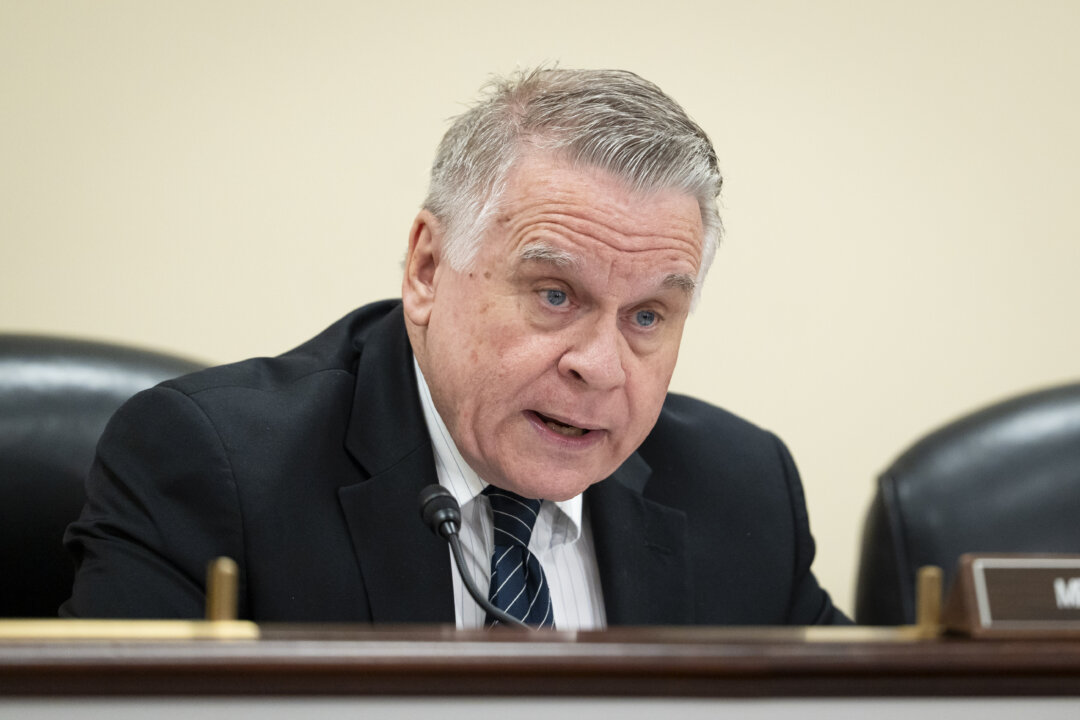
China Uses Fear and Coercion for Transnational Repression, Congressional Report Says









Related Articles
China Business & EconomyChina NewsChina Technology
China Tech Index Plunges More Than 40 Percent From July Peak
China’s technology-heavy STAR 50 index has fallen by more than 40 percent...
China Military NewsChina NewsChinese RegimeInside CCP OfficialdomSpecial TopicsZhang Youxia
Xi Opens CCP Plenum Amid Sweeping Purges, Record-Low Attendance Forecast
Chinese Communist Party leader Xi Jinping opened a four-day meeting of senior...
China Business & EconomyChina NewsChinese RegimeFinance & Business TiesInside CCP OfficialdomSpecial Topics
Chinas Economic Woes Deepen as CCP Plenum Focuses on Political Control
The Chinese Communist Party (CCP) opened a four-day leadership meeting in Beijing...



China NewsEuropeGlobalUK NewsWorld News
UK Must Be Ready for War in 1,000 Days, Says British Defense Secretary
British Defense Secretary Wes Streeting has said the country must be ready...
