The Chinese communist regime is sending a senior official to attend the funeral of Iran’s late Supreme Leader Ali Khamenei this weekend in Tehran, while officials from Russia and several other nations are also set to attend.Analysts told The Epoch Times the funeral diplomacy shows that U.S. pressure, war, sanctions, and regional instability are pushing authoritarian and non-Western states to coordinate more visibly.He Wei, vice chairman of the Standing Committee of the Chinese regime’s rubber-stamp legislature—the National People’s Congress—will attend on Friday, according to the Chinese Foreign Ministry. The funeral is set to take place July 3–9.Russia will send Dmitry Medvedev, former Russian president and current deputy chairman of the Security Council of the Russian Federation, the Iranian ambassador to Moscow said.China is Iran’s largest economic partner and a major buyer of sanctioned Iranian crude oil. Russia has also allegedly supported Iran in the war with the United States by providing intelligence.Sending He instead of China’s top diplomat Wang Yi to attend Khamenei’s funeral is a downgraded level of representation, Shen Ming-shih, research fellow at the Division of National Security Research at Taiwan’s Institute for National Defense and Security Research, told The Epoch Times.Since Khamenei was the leader of an autocratic theocracy, someone who is at least a member of the Chinese Communist Party’s Politburo should attend his funeral, Shen said. “Sending someone of lower rank is to avoid giving the impression that China and Iran share an exceptionally close relationship.”Sun Kuo-hsiang, a professor of international affairs and business at Nanhua University in Taiwan, shares a similar assessment.He’s attendance is high-level, but not the highest-level signal, he said. “However, if China’s top foreign-policy operator Wang Yi attended, the signal would be stronger in diplomatic terms.”Beijing appears to be showing solidarity with Iran while avoiding an overly provocative or crisis-escalating gesture, Sun said.Funeral DiplomacyPakistani Prime Minister Shehbaz Sharif has also confirmed his attendance of the funeral. Sharif has been one of the key mediators pushing to end the conflict involving the United States, Israel, and Iran. The vice president of neighboring Turkey and the presidents of Georgia and Tajikistan will also attend the funeral, as well as delegations from India, Afghanistan, and Turkmenistan.The attendance list suggests a consolidation of the camp that is not aligned with the U.S. stance but closer to Russia and the “axis of evil,” Sun said. And it shows a pattern: “Russia is openly confrontational; China is supportive but calibrated,” he said.However, Sun said, “Turkey, Tajikistan, and Georgia should not automatically be read as endorsing Iran’s revolutionary regime. Their attendance is more about neighborhood diplomacy, risk management, energy/security interests, and keeping channels open.”Shen said countries like Georgia or Tajikistan were once satellites of the former Soviet Union and currently maintain good relations with Russia, or they may simply need Iran’s energy resources.Under these circumstances, “attending the funeral is a matter of diplomatic courtesy; however, attending does not equate to an endorsement of the Iranian regime,” he said.Red and black pennants hang above a street as vehicles pass by during preparations for a farewell ceremony for Iran’s late Supreme Leader Ayatollah Ali Khamenei, who was killed on Feb. 28 in Israeli and U.S. airstrikes, outside the Imam Khomeini Mosalla, in Tehran, Iran, on July 2, 2026. Mohammed Salem/ReutersTurkey is also an Islamic nation, but it is a secular one. Sending a representative to the funeral is unlikely to spark significant controversy, Shen said, adding that “notably, during the conflict between the U.S. and Iran, Turkey did not clearly take sides.”So far, there’s no information about whether North Korea is sending any official to attend Khamenei’s funeral.China, Russia, Iran, and North Korea essentially form an “axis of evil” that tends to take concerted action on many policy fronts, Shen said. “The four nations share common interests, particularly when it comes to countering the United States.”North Korea’s silence or absence so far suggests either caution, secrecy, or simply lower diplomatic priority, according to Sun.“It is hard to say for certain whether North Korea will send a representative, though the likelihood is high,” Shen said.Possible ScenariosDespite the United States and Iran signing a ceasefire agreement, sporadic attacks and counterattacks continue to erupt between the two sides and at the Strait of Hormuz.Under the circumstances, Sun described possible scenarios of how things will unfold in the Middle East: “funeral diplomacy first, then resumed indirect talks between Iran and the United States; continued Iranian coercion at sea; occasional military incidents; and strong international pressure to keep Hormuz at least partly open.”Oil tanker HELGA is berthed at one of Iraq’s southern offshore oil terminals near Basra as it prepares to load crude oil, becoming the second vessel to arrive since the closure of the Strait of Hormuz on April 24, 2026. Mohammed Aty/ReutersHe warned that the biggest risk is miscalculation: “One major tanker attack or another U.S./Israeli strike could push both sides back into a wider escalation.”At present, there are certainly no issues with oil shipments, Shen said. “Iran can export its oil, and China can secure supplies from Iran. It appears unlikely that a blockade will be imposed.”As for sporadic military clashes in the region, provided they do not escalate into large-scale warfare or major conflict, they will essentially have no significant impact on oil transport and exports, he said.For China, a prolonged war and continued closure of Hormuz would strategically be a double-edged sword, Sun said. “It could drain U.S. military attention and weaken Washington’s focus on the Indo-Pacific, but economically it would hurt China badly: a large share of China’s crude oil imports passes through Hormuz. Therefore, Beijing’s preferred outcome is probably controlled pressure on the U.S., not a total or prolonged Hormuz shutdown.”Luo Ya and Reuters contributed to this report.

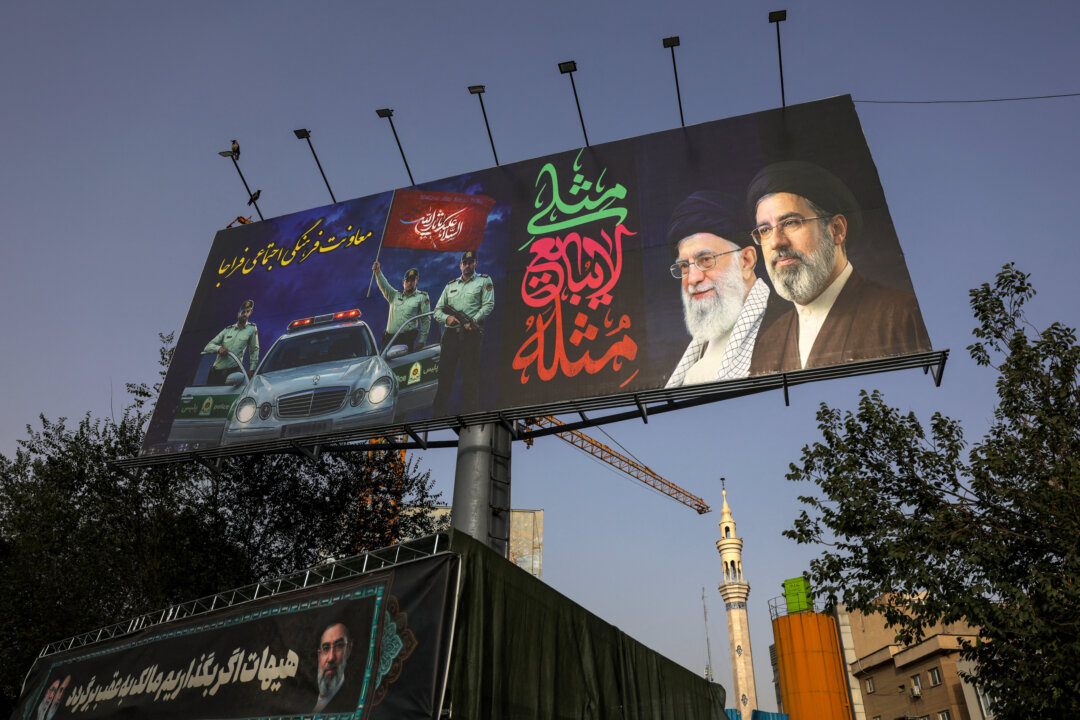
China Sends Senior Official to Attend Khameneis Funeral, as USIran Conflict Continues








Related Articles

EuropeThe Final wakeup call
French students are showing us what protest looks like in the age of viral spectacle
The recent wave of protests in Europe have left us with two...

EuropeThe Final wakeup call
Frances casseurs: why the term fails to do justice to the extent of looting and spiralling unrest
Following widespread looting sprees and acts of violence occurring on the sidelines...

EuropeThe Final wakeup call
Elderly women are often victims of gender-based violence. Why is it so hard for them to get help?
In 1997, Ana Orantes appeared on an Andalusian television programme to recount...



China News
Americans at Serious Risk of Wrongful Detention in China: State Department
The State Department is warning Americans living in or traveling to China...
