
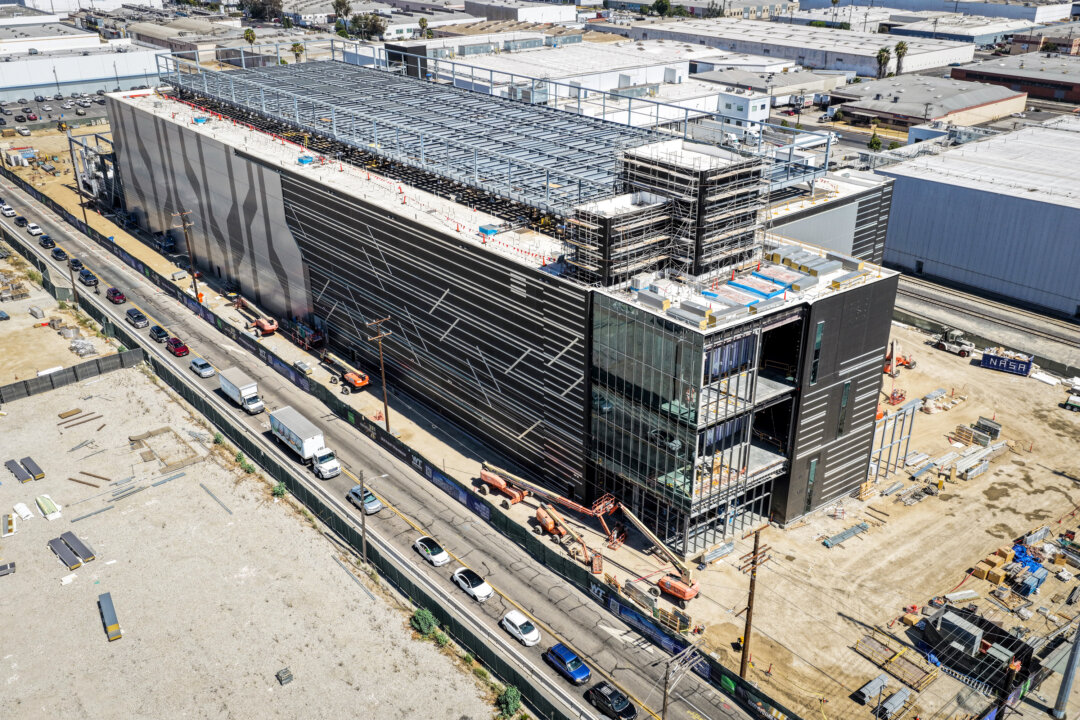
Meta’s newly announced $13 billion AI data centre campus in Alberta will require as much electricity as 800,000 homes.The Sturgeon County project is one of the largest AI data centre developments announced in Canada to date, as technology companies search for abundant land, electricity, and water to power the rapid growth of artificial intelligence.Some are racing to attract those investments, seeing AI data centres as a source of jobs, economic growth, and technological innovation. Alberta alone has nearly 100 proposals at various stages of development, while Ottawa has unveiled a national strategy aimed at expanding Canada’s AI capacity.But as the promise of an AI gold rush intensifies, opposition is mounting as well.Some communities across Canada are questioning whether the promised economic benefits outweigh the potential strain on electricity grids, water supplies, roads, and other infrastructure, along with possible environmental and quality-of-life impacts.As governments and industry pursue a share of the global AI boom, the debate is increasingly shifting from whether Canada should build more AI data centres to where—and under what conditions—they should be built.Why AI Data Centres?AI data centres house specialized computer servers equipped with powerful chips that train and operate artificial intelligence systems. The facilities require vast amounts of electricity, high-capacity fibre-optic connections, and often large volumes of water for cooling.Demand for AI computing is rising rapidly worldwide as businesses increasingly use AI to cut costs, automate tasks, and analyze data in sectors such as marketing and sales, finance, customer service, retail, technology, and software development.Consulting firm McKinsey estimates global investment in AI data centres could reach $5.2 trillion by 2030, with worldwide demand for data centres nearly tripling over the same period. AI is expected to account for roughly 70 percent of that growth.Qiang Wang, an assistant professor of finance at the University of Calgary’s Haskayne School of Business who researches financial technology and AI, said those projections are plausible.“In 2026 alone, capital expenditures by the 14 largest data centre operators approach $750 billion. There is enormous demand for data centre investment,” Wang told The Epoch Times.McKinsey also estimates widespread AI adoption could add as much as $22.1 trillion annually to the global economy through higher productivity, lower costs, and increased revenues.Canada’s AI AmbitionsOttawa’s recently unveiled national AI strategy, “AI for All,” aims to increase AI adoption among Canadian businesses from about 12 percent today to 60 percent by 2034.The plan is part of Canada’s push for “sovereign AI,” which would give Canada access to domestic AI services rather than foreign-controlled ones, including Ottawa’s plan to help fund a sovereign public AI supercomputer, to the tune of roughly $890 million over seven years starting in 2026-27.Canada is home to 337 data centres, the fifth-highest total in the world, behind only the United States, Germany, the United Kingdom, and China, according to Stanford University researchers. While not all are dedicated to AI, governments and industry see significant room for expansion.“There is strong interest in expanding data centre capacity in Canada,” Wang said.Traditional data centres primarily provide cloud computing and data storage, while AI data centres use far more powerful chips to train and run artificial intelligence systems, making them more expensive and energy intensive.Prime Minister Mark Carney has been clear about his interest in expanding AI data centres in Canada, saying they will “reinforce our digital sovereignty.”Electrical transmission lines are seen in the middle of a canola field near Pincher Creek, Alta., in a file photo. Nalidsa/ShutterstockAlberta’s AI PushAlberta has emerged as a focal point of Canada’s AI data centre ambitions.In addition to Meta’s $13 billion project in Sturgeon County, Montreal-based Synapse has proposed building a $7 billion to $10 billion AI data centre campus in the small Alberta town of Olds. The company’s first application was rejected by the Alberta Utilities Commission (AUC) in March because of deficiencies in the submission. Synapse reapplied in April and is awaiting a decision.Another major proposal in Alberta is entrepreneur Kevin O’Leary’s Wonder Valley AI Campus near Grande Prairie. The project’s first phase would generate 1.4 gigawatts of off-grid electricity, with plans to eventually expand to 7.5 gigawatts.The province has nearly 100 data centre proposals at various stages of development as it seeks to become North America’s leading destination for AI infrastructure.The province’s AI data centre strategy points to ample natural gas and power generation capacity in Alberta, along with a cold climate, modest taxes, and large tracts of available land as as key advantages for attracting investment.The area of Olds, Alta., where Synapse Real Estate Corp. is planning a data centre complex with 1.4 gigawatts of natural gas-fired power generation, is shown on June 4, 2026. The Canadian Press/Lauren KrugelWang said growing electricity constraints and community opposition in parts of the United States could also encourage some companies to expand northward.“As a result, companies may look to expand into neighbouring countries where demand is growing and suitable locations remain available,” she said.Pierre-Olivier Pineau, a professor at HEC Montréal, said Alberta’s privatized electricity market is another key advantage.“Alberta is the province of choice for new data centres because it has the most open electricity market,” Pineau told The Epoch Times.He also said Alberta’s abundant natural gas and greater flexibility for building new power generation make it easier to develop large AI projects than in provinces with vertically integrated electricity systems.Warren Mabee, a professor of geography and planning at Queen’s University, said Alberta’s policy allowing developers to bring their own power generation has also attracted industry interest.“Alberta has a strategy which signals a strong willingness to support data centre development, including a ‘bring your own power’ approach that allows these centres a fair bit of leeway in terms of creating new electrical capacity,” Mabee said.By contrast, Ontario requires regulatory approval before large data centres can connect to the provincial electricity grid, he said.Power, Water, and OppositionOne of the biggest question marks around AI data centres in Canada is that of power and water consumption.The federal government estimates Canada currently has about 337 megawatts of dedicated AI data centre capacity, but demand could eventually reach 20 gigawatts.Warren Mabee, a professor of geography and planning at Queen’s University, said the prospect is a key driver of the ongoing push to expand Canada’s electricity system.“Right now, we don’t have 20 gigawatts of power in the pipeline to support these centres, but this is a big part of the rationale behind new builds of nuclear and gas plants in the country,” Mabee told The Epoch Times.Natural Resources Canada estimates that rising demand from a variety of sources, including from AI data centres, will require Canada to at least double its electricity system infrastructure by 2050 at an estimated cost of roughly $1 trillion.Even if only a portion of the proposed AI projects move ahead, they could require billions of dollars in new natural gas plants, nuclear reactors, transmission lines, and other electricity infrastructure.AI data centres also consume significant amounts of water for cooling. Water use varies widely depending on the cooling technology, local climate, and computing demands of each facility. Depending on their design and workload, large facilities can use hundreds of thousands or even millions of litres each day.Pineau said Canada should also do more to capture waste heat generated by AI data centres.“If Canada wanted to be productive and efficient in its energy consumption, it would build heat recovery systems with new data centres, to make sure that heat is not entirely wasted,” he said.Those demands have fuelled growing opposition to proposed AI data centres across Canada.In Olds, Alta., where Synapse has proposed a multi-billion-dollar AI campus, hundreds of intervenors and several community groups have argued the project has not adequately addressed safety and environmental concerns while overstating the local economic benefits.Residents in communities including Vancouver, Hamilton, Mississauga, Regina, and Saint John have also raised concerns about electricity use, water consumption, noise, air pollution, and whether the projects will deliver the economic benefits being promised.Sets of data centre cooling towers are seen in this file photo. Waitforlight/Getty ImagesHundreds of people demonstrated in Vancouver during a National Day of Action against AI data centres in June, arguing the projects would place additional pressure on British Columbia’s electricity grid and water supplies.Opposition has also emerged south of the border. xAI’s Colossus data centre in Memphis, Tenn., has drawn lawsuits and protests over its electricity generation, water use, and potential impacts on nearby neighbourhoods.Alex de Vries, founder of Digiconomist, said large AI data centres can affect local electricity prices, water supplies, air quality, and biodiversity if they are not carefully planned.Complicating the issue is that some studies suggest Beijing is also engaging in a disinformation campaign to sow division in the West in pursuit of dominance in the AI race. Reports have shown Chinese operators developing online material and graphics discouraging the development of AI centers in the West.Do Benefits Outweigh Costs?Supporters say AI data centres could generate billions of dollars in investment, strengthen Canada’s digital infrastructure, and create new jobs.Ottawa’s AI strategy projects AI adoption could create up to 250,000 jobs by 2031 and add roughly $200 billion to Canada’s economy.Not everyone is convinced.“I don’t think AI is that important for the future of the Canadian economy,” Pineau said.“I’m not saying that we could do without AI, but the Canadian economy will not rely on AI to grow more than other countries. We are, and will remain, a resource-based economy, with strong service industries.”Mabee also questioned whether Ottawa’s projections are realistic.“To me these sound like aspirational rather than realistic targets,” he said.“It’s not clear where the jobs come from, other than training people how to use AI.”Meta says it is taking steps to address some of the concerns surrounding its Alberta project. The company says the Sturgeon County campus will use a closed-loop cooling system to reduce water consumption and has committed $60 million toward local water, roads, and other infrastructure. Pembina Pipeline plans to supply the project with electricity from a future 932-megawatt natural-gas generating facility, while Capital Power is expected to provide 250 megawatts during startup.Wang said large projects could increase municipal tax revenues and spur additional economic activity, but she cautioned that AI could also replace some entry-level jobs.“One concern surrounding AI is that it may replace some types of labour, particularly entry-level jobs,” she said. “I certainly hope this is not the outcome.”Wang also said Canada has an opportunity to learn from projects in the United States, where some developments have sparked significant community opposition.“By carefully selecting project sites and considering factors such as water availability, land use, and community concerns early in the planning process, Canada may be able to reduce local opposition while still attracting data centre investment,” she said.









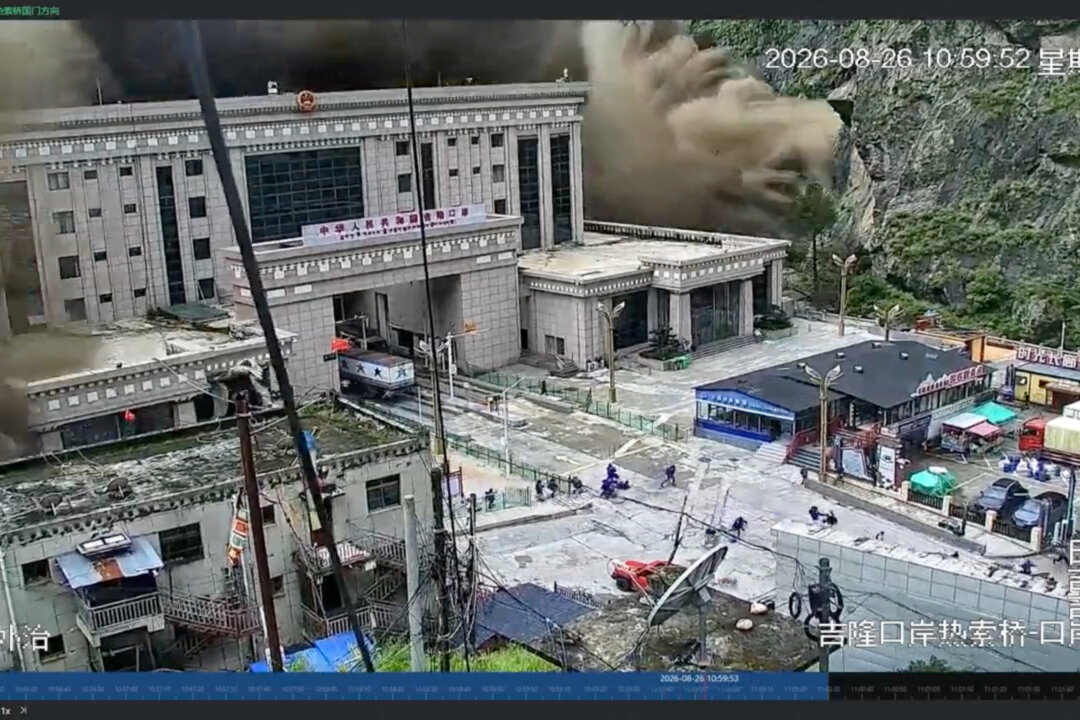
Chinese Scientists Flagged Glacial Flood Danger One Year Before Nepal Catastrophe
More than a year before the catastrophic flash flood devastated the China–Nepal...
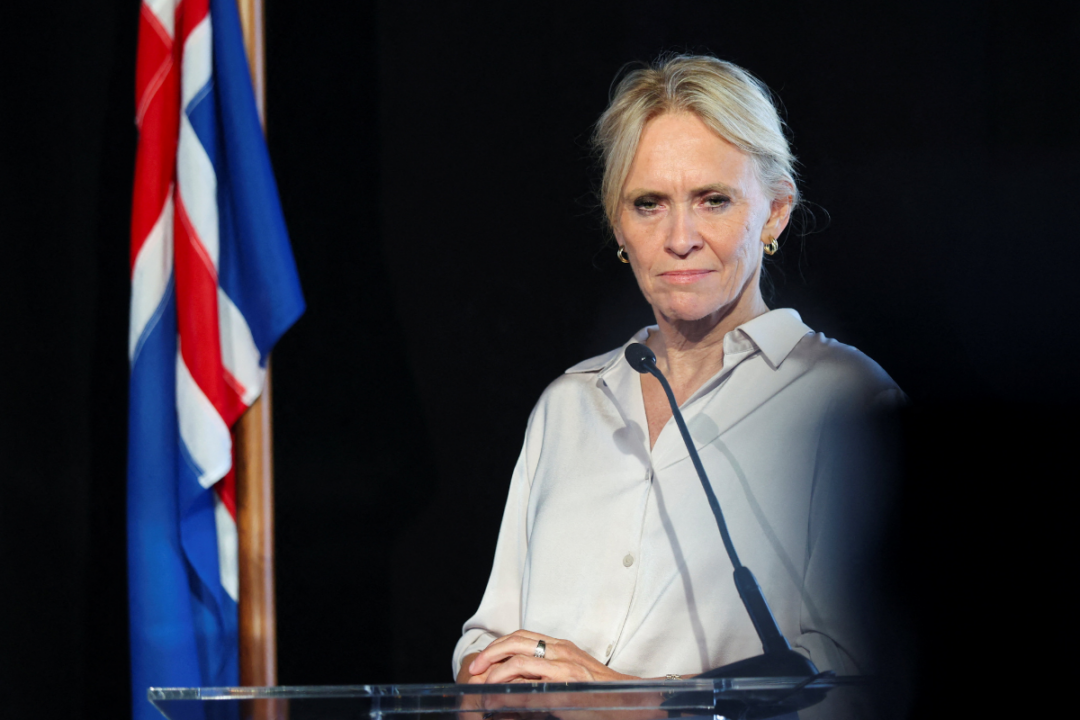
Iceland Focuses on Security Partnerships After Voters Reject Opening EU Membership Talks
Icelandic Minister for Foreign Affairs Thorgerdur Katrin Gunnarsdottir attends a press conference...

Italy, Spain Extend Tit-for-Tat Border Curbs After Ceuta Illegal Immigrant Crisis
Immigrants gather on a hill as they attempt crossing from the border...



Vaccine Maker Halts Trial on mRNA Cancer Shot
A pharmacist administers the Pfizer-BioNTech vaccine in Los Angeles, Calif., on October...
