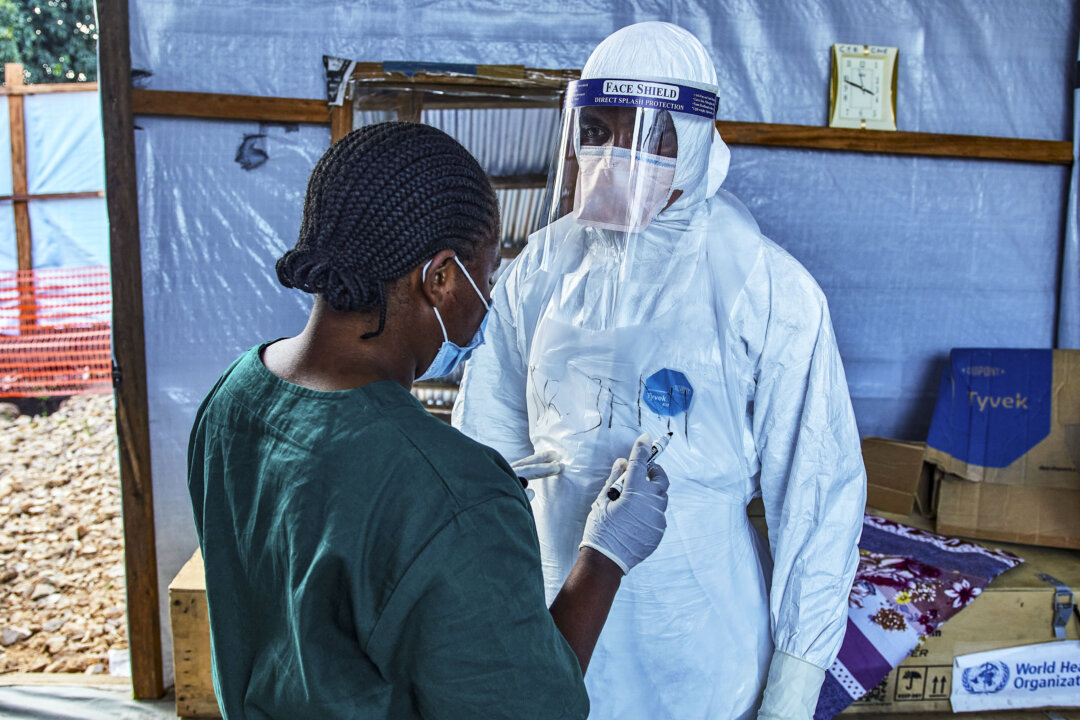
Health workers at Evangelical Medical Center in Bunia, Congo, on July 3, 2026. Dirole Lotsima Dieudonne/AP PhotoThe Public Health Agency of Canada is temporarily barring entry to foreign nationals who have been in the Democratic Republic of the Congo (DRC) within the past 21 days to help prevent the spread of Ebola.The measure is to be enforced through an Interim Order under the Aeronautics Act, which will require commercial and private air carriers to ensure no foreign nationals included in the measure are permitted to board flights to Canada, a July 19 news release says.The agency says the measure is to be in place as of July 20 at 11:59 p.m. EDT and is intended to increase the effectiveness and sustainability of existing border measures used to safely process travellers arriving in Canada, including Canadian humanitarian workers returning from overseas.This is a change to the previously announced border measures introduced on May 26, whereby effective May 30 at 11:59 p.m. EDT until Aug. 29, foreign nationals along with Canadian citizens, permanent residents, and persons registered under the Indian Act entering Canada who have been in the DRC, Uganda, or South Sudan within the previous 21 days and have no symptoms have to quarantine for 21 days.There will be no change to that measure for Canadian citizens, permanent residents, and persons registered under the Indian Act. Only foreign nationals who were in the DRC with the past 21 days will be barred from entering Canada altogether.An Ebola outbreak in remote areas of the DRC was first reported in May and has since spread to Uganda. The outbreak involves the Bundibugyo virus, a species of Ebola virus and a rarer strain for which there is no vaccine or specific treatments.As of mid-July, the DRC had reported more than 2,100 confirmed cases of the disease and more than 800 deaths. Health authorities have warned that response to the outbreak is challenging because of complex circumstances in the region such as limited health infrastructure, ongoing conflict in the area creating security issues, violence against health-care workers and shortages of personal protective equipment, and frequent population movement and cross-border travel.There have been no confirmed Ebola cases in Canada or the United States, and authorities of both countries say the overall risk to the general public and travellers of getting the disease remains low if proper precautions are followed.The Public Health Agency of Canada advises anyone planning to travel internationally to review the federal government’s travel advice and advisories page, which indicates the level of precaution that should be taken when travelling to each destination.While Uganda is not included in the current visitor ban, the agency advised travellers planning to visit the country to monitor advisories on the page. As of press time, the government advises Canadians to avoid non-essential travel to that country and has issued regional advisories within the country.In the previous border measures announcement on May 26, the government also temporarily suspended immigration documents for residents of the DRC, Uganda, and South Sudan for the next 90 days beginning May 27 at 11:59 p.m. EDT.

Canada Bars Entry to Foreign Nationals Recently in Congo Due to Ebola Concerns








Related Articles

China NewsEuropeGlobalUK NewsWorld News
UK Must Be Ready for War in 1,000 Days, Says British Defense Secretary
British Defense Secretary Wes Streeting has said the country must be ready...

China NewsEuropeGlobalUK NewsUK Top NewsWorld News
UK Prime Minister Says He Agrees With Principle of Migration Reform
British Prime Minister Andy Burnham said on Oct. 26 that he agreed...

China NewsEuropeGlobalWorld News
Serbian President Concedes Election Defeat to Student-Led Coalition
Serbian President Aleksandar Vucic has conceded defeat in the Oct. 25 election...



Asia & PacificChina NewsEuropeInternational RelationsNational SecurityPolicies & ImpactsUSUS NewsUS-China RelationsWorld News
Japan Defense Academy Chief Calls for 3 Red Lines in Competition With China
Japan’s former top uniformed military officer has called for establishing three “red...
