Foreign Minister Penny Wong has not ruled out the possibility of Australia increasing its sea patrols in the South China Sea with the United States and Japan.This comes after Beijing’s July 6 intercontinental missile test in the South Pacific that drew condemnation from the United states, Australia and other Pacific nations, including New Zealand, Tuvalu, and Fiji.Speaking to reporters at the ASEAN Summit in Manila, Philippines, on July 22, Wong said that stability in the South China Sea is “critical” to the region’s stability.“That is something I’m sure we should all keep in mind,” she told reporters.“We are concerned about some of the aggression we are seeing, we are concerned about some of the destabilising conduct we are seeing, and the countries of the region have a choice to make about how we all respond to that.Wong’s remarks came in response to a reporter’s question about whether Australia could conduct more regular regional sea patrols alongside the United States and Japan following China’s launch of nuclear-capable missiles.“We are increasing our maritime cooperation, and you might be aware that one of my first events here was an announcement of additional funding with your Coast Guard where we are contributing more on drones and other mechanisms to try and improve maritime domain awareness,” she said.Meanwhile, Beijing has hit back at Wong’s comments, saying that Australia was not a party to the South China Sea issue, and had no right to intervene.Additionally, in a statement published by Chinese state media, Wong reportedly said that Australia should uphold the principle of “non-interference in internal affairs and abandon double standards.”While Australia is a non-claimant in the South China Sea, it has increased its military activities through joint activities in the maritime zone with the United States and other allies since the South China Sea dispute in the early 2010s, according to South China Sea NewsWire.Wong Voices Concerns With Chinese CounterpartOn July 21, Wong met with Chinese counterpart Wang Yi, where she addressed Australia’s concerns, and discussed the importance of peace and stability in the Indo-Pacific, saying that Australia will cooperate “where we can and disagree where we must.”“We want to continue to engage because we believe that is in our national interest,” she said.“You speak about the importance of mutual understanding. I agree, and I expect we will discuss our concerns today, including around peace and stability in our region, safe and professional military conduct, and the importance of transparency and reassurance of intent, as well as the issues of consular, human rights and other bilateral and regional matters.”The Epoch Times has contacted the Department of Foreign Affairs and Trade (DFAT) for comment.Wong Reaffirms Strategic Relationship with USWong reaffirmed Australia’s relationships with the United States and other regional partners.“Our principal strategic relationship remains with the United States, but it’s not the only relationship we have, and we recognise we have to work harder in our region,” she said on July 21.“We have a strong relationship with Japan, with the Republic of Korea, and we signed a treaty on common security with Indonesia. So, we are really working hard across a range of areas to secure stability and peace, which is what we all want.”Wong said that while Australia’s relationship with its largest trading partner, China, is important, it is necessary to be clear about areas of disagreement while maintaining dialogue with Beijing.At the same time, she noted that ASEAN, which comprises 11 Southeast Asian countries, is geographically central to the region.“When we say we support ASEAN centrality, it’s not just an abstract concept. If you’re in Australia, you look up, it is ASEAN at the centre of our region. And stability and peace in the Indo-Pacific requires a strong ASEAN at its core,” Wong said.“We see greater geopolitical contest; we see behaviour which is destabilising. We see a lot of challenges for peace and security.”

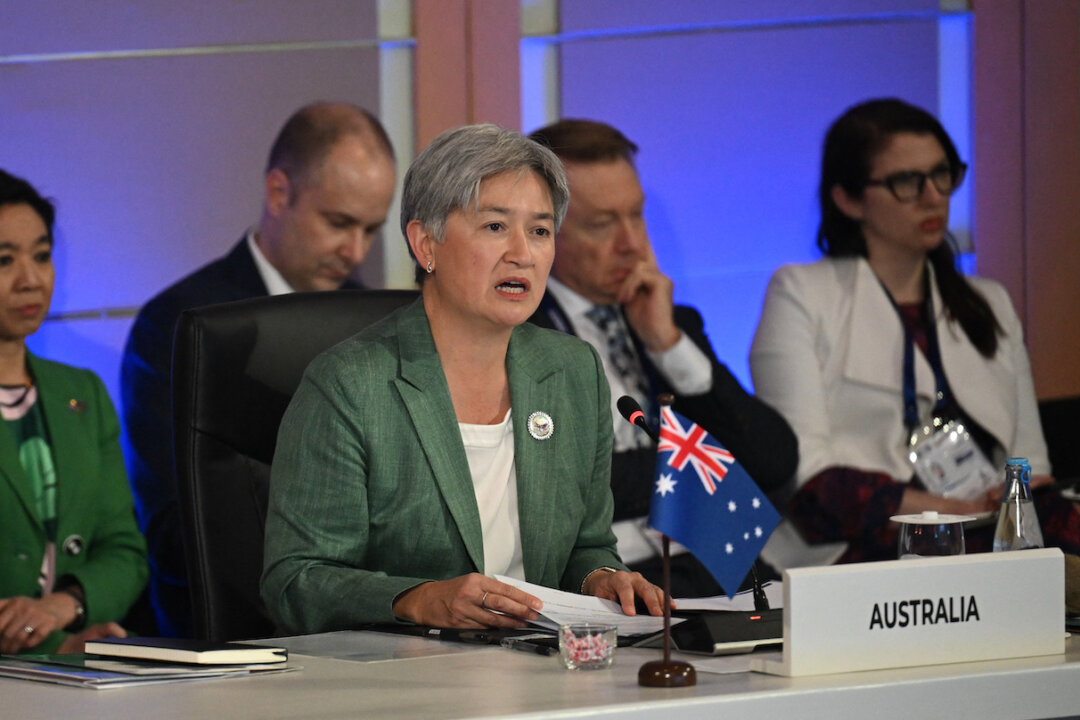
Australia Leaves Door Open to Joint South China Sea Patrols After Beijings Missile Test








Related Articles

China NewsEuropeGlobalUK NewsWorld News
UK Must Be Ready for War in 1,000 Days, Says British Defense Secretary
British Defense Secretary Wes Streeting has said the country must be ready...
China NewsEuropeGlobalUK NewsUK Top NewsWorld News
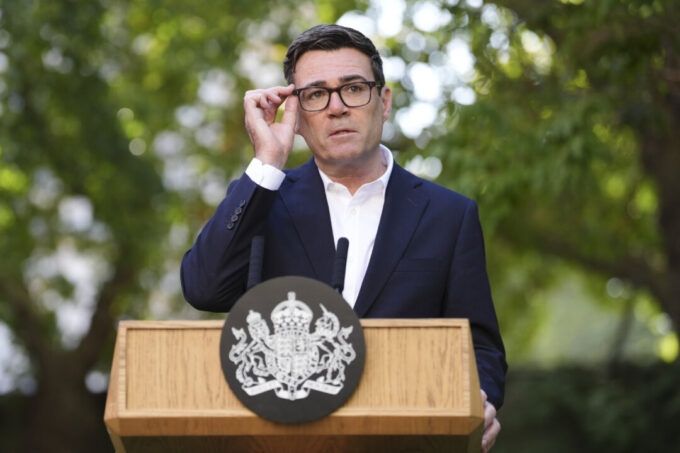
UK Prime Minister Says He Agrees With Principle of Migration Reform
British Prime Minister Andy Burnham said on Oct. 26 that he agreed...

China NewsEuropeGlobalWorld News
Serbian President Concedes Election Defeat to Student-Led Coalition
Serbian President Aleksandar Vucic has conceded defeat in the Oct. 25 election...


Asia & PacificChina NewsEuropeInternational RelationsNational SecurityPolicies & ImpactsUSUS NewsUS-China RelationsWorld News
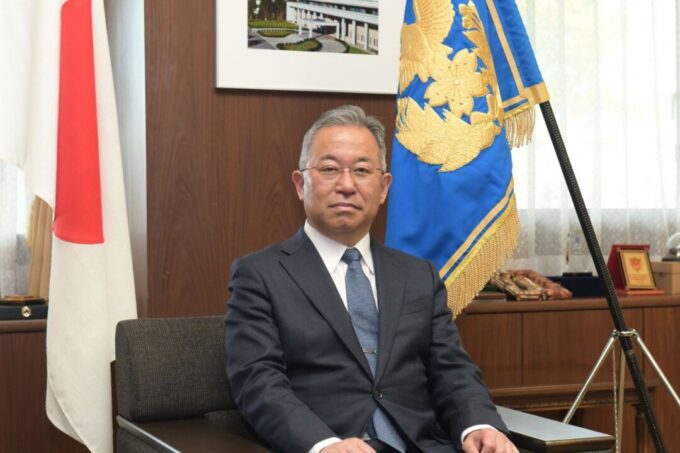
Japan Defense Academy Chief Calls for 3 Red Lines in Competition With China
Japan’s former top uniformed military officer has called for establishing three “red...
