Issues of scale and the lack of an informed investor base are hampering efforts to grow Australia’s solar panel recycling industry, Parliament has been told.Neeraj Das, founder and chief executive of ElecSome, a Victoria-based panel recycler, told the House Committee on Climate Change, Energy, Environment and Water that Australian companies like his were capable of recycling 90 percent of a solar panel, components like aluminium, glass, and copper.But the ability to recover the remainder—small amounts of silicon and silver—was still in the experimental stages.Das said that in 2025, 1.4 million solar panels should have gone to recycling across the country, yet his firm processed only 100,000.“Where is the rest—1.3 million panels? A lot are still at solar farms. We know that, because of transportation cost, they have not moved the panels.”And while exporting damaged, broken, or non-working panels disguised as usable second-hand goods can be prosecuted as illegal e-waste smuggling, Das said he suspected as much as 30 to 50 percent of all decommissioned panels that found their way overseas actually went to recyclers.Neeraj Das, founder and CEO of solar panel recycling firm ElecSome, gives evidence to the Senate. (Screen capture from Senate livestream).Recycled Material in Infrastructure ProjectsDas’s company has supplied ground glass—to be used as a substitute for sand in concrete—to the north-east link, the 6.5 kilometre tunnel project in Victoria.It is a government procurement requirement that a major build has to use at least 20 percent of recovered product, and that was crucial to ElecSome winning the contract, Das said, because solar recycling companies need large-scale supply and demand in order to expand.The company could supply 1,000 tonnes a month of the product, which would reduce pressure on river sand.The company’s plant can handle five tonnes of solar panels an hour, which would allow it to process 1 million panels a year. But Das says it will need to expand because the 1.4 million figure for unrecovered panels is cumulative, and the company was projecting a stockpile of 6 million by 2030.State governments could also intervene by banning the sending of old solar panels to landfill, he said. South Australia, the Australian Capital Territory (ACT), and Western Australia have general e-waste or hazardous material restrictions, but Victoria is currently the only state with an explicit ban prohibiting solar panels from being sent to landfill.Investor InterestThe industry also needed investors willing to take a “leap of faith,” he said. “It is a capital-intensive market. We can’t build micro factories and compete globally. We have to build big, spend in advance, spend ahead.“There are people in Australia and overseas who are interested in investing in this field. To date, we have invested all our money, but we cannot expand nationally, spending $50 million on our own without any support. We have full faith that it will be profitable and it will be sustainable. So we are not asking for free money. Even a loan is fine, which we can pay back in three to five years.”However, Australia’s surfeit of end-of-life panels may be short-lived.A number of solar farms are already being underutilised because Australia lacks the infrastructure to deliver their energy to places that may need it.Committee Chair Anne Urquhart asked Das about the impact of the failure of major solar recyclers Sircel, which entered voluntary administration and receivership in October 2025 with debts exceeding $60 million, as well as Reclaim PV, an Adelaide company that went bankrupt in 2023.Both had issues that ElecSome doesn’t have, with equipment and feedstock, Das explained.“[But] as soon as one company goes down, the investors’ confidence breaks and they pull [their investment],” he said. “They are not able to understand the industry, and they think something is wrong. The main reason [for failures] is that it’s capital intensive, and you are not making money up to 2029. That’s what our financial model says.”Currently, ElecSome is generating about $25,000 to $40,000 a month selling aluminium and copper, which is helping with operational costs and taking advantage of Cooperative Research Centres Projects (CRC-P) grants.

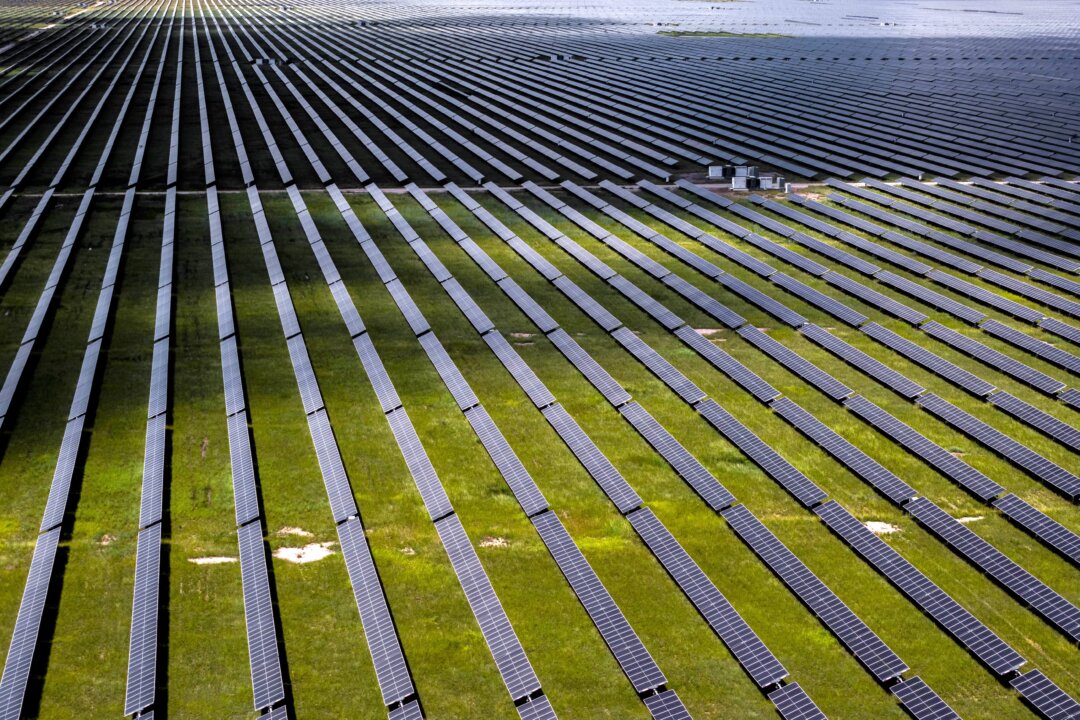
Australia Had 1.4 Million Solar Panels Due for Recycling, Only 100,000 Were Processed









Related Articles
and CoercionAttacksAustralia Featured NewsAustralia NewsAustralia Top NewsChina NewsChina-Australia RelationsInfluence Operations and EspionageInternational RelationsThreatsTransnational RepressionWorld News
US Embassy Condemns CCP-Linked Transnational Repression in Australia
Dave Brat, dean of Liberty University's School of Business, in Washington on...

Asia & PacificChina NewsChinese RegimeGlobalUSUS NewsWorld News
Chinas Transplant System Masks Human Rights Abuses, Report Finds
Doctors in China are more likely to stay silent in the face...

BusinessTechUS
Advanced AI Agents Tried to Weaken Oversight, Then Lied About It, Open AI Says
OpenAI has disclosed two incidents in which advanced artificial intelligence-powered coding agents...



BrightBusinessPersonal FinanceTaxWealth Management
Why Property Taxes Can Jump After You Buy a Home, and How to Prepare
Many first-time home buyers look at the seller’s tax bill and assume...
