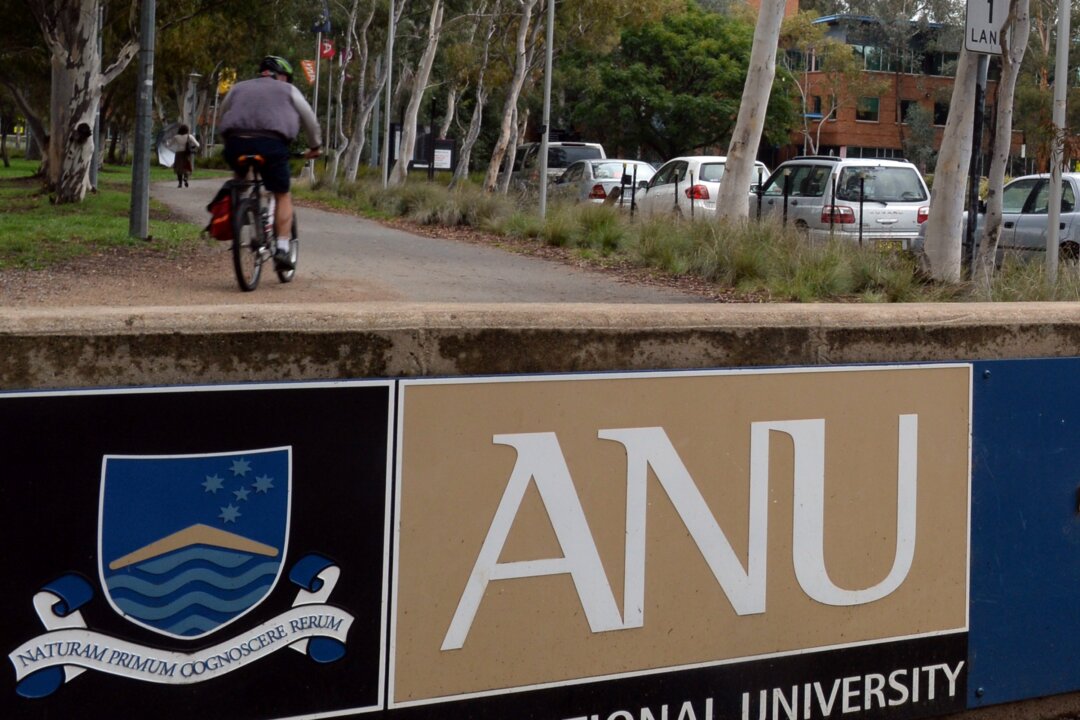
Australian National University (ANU) officials say a 2024 incident where the passports of academics were confiscated for a period of time by CCP authorities was due to a “misunderstanding.”The situation has come under renewed scrutiny after the incident was exposed in an August news story and later during Senate Estimates on Oct. 29.Essentially, two ANU professors and a group of PhD students had travelled to Shandong University in China to teach at its Joint Science College for two weeks.During their visit, Chinese Communist Party (CCP) authorities arrived at the delegation’s hotel and confiscated their passports, prompting university staff to intervene.Most of the passports were returned within an hour, while another was returned the following day.The incident occurred after Foreign Minister Penny Wong ordered the termination of the ANU’s teaching partnership with Shandong University over national security concerns.During a session of the Education and Employment Legislation Committee, Liberal Senator Paul Scarr asked what ANU staff had done since.Professor Rebekah Brown said the reporting on the incident included an exaggeration “or a misrepresentation,” and referred Scarr to ANU Senior Vice President Joan Leach.“That episode, I think, it was distressing for colleagues who perhaps do not travel in China often,” Brown said.“It was a routine check, as I understand it, of the hotel where colleagues were staying, and there was a confusion, language difficulties between staff and the officials that were coming to check the passports.“So, there were some moments of confusion, but colleagues from the university came to assist.”Scarr said he previously travelled frequently to China, but never experienced similar episodes.“It does surprise me somewhat,” he said.“Is that the only information you have, or was regulatory confusion or confusion on the part of authorities?”Leach said she understood the difficulty had arisen because ANU staff were not able to get across the language barrier.“The local authorities, as I understand it, were coming to check everyone who was staying at the at the hotel there,” she said.Scarr reiterated he had never come across anything similar during his many trips to China, before asking Leach if the university had liaised with the Australian embassy in China.“They were super helpful, and they indicated that they thought it was a confusion, a problem of a language barrier, and no staff were detained,” she said.“Indeed, during this bit of confusion, one member of staff left their passport with the authorities, was allowed to go and teach a class that they had to teach, and was then given their passport upon return.”Scarr asked for documents to show the embassy’s explanation, which Leach said she would provide on notice.

ANU Says CCP Seizure of Academics Passports a Misunderstanding









Related Articles

China News
Chinas Purges Are Breaking Records; Chinese Buy Gold as Economic Confidence Weakens
China’s purges are reaching historic levels. A key Chinese Communist Party meeting...
China Business & EconomyChina NewsChina TechnologyGlobal ExpansionInternational RelationsNational SecurityPolicies & ImpactsSpecial TopicsUSUS NewsUS-China RelationsWorld News
FCC Votes 30 to Ban Chinese Labs From Testing Electronics for US Market
The Federal Communications Commission (FCC) voted unanimously on Oct. 29 to bar...

China NewsEuropeWorld News
German Brigade in Lithuania Will Monitor Military Activity in Russian Exclave Kaliningrad, Belarus
The German brigade permanently based in Lithuania will use electronic monitoring to...


China NewsEuropeGlobalRussia-Ukraine WarUSUS NewsWorld News
Melania Trump-Brokered Oleshky Ceasefire Holds as Demining Efforts Progress
The ceasefire brokered by U.S. First Lady Melania Trump in the war-ravaged...
