
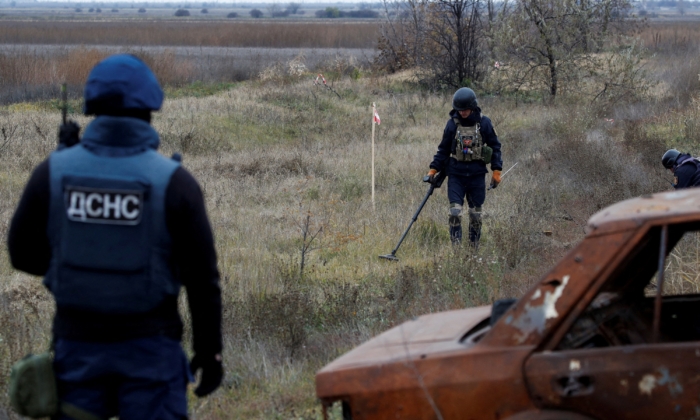
The quad of NATO states have said that the threat posed by Russia has forced them to reassess their view on the use of the weapons.
Poland and the Baltic states of Lithuania, Latvia, and Estonia are planning to withdraw from the international convention banning landmines, the four countries announced on Tuesday.
The quartet of nations on NATO’s eastern flank cited the threat from Russia as the reason for withdrawing from the treaty, which was signed in the Canadian capital of Ottawa in 1997 and came into force in 1999.
In a joint statement, the four countries’ defense ministers said that since the agreement had been ratified, the security situation in their region “has fundamentally deteriorated.”
“Military threats to NATO Member States bordering Russia and Belarus have significantly increased” and as a result “it is essential to evaluate all measures to strengthen our deterrence and defense capabilities,” they said.
The ministers added that they needed to provide their defense forces “flexibility and freedom of choice to potentially use new weapons systems and solutions.”
“In light of these considerations, we—the Ministers of Defense of Estonia, Latvia, Lithuania, and Poland—unanimously recommend withdrawing from the Ottawa Convention. With this decision, we are sending a clear message: our countries are prepared and can use every necessary measure to defend our territory and freedom,” they said.
Related Stories

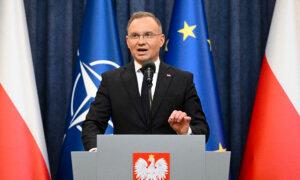
The Ottawa agreement, which has currently been ratified or acceded to by a total of 164 countries, has the official title of “The Convention on the Prohibition of the Use, Stockpiling, Production, and Transfer of Anti-Personnel Mines and on Their Destruction.”
Its opening statement reads that it “prohibits the use, stockpiling, production, and transfer of anti-personnel landmines (APLs). It requires states-parties to destroy their stockpiled APLs within four years and eliminate all APL holdings, including mines currently planted in the soil, within 10 years.”
Though signed or acceded to by the overwhelming majority of the international community, some notable nations among the 32 non-signatory states are the United States, China, and Russia.
Pulling out will allow Poland and the Baltics, some of NATOs biggest contributors in terms of percentage of GDP, to begin stockpiling the controversial munitions again.
However, in the same statement announcing the withdrawal, the nations said that they “remain committed to international humanitarian law, including the protection of civilians during armed conflict.”
Lithuanian Defense Minister Dovile Sakaliene said in a separate statement that the planned withdrawal was to allow an effective protection of the region’s borders.
Finland, which also shares a border with Russia, said in December that it was also considering pulling out of the international agreement because of Moscow’s use of landmines in Ukraine.
The government in Helsinki said it planned to complete a review of its commitment to the Ottawa Convention in early 2025, saying the country would take into account “the change in the security environment, the development of technologies and the lessons learned from Ukraine, as well as the importance of arms control agreements as part of the international treaty system.”
In a report released last year by Landmine Monitor, the international watchdog said land mines were still actively being used in 2023 and 2024 by Russia, Burma, Iran, and North Korea.
According to the United Nations, “Ukraine is now the most mined country in the world, with potentially 23 percent of its land at risk of contamination with landmines and unexploded ordnance.”
The organization estimates that clearing the unexploded mines and shells deployed during the war will cost around $34.6 billion.
The International Campaign to Ban Landmines, which is seeking to eradicate the use of the weapons from the face of the planet, called the decision by the four nations “devastating news” and accused them of “projecting weakness, not strength and putting civilians lives at risk.”
Reuters and The Associated Press contributed to this report.









The EUs repair policies are changing the way tech is designed
In the late 1970s, concerned by resource use and scarcity, German industrial...
Chinese Scientists Flagged Glacial Flood Danger One Year Before Nepal Catastrophe
More than a year before the catastrophic flash flood devastated the China–Nepal...
Iceland Focuses on Security Partnerships After Voters Reject Opening EU Membership Talks
Icelandic Minister for Foreign Affairs Thorgerdur Katrin Gunnarsdottir attends a press conference...


Italy, Spain Extend Tit-for-Tat Border Curbs After Ceuta Illegal Immigrant Crisis
Immigrants gather on a hill as they attempt crossing from the border...
