A selloff in tech stocks pushed the Nasdaq Composite Index into correction territory.The tech-fueled index dropped roughly 1,200 points, or nearly 5 percent, to about 25,500 at 11:51 a.m. EST.Nov. 5’s sharp decline leaves the Nasdaq more than 10 percent below the record closing high it set last month, meeting Wall Street’s definition of a correction. But it is still up approximately 5 percent year to date.The Dow Jones Industrial Average—a 30-stock blue-chip index—erased about 1,200 points, or 2.3 percent. The broad-market S&P 500 fell more than 200 points, or nearly 3 percent, to below 7,500.Both leading benchmarks are also up 8 percent and 9 percent, respectively, this year.The Russell 2000—an index of 2,000 small-cap companies—dropped close to 3 percent.The selloff follows a post-election rally a day earlier, when investors welcomed political certainty and divided government. The Dow posted its best day since April 2025 after soaring more than 1,500 points.“Yesterday’s stock market rally in the face of the Democratic landslide made no sense. In contrast, today’s sell-off makes perfect sense. Expect more days like today,” Peter Schiff, chief economist and global strategist at Euro Pacific Asset Management, said on X.Stocks linked to the artificial intelligence (AI) trade largely contributed to the selloff. Other sectors—consumer staples, energy, healthcare, and utilities—held steady.Investors may be concerned that a federal- and state-level blue wave that swept through midterm elections could threaten the AI boom. A chorus of lawmakers have argued for more AI regulation, and some have gone so far as to call for a moratorium on data-center construction.Shares of chipmakers Advanced Micro Devices (AMD), Broadcom, Nvidia, and Qualcomm slumped. The widely watched iShares Semiconductor ETF—a popular index composed of chipmakers—also fell about 8 percent.Neocloud companies—Coreweave, Iren, and Nebius, for example—also plummeted. The industry—cloud computing providers built for immense AI workloads—has been beaten in recent weeks over concerns that these companies will be unable to borrow money to fund their infrastructure buildout.Elon Musk’s SpaceX and Tesla Motors, meanwhile, both suffered steep losses.Several major U.S. tech stocks are officially in a bear market, meaning down at least 20 percent from their recent peak.The selloff occurred despite a solid third-quarter earnings season, as a majority of S&P 500 companies that have reported their financials have beaten expectations.The market narrative has ostensibly shifted from “AI changes everything” to “Blue wave means data centers will never be built again in this country,” says Chris Zaccarelli, Chief Investment Officer for Northlight Asset Management.“We do agree that sentiment has shifted and building data centers will become more difficult, but if there is a productive business case for building them, then they will get built – and Artificial Intelligence will continue to be a more important part of the technology solutions that businesses use every day,” Zaccarelli told The Epoch Times in an emailed note.The situation is a lot more “nuanced” than the market’s behavior, he added.Leverage and SentimentThe selloff stems from record leverage and weakening market sentiment, says popular financial newsletter The Kobeissi Letter.“Sentiment is the ultimate driver of price,” the group said on X.“For months, we have been commenting on the historic levels of leverage in today’s markets. This is precisely what happens when sentiment reverses in an overleveraged market.”Margin debt—the amount investors borrow from their brokerage accounts—was the second-highest level on record in September, according to FINRA data. Margin debt was $1.48 trillion, down from $1.453 trillion in the previous month.Traders sought shelter from the red ink by rotating into U.S. Treasury bonds. Yields were red across the board, with the benchmark 10-year sliding below 4.9 percent.Gold and silver prices posted modest gains, rising about 1 percent and 0.2 percent, respectively.Economists are penciling in a gain of 65,000 new jobs and an unemployment rate of 4.2 percent.

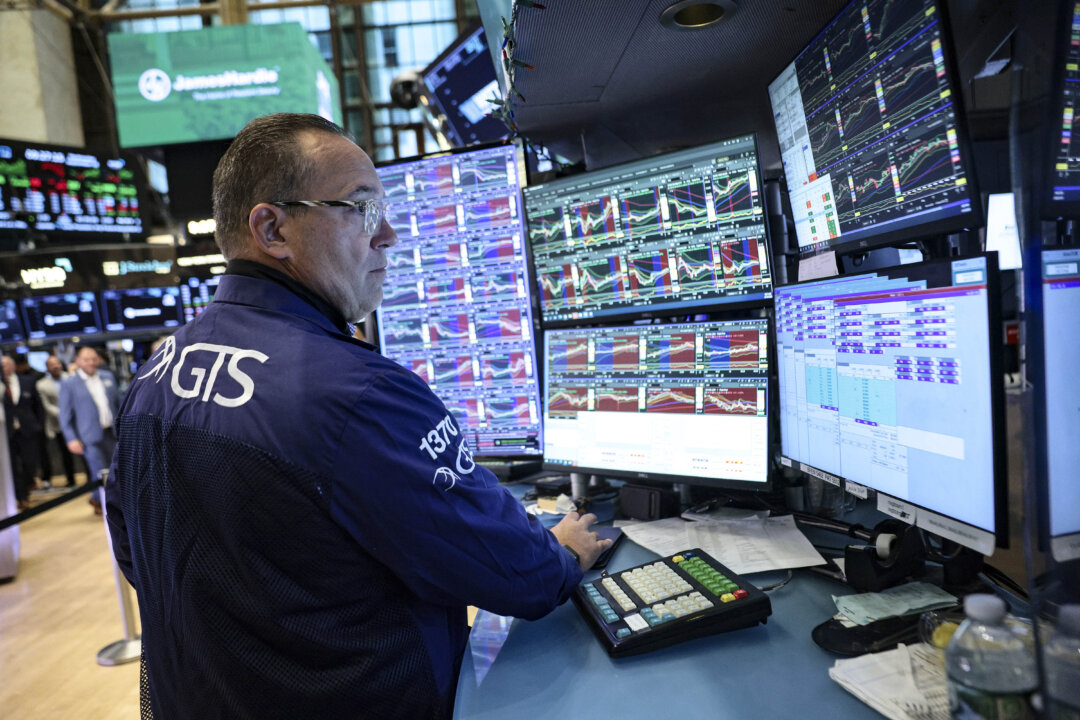
Nasdaq Plunges Into Correction Territory as Wall Street Dumps Tech Stocks









Related Articles
BusinessCompanies
Wendys Rejects $1.4 Billion Buyout Offer From Nelson Peltz-Led Group
Wendy’s has rejected a $1.4 billion takeover offer from billionaire investor Nelson...




2026 MidtermsBusinessCaliforniaEconomic PoliciesNorthern CaliforniaRegional & State NewsSouthern CaliforniaState NewsUSUS Politics
Californians to Vote on Proposed Billionaire Tax
On Nov. 3, Californians will decide whether to impose a wealth tax...
