Home prices rose across most U.S. metropolitan areas in the third quarter, adding to homeowners’ wealth while weighing on home buyers’ budgets.Prices increased from a year earlier in 78 percent of metro markets, down from 80 percent in the second quarter, according to the National Association of Realtors’ (NAR) report released Oct. 29.Just 4 percent recorded double-digit gains, down slightly from 5 percent in the previous quarter.The national median price for an existing single-family home rose 1.7 percent to $432,900, matching the revised annual growth rate in the second quarter.“Even with affordability challenges causing the housing market to stagnate, home prices continue to set record highs in most parts of the country,” NAR Chief Economist Lawrence Yun said.“Homeowners are the beneficiaries of the price gains. Over the past seven years, the average house has appreciated by $146,000.”Regional Markets DivergeThe Northeast recorded the strongest regional price growth, with its median rising 4 percent to $561,500.Median Prices increased 3.6 percent in the Midwest and 1 percent in the South, while the West posted a 0.6 percent decline.San Jose remained the most expensive metro market, with a median price of $1.92 million. Gulfport-Biloxi-Pascagoula, Mississippi, led the report’s list of large markets with the strongest annual gains, at 11 percent.Many Midwestern markets offer relatively affordable homes, putting homeownership within reach of more buyers, according to NAR. Meanwhile, the artificial intelligence boom continued to drive up home prices in the Bay Area.There is also a notable turnaround in Florida.“Throughout the last year, home prices declined in many Florida markets. This quarter, however, homes in nearly all Florida markets are showing price gains,” Yun said.Higher Payments Weigh on Affordability NAR estimated the monthly mortgage payment on a typical existing single-family home, assuming a 20 percent down payment, at $2,251. That was $48 more than in the second quarter and $69 above a year earlier.Typical families devoted 24.1 percent of their income to mortgage payments, compared to 23.9 percent the previous quarter and 24.5 percent a year earlier.The burden was considerably heavier for first-time buyers. A household purchasing a $368,000 starter home with 10 percent down faced an estimated monthly mortgage payment of $2,208, consuming 36.3 percent of income, according to NAR.That share increased from 36 percent in the second quarter, although it remained below the 37 percent recorded last year.Persistently high borrowing costs have added to the pressure. Freddie Mac data show that the average rate on a 30-year fixed mortgage climbed from 6.16 percent on Jan. 8 to 7.24 percent on Oct. 29, more than a full percentage point in less than a year.Forecasts from major housing finance groups suggest that the 3 to 4 percent mortgage rates many borrowers grew accustomed to earlier in the decade are unlikely to return anytime soon.Fannie Mae projects mortgage rates will average 7.5 percent in 2027. The Mortgage Bankers Association expects rates to average 7.3 percent in the fourth quarter of 2026 and stay above 7 percent throughout 2027.

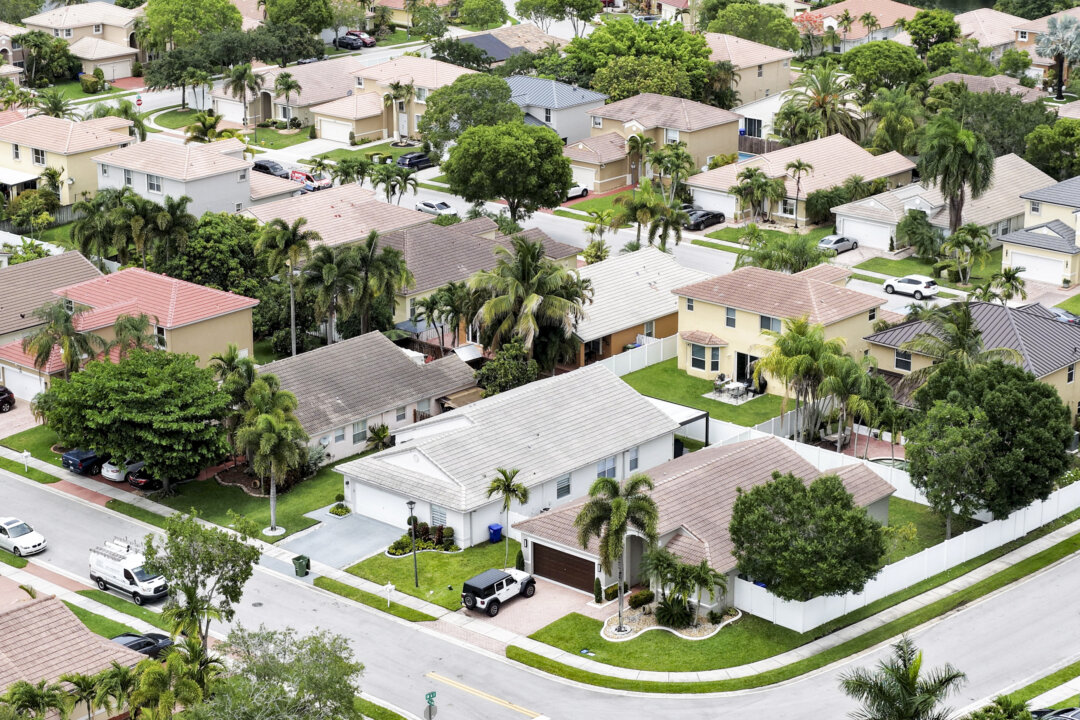
Home Prices Rise in 78 Percent of Metro Markets, NAR Says









Related Articles

BusinessBusiness ColumnistsOpinionThinking About China
The Facade of Prosperity: Why Chinas Households Arent Spending
CommentaryChina’s investment- and export-driven growth model is faltering, but low household incomes...

Business
Nasdaq Logs Worst Month in More than a Year as Amazon, Intel Earnings Deepen Tech Sell-Off
The Nasdaq Composite Index fell almost 3 percent on Friday, suffering its...
BusinessChina NewsEnergyEuropeExecutive BranchGlobalInternationalUSUS PoliticsWorld News
US Signs Critical Minerals, Energy, Technology Deals With Finland, Hungary
The United States has signed critical mineral, energy, and technology deals with...



Asia & PacificBusinessCrime & Public SafetyCryptocurrencyEuropeInternationalMarketsNational SecurityTechTech NewsUSWorld News
Cybersecurity Researchers Link North Korea to $6.4 Billion Binance Hack
Binance logo and stock graph are displayed in this illustration taken on...
