Prime Minister Mark Carney said his government is “committed” to abolishing or reforming the Indian Act, after Manitoba Premier Wab Kinew called for Ottawa to get rid of it.Carney told reporters after a meeting between first ministers and chiefs from the Assembly of First Nations (AFN) that his government is “committed to a process that moves Canada beyond the Indian Act.” Carney did not say exactly how this process would go forward, but that his government would work with First Nations to determine it.“It could be moving beyond. It could be reforming. It could be abolishing and then … modernizing. Fully modernizing the governance relationship is the desirable end state,” Carney told reporters on Oct. 26.The Indian Act, which was introduced in 1876, deals with First Nations governments and the management of reserve land, while also outlining Ottawa’s obligations to indigenous people. The legislation has been amended several times, and it is the primary legal document for indigenous people.Earlier in the day, Kinew told reporters that he proposed abolishing the Act during the meeting, and that it is “long overdue that we have a relationship with indigenous peoples in Canada that reflects who we are as Canadians today.”Kinew showed reporters his identification card, which he said identifies him as an “Indian within the meaning of the Indian Act.” He said that Canada should no longer have a “race-based form of identification,” and should adopt a more modern approach. He said the Canada-First Nations relationship he is looking for is one “that reflects who we are as Canadians today, recognizes nationhood, and lives up to the true nature of reconciliation.”The Manitoba premier added that while he supported Carney’s efforts to promote democracy and human rights on the international stage, he believed that “us still having the Indian Act here at home is inconsistent with that.”Announcements on Indigenous FundingCarney told reporters that the AFN had proposed a new First Nations sovereign wealth fund, which would give “First Nations and their children and their children’s children an opportunity to share directly in the wealth the country is creating.” Carney said he will instruct Finance Minister François-Philippe Champagne to begin working on proposals for a fund to share the wealth generated by major projects.Carney said his government will amend the First Nations Fiscal Management Act to expand the First Nations Finance Authority’s lending authority, making it easier for First Nations to secure financing to invest in major projects and share in returns.The prime minister said Ottawa had committed to more than $2.5 billion over five years for First Nations emergency preparedness; more than $630 million over four years for First Nations and Inuit policing; $260 million over four years for indigenous workforce training and employment; and $140 million for crime prevention and community safety in indigenous communities.The meeting between Carney, most of the premiers, and First Nations chiefs was the first such gathering since the Kelowna Accord talks of 2005, when then-Prime Minister Paul Martin met with indigenous leaders in British Columbia to discuss how to close socioeconomic gaps in indigenous communities.Prior to the meeting, Carney said it was “sobering” that it was the first such meeting in more than two decades, and that the federal government would continue to make investments in First Nations communities. Carney said the government is investing $3.5 billion more each year for First Nations education, while committing more than $4 billion for affordable housing for indigenous Canadians and working to promote access to safe drinking water.The prime minister said the annual expenditures of Indigenous Services Canada had grown by an average of 15 percent since 2018 to reach $26 billion a year, while total infrastructure investment over that period was $33 billion. “These are welcome and these are necessary commitments,” he said.AFN National Chief Cindy Woodhouse Nepinak said the current infrastructure gap between First Nations and non-indigenous Canadians is $351 billion, touching on issues such as access to clean water, healthcare, schooling, and police and emergency services.Woodhouse Nepinak said First Nations wanted to build prosperity for children in the next seven generations, but this process could not “be about ramming through major projects as fast as we can.” She said the federal government’s Major Project’s Office—which seeks to accelerate the process to build infrastructure like ports, rails, and pipelines—must listen to First Nations’ proposals.According to a study published by the Fraser Institute last week, Ottawa has spent $110 billion over the past 50 years through treaty negotiations, lawsuits, and settlements with First Nations, including in relation to the Indian Act. The study says the pace has accelerated since 2017.“There has been a distinct increase in the number and value of claims settlements by Ottawa for violations of the Indian Act or of historic treaties,” the study says.“In 1974, there were two settlements valued at $1.8 million. In 2024–25—the peak—there were 69 settlements valued at $7.3 billion. For 2025–26, there were 30 settlements valued at $2.7 billion.”

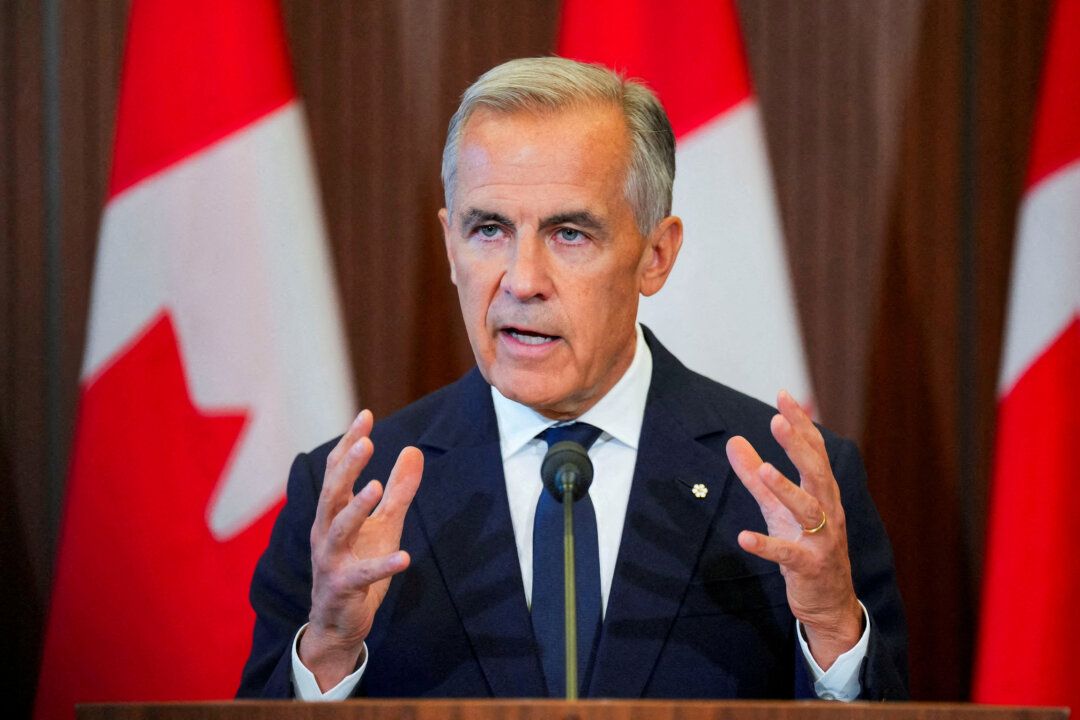
Carney Says Ottawa Committed to Moving Beyond Indian Act









Related Articles
China NewsEuropeGlobalUK NewsWorld News
UK Must Be Ready for War in 1,000 Days, Says British Defense Secretary
British Defense Secretary Wes Streeting has said the country must be ready...
China NewsEuropeGlobalUK NewsUK Top NewsWorld News
UK Prime Minister Says He Agrees With Principle of Migration Reform
British Prime Minister Andy Burnham said on Oct. 26 that he agreed...
China NewsEuropeGlobalWorld News
Serbian President Concedes Election Defeat to Student-Led Coalition
Serbian President Aleksandar Vucic has conceded defeat in the Oct. 25 election...


Asia & PacificChina NewsEuropeInternational RelationsNational SecurityPolicies & ImpactsUSUS NewsUS-China RelationsWorld News
Japan Defense Academy Chief Calls for 3 Red Lines in Competition With China
Japan’s former top uniformed military officer has called for establishing three “red...
