China’s military research establishment is facing renewed scrutiny after Zhao Xiaozhe, a former director of the Central Military Commission’s (CMC) Science and Technology Commission, was removed from the roster of academicians of the Chinese Academy of Engineering.The removals come as a growing number of senior researchers and executives with backgrounds in China’s nuclear weapons, missile, military aircraft, and electronic information programs have been dropped from the membership rolls of the country’s two state-run academies this year.Insiders familiar with China’s military-industrial sector say the moves reflect a broader crackdown on corruption and political disloyalty within a highly secretive research system in which enormous regime funding is allocated with limited outside scrutiny. They spoke to The Epoch Times on condition of anonymity out of fear of reprisal.An insider close to China’s military-industrial complex told the publication that corruption in military research has long been widespread, including alleged kickbacks, abuse of power, and the sale of official positions.“Whether someone is investigated does not depend solely on corruption issues,” the insider said. “Political stance and which side one stands with are also important factors.”Zhao’s removal is particularly significant because the commission he headed controls major aspects of military science and technology planning, including decisions involving major weapons-development programs and related funding, according to an expert in China’s military who spoke to The Epoch Times.“This department has a lot of funding, and it is also easy to embezzle,” the expert said. “If you draw up a project, it is all considered a military secret, so no one reviews it.”Military Research Projects Under ScrutinyThe Chinese Academy of Engineering’s current roster no longer includes Zhao’s name, and his biography has also been removed from the academy’s website.Zhao spent much of his career working on military command-and-control information systems, including naval combat software, maritime operational command, and military information systems.His predecessor, Liu Guozhi, previously headed the same CMC commission and was an academician of the Chinese Academy of Sciences. His name has also disappeared from that academy’s list.The two removals follow a series of similar actions against prominent figures in China’s military-industrial complex.In March, the Chinese Academy of Engineering removed radar scientist Wu Manqing, missile guidance specialist Wei Yiyin, and nuclear weapons engineer Zhao Xiangeng.Yang Wei, chief designer of the J-20 fighter jet, was subsequently also removed from the Chinese Academy of Sciences’ list of academicians.The developments have raised questions about the integrity of China’s military research and procurement system, where projects can involve billions of yuan in annual government funding.Another insider familiar with China’s military system told The Epoch Times the departments involved in military research are the most well-funded, with very few questions asked, leaving plenty of room for waste and corruption. He suggested that many of those research projects may not be qualified.Broader PurgeThe removals of military-linked academicians come against the backdrop of a broader purge of China’s military leadership.On Jan. 24, the Chinese regime announced that Vice Chairman of the CMC Zhang Youxia and CMC member Liu Zhenli were under investigation. The purge has since extended into several parts of the military.China’s military-industrial complex is central to the regime’s efforts to strengthen the country’s armed forces and develop advanced weapons. However, its highly classified nature also limits outside scrutiny of how research projects are selected, funded, and evaluated.The insiders said the combination of secrecy, concentrated political authority and large budgets has created opportunities for corruption in various research projects.Meanwhile, the regime continues a broader campaign targeting senior military personnel, with corruption investigations occurring alongside efforts to enforce political loyalty within the armed forces. The full reasons for the removal of the academicians have not been publicly disclosed.Li Xue contributed to this report.

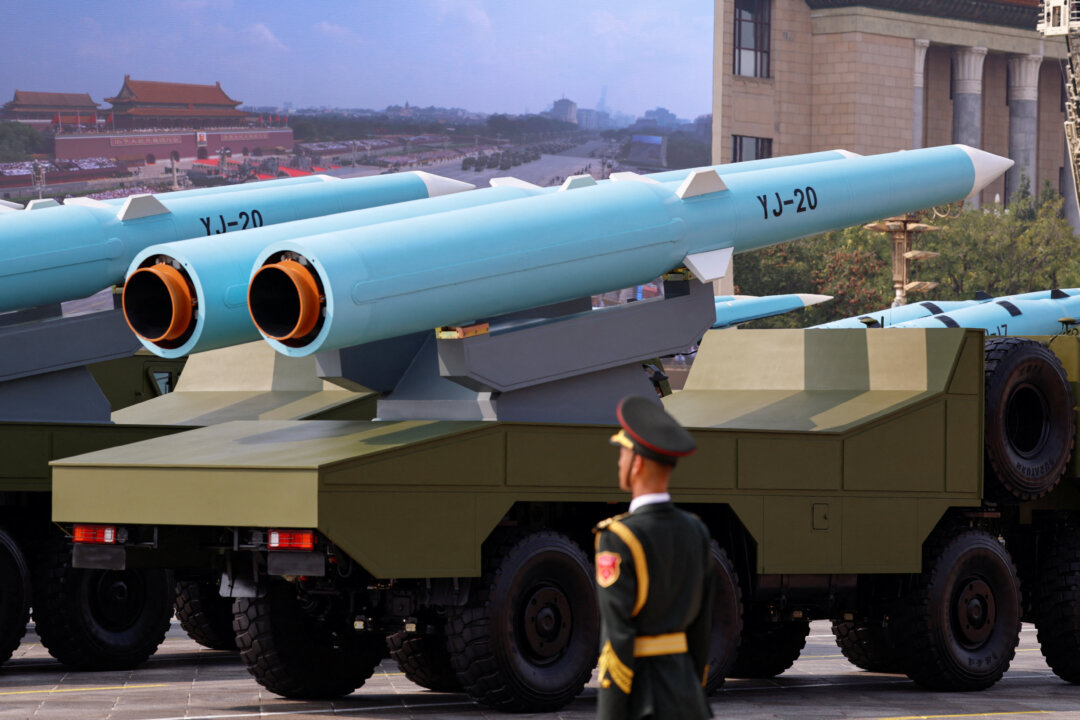
China Purges Senior Military Systems Engineer Amid Expanding Crackdown Within Military








Related Articles

EuropeThe Final wakeup call
Lula wins a miracle election in Brazil. Now comes the hard part: putting the country back on the right track
Three weeks ago, Brazilian President Luiz Inácio Lula da Silva’s political obituaries...

EuropeThe Final wakeup call
US midterms: what a new Congress could and could not change for Europe
US midterm elections traditionally attract fewer voters than presidential contests. But this...

EuropeThe Final wakeup call
Political power without balance leads to the erosion of democracy, what Montesquieu can teach modern-day France
KEY TAKEAWAYS Democratic erosion does not start by doing away with elections;...


China Business & EconomyChina NewsChina Technology
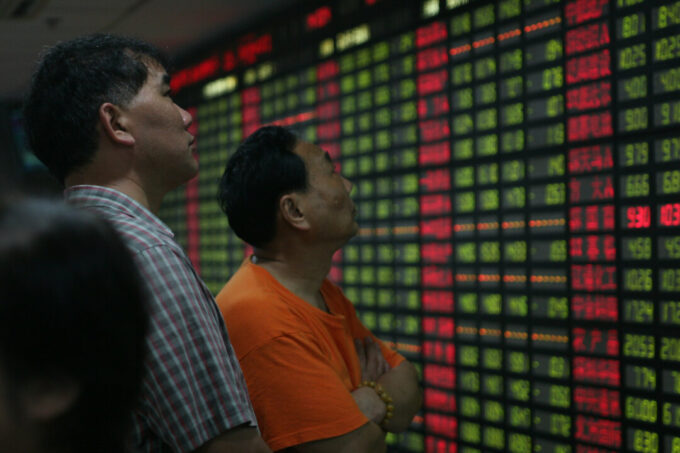
China Tech Index Plunges More Than 40 Percent From July Peak
China’s technology-heavy STAR 50 index has fallen by more than 40 percent...
