China’s private sector is facing a growing wave of bankruptcies, restructurings, and liquidations, with companies that have operated for more than a decade collapsing across manufacturing, technology, cosmetics, pharmaceuticals, and other industries.Business owners and economists told The Epoch Times that a combination of shrinking demand, the collapse of China’s property market, depleted local government finances, shifting export orders, and tighter bank lending is squeezing companies’ cash flows and leaving some businesses with few options other than judicial bankruptcy.They spoke on condition of anonymity out of fear of reprisal.The pressure is particularly acute for manufacturers, according to a businessman surnamed Liang in Foshan, China, who said many companies are struggling to collect payments while having to pay suppliers upfront.“Many who have operated businesses for more than a decade have technology that is among the best in their industries, but upstream materials and chip manufacturers have been squeezed, forcing them to pay cash and wait in line to pick up goods,” Liang said.“Downstream, export orders have shifted to Southeast Asia, and with local governments tightening their finances, the payment terms from major customers have gone directly from three months to one year.”Liang said some factory owners have become reluctant even to shut down their businesses because they fear facing tax inspections and demands for back taxes.“Under the Chinese Communist Party’s bad economic policies, factories are facing a fatal cash-flow crisis, and some have even reached the desperate situation where they want to close their factories but don’t dare to,” he said.Bankruptcies Spread Across IndustriesThe plight of Foshan Guanjin Optoelectronic Technology Co. Ltd. shows how even companies once recognized by the Chinese Communist Party (CCP) for their technological capabilities are struggling to survive.On July 28, a court in Foshan ruled that the company had gone bankrupt and terminated its bankruptcy proceedings.The court announcement said the company was unable to repay debts as they came due and had insufficient assets to cover its liabilities.Its bankruptcy administrator completed the distribution of the company’s remaining assets.Founded in 2011, Guanjin Optoelectronic operated for about 15 years and had been designated a “specialized, sophisticated, distinctive, and innovative” enterprise by provincial authorities, part of an official designation intended to highlight technologically advanced small and medium-sized companies.The collapse highlights the widening gap between Beijing’s emphasis on industrial upgrading and the financial pressures facing many of the private companies that are supposed to drive that transformation.The deterioration is not confined to manufacturers.Lagou, once a leading Chinese online recruitment platform, entered bankruptcy review in April and formally began bankruptcy restructuring proceedings in May, according to Chinese news portal Sohu.At its peak, the company had more than 20,000 businesses using its platform and had secured multiple rounds of financing.Its restructuring comes as China’s once-rapidly expanding online business sector faces a broader downturn.The cosmetics industry has also experienced a surge in corporate failures.At least 20 companies in the sector entered bankruptcy proceedings or compulsory liquidation during the first half of this year, nearly twice the number recorded during the same period in 2024, according to another report on Sohu.In July, China’s well-known Beijing Tongrentang Cosmetics Co., founded in 2005, was one of the companies placed into compulsory liquidation proceedings.The pressure has also reached the pharmaceutical sector.On July 31, the Chongqing Municipal Medical Products Administration published one of its latest lists of companies whose pharmaceutical distribution licenses were canceled at the companies’ request for business reasons.The list included companies that had operated for decades.The cancellation of a business license is different from a court-ordered bankruptcy, but the exit of long-established pharmaceutical distributors underscores how financial strain is reaching traditional industries that had operated for a lengthy period of time.Cash Flow Becomes Key TestA Chinese economist told The Epoch Times the wave of restructuring across industries reflects deeper problems in China’s economic model.He attributed the failures to what he described as the Chinese Communist Party’s effort to move away from a market-oriented economy toward greater state control.“When the property bubble burst, local government finances dried up, and large numbers of private enterprises were strangled, their bankruptcy was only a matter of time,” the economist said.Another economist, who gave his surname as Lai, told The Epoch Times the consequences of corporate failures in China are increasingly being passed down the supply chain to employees and suppliers.“In the past, we thought bankruptcy was the market’s ‘survival of the fittest,’ but now it looks more like a downward transmission of costs,” Lai said.“Since entrepreneurs have tied up their personal assets, they hold on until the last moment. As a result, by the time a company actually enters judicial proceedings, its assets have already shrunk to zero.“Banks take the mortgaged factories, while employees who have worked with the company for decades and suppliers that provided financing are forced to bear bad debts of more than 90 percent.”Jiang Fei contributed to this report.

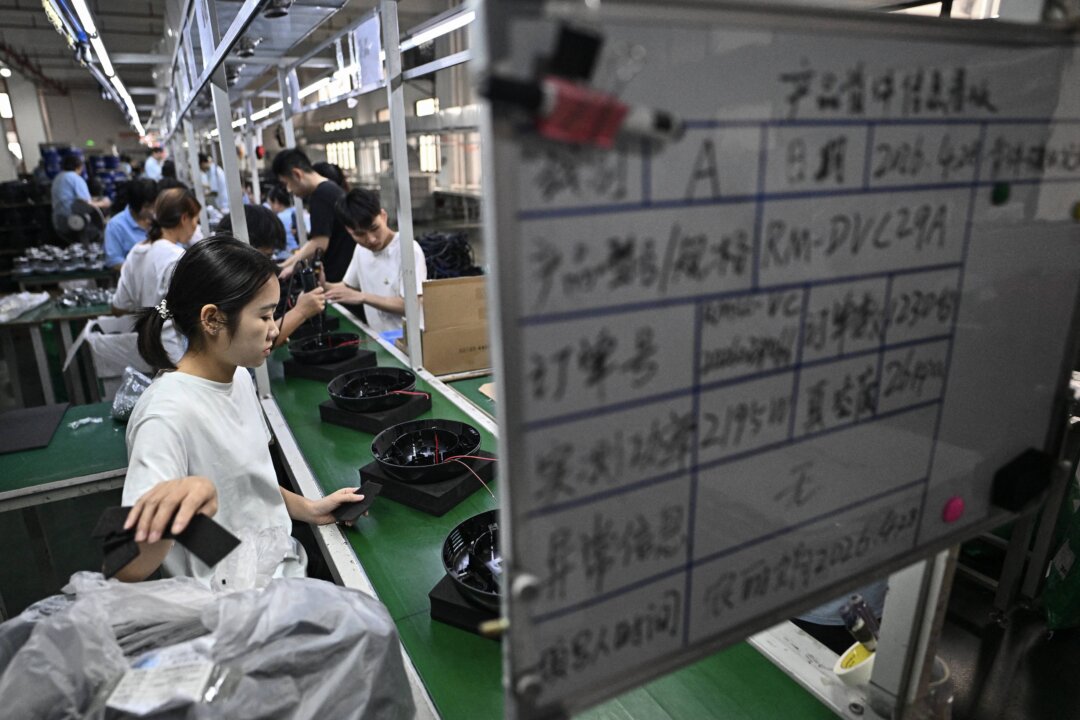
Chinas Private Sector Faces Growing Wave of Bankruptcies as Cash Crunch Deepens









Related Articles
China Business & EconomyChina NewsChina Technology
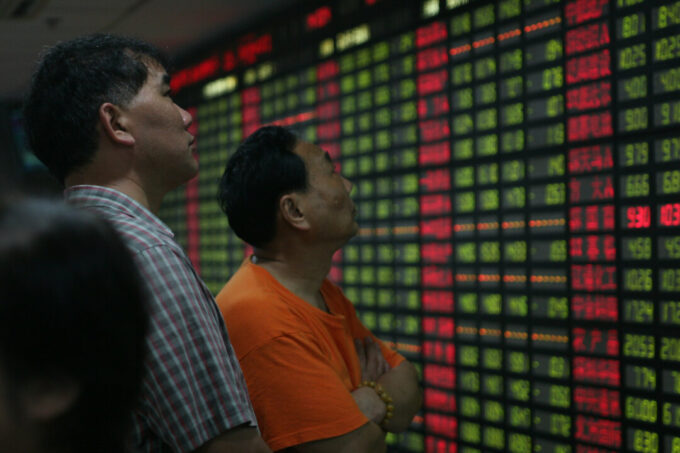
China Tech Index Plunges More Than 40 Percent From July Peak
China’s technology-heavy STAR 50 index has fallen by more than 40 percent...
China Military NewsChina NewsChinese RegimeInside CCP OfficialdomSpecial TopicsZhang Youxia
Xi Opens CCP Plenum Amid Sweeping Purges, Record-Low Attendance Forecast
Chinese Communist Party leader Xi Jinping opened a four-day meeting of senior...

China Business & EconomyChina NewsChinese RegimeFinance & Business TiesInside CCP OfficialdomSpecial Topics
Chinas Economic Woes Deepen as CCP Plenum Focuses on Political Control
The Chinese Communist Party (CCP) opened a four-day leadership meeting in Beijing...



BusinessCompaniesEnergy
EQT to Buy Range Resources, Creating Largest US Natural Gas Producer
EQT Corp. has agreed to acquire rival Appalachian shale driller Range Resources...
