Pyongyang has denounced the upcoming annual joint U.S.–South Korean military drills on the peninsula, calling them provocative and “a demonstration of an aggressive war.”Earlier this week, U.S. and South Korean officials announced that this year’s joint Ulchi Freedom Shield will be held from Aug. 17 to Aug. 27 and will include exercises to counter drone attacks, GPS disruption, and cyberattacks.The North Korean state-run media agency KCNA on Aug. 14 cited a spokesperson for the country’s Ministry of Foreign Affairs as saying that the addition of these exercises signals an escalated level of aggression from previous years.“Applying a new level of deterrence to a new level of threat is our consistent security principle,” the ministry said.“The grave power standoff created by hostile nations will not be tolerated in the slightest, and our stance against the enemy—to thoroughly reject any threats or challenges through the responsible and resolute exercise of the right to self-defense—will be expressed more clearly.”Such rhetoric from Pyongyang is typical ahead of joint exercises between South Korea and its allies. North Korea in the past has conducted its own military tests or exercises in response to previous Ulchi Freedom Shield drills.South Korea and the United States have maintained that the exercises are defensive in nature and are not designed as a provocation, but to address security threats facing the Korean Peninsula.The annual Ulchi Freedom Shield exercise is a joint, all-domain drill between South Korean and U.S. forces in which the allies strengthen their joint response capabilities against a range of regional security threats. It often features live, virtual, and field-based training, engaging personnel from a range of military services from both forces.Ulchi Freedom ShieldIn an Aug. 10 joint statement, the U.S. Joint Chiefs of Staff and the South Korean Combined Forces Command said that the focus of this year’s drills will be on evolving threats posed by North Korea, which has developed new tactics while assisting Russia in the Ukraine war.“The character of warfare has been changing,” Col. Ryan Donald, director of public affairs at the ROK/US Combined Forces Command, told reporters. “So even evolving aspects of warfare—including drones, GPS disruption, cyberattacks—are expected to be reflected in the exercise.”ROK stands for South Korea’s official name, the Republic of Korea.“DPRK soldiers have deployed and fought in Ukraine, and they’ve taken those lessons they learned there and brought them back to North Korea,” Donald said.“That changes the [DPRK’s] capability, and our training accounts for that threat.”North Korean Missile TestingSouth Korean and Japanese authorities on Aug. 12 said that North Korea fired a ballistic missile toward the sea off the Korean Peninsula’s east coast.North Korea launched the missile from Wonsan, six days after firing another from the same area, Seoul and Tokyo said.Hong Min, a senior researcher at the Korea Institute for National Unification in Seoul, said the launch was likely part of Pyongyang’s ongoing weapons-testing schedule but noted that the timing may also have been a political message.“Even if it was a test of a weapon under development, choosing when to conduct it requires a political decision,” Hong said.U.S. Pacific Command (PACOM) said in a statement that it was aware of the DPRK’s missile launch and was consulting with allies and partners.“Based on current assessments, these events do not pose an immediate threat to U.S. personnel or territory, or to our allies,” PACOM said. “The United States remains committed to the defense of the U.S. homeland and our allies in the region.”Reuters contributed to this report.

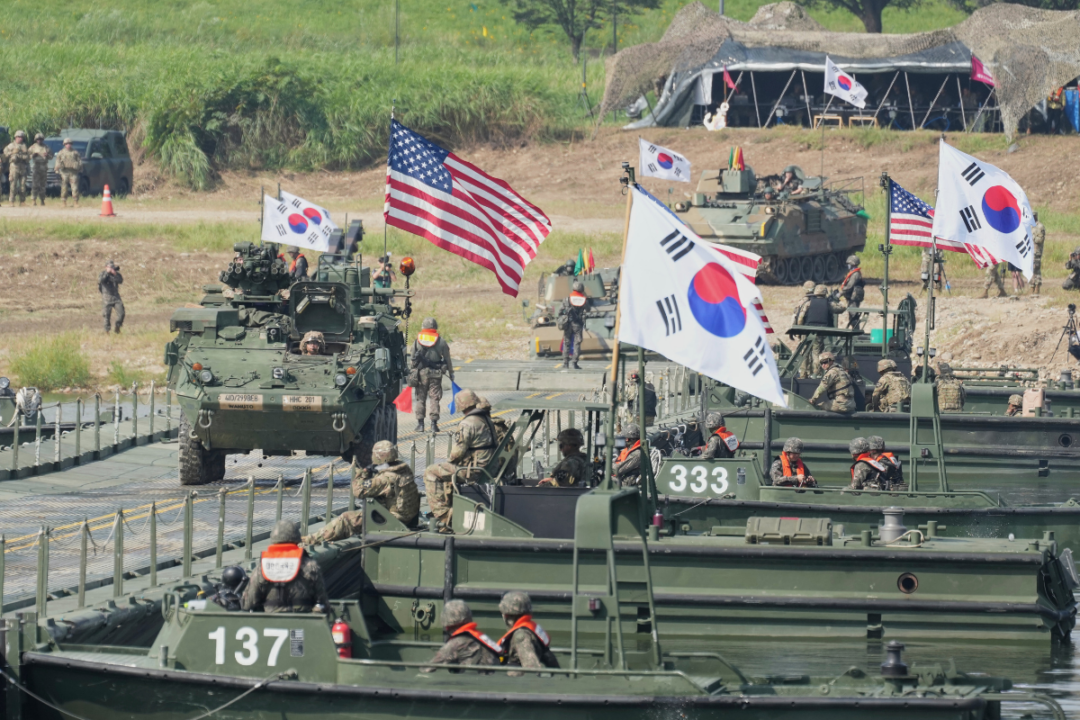
North Korea Threatens Stronger Deterrence Ahead of USSouth Korea Military Drills









Related Articles

EuropeThe Final wakeup call
Lula wins a miracle election in Brazil. Now comes the hard part: putting the country back on the right track
Three weeks ago, Brazilian President Luiz Inácio Lula da Silva’s political obituaries...

EuropeThe Final wakeup call
US midterms: what a new Congress could and could not change for Europe
US midterm elections traditionally attract fewer voters than presidential contests. But this...
EuropeThe Final wakeup call
Political power without balance leads to the erosion of democracy, what Montesquieu can teach modern-day France
KEY TAKEAWAYS Democratic erosion does not start by doing away with elections;...



China NewsEuropeGlobalUK NewsWorld News
UK Must Be Ready for War in 1,000 Days, Says British Defense Secretary
British Defense Secretary Wes Streeting has said the country must be ready...
