
U.S. small businesses plan to bolster their hiring efforts, but many entrepreneurs struggle to find workers to fill these positions, a new survey found.The Small Business Optimism Index—a monthly survey conducted by the National Federation of Independent Business—surged in July to 99.8, the highest level in almost a year. This was also above the 52-year average of 98.0.Of the survey’s 10 index components, eight climbed, with employment plans and capital expenditure forecasts leading the charge last month.“Small business optimism rose again in July, with a significant increase in owners expecting to hire, accompanied by an improvement in plans to make capital expenditures,” Bill Dunkelberg, the group’s chief economist, said in an August 11 statement.While hiring plans are at a near-four-year high and above the series’ five-decade average, smaller firms are struggling to find workers.For 27 percent of small business owners, “labor quality or availability” was their top problem—firmly above the historical average of 12 percent. Thirty-six percent of respondents noted that they could not fill their job openings, the highest level since June 2025.Demand for labor remains robust, with job vacancies above 7 million. At the same time, hiring momentum has stalled since the springtime boom.In ADP’s weekly private payrolls snapshot, U.S. firms added an average of 8,250 jobs per week in the four weeks ending July 25, representing the sixth straight week of slowing hiring.This comes after the U.S. economy unexpectedly lost 23,000 jobs in July, led by local government education, leisure and hospitality, and retail.Many economic observers, including Bill Adams, chief U.S. economist at Fifth Third Commercial Bank, shrugged off the surprise decline as driven by seasonal factors, such as teachers’ summer vacations and the end of FIFA World Cup festivities.“This looks like a wonky seasonal adjustment fluke,” Adams said in a note emailed to The Epoch Times.“The Bureau of Labor Statistics tries to adjust their measurement of K-12 jobs for the big swings that come every year in the summer months, but it’s hard to do in practice.”Changing dynamics are also keeping a lid on the unemployment rate, which ticked down to 4.1 percent.A falling rate is welcome, but it is declining “mostly for the wrong reasons,” Adams said.“In the broader context, the July jobs report shows that job growth was slow in the middle of 2026, but the job market is still tightening due to a shrinking labor force,” he added.‘Disturbing’ Trend in Workforce ParticipationAnother factor has been the sizable decline in workforce participation, says Stephen Moore, economist and co-founder of The Committee to Unleash Prosperity.July’s labor force participation rate fell by 0.1 percentage point to 61.4 percent. Excluding the pandemic years of 2020 and 2021, this is the lowest level since 1976.Various factors have contributed to this downward movement, including more seniors leaving the workforce and immigration policy reforms.San Francisco Federal Reserve research also suggests methodological changes to population estimates by the Bureau of Labor Statistics likely accounted for a sizable share of the steady drop in workforce participation.Still, according to Moore, fewer people engaging in the job market is a concerning trend unfolding today.“We’re facing a very disturbing reduction in the number of people of working age that are in the workforce,” Moore said on Fox Business following the jobs report on August 7.The continuing decline in the number of males between 18 and 35 in the workforce is also “really troubling,” the former economic adviser to President Donald Trump added.“We can’t quite figure out what is happening there,” he said. “But we have to get them back in the workforce.”The overall male labor force participation rate has yet to recover from pre-pandemic levels, sliding to below 67 percent this year. It has also been in steady decline for decades, peaking at almost 88 percent in 1949.It is unclear what has been happening to American men. Various theories have been presented over the years.A June paper published in the National Bureau of Economic Research suggested one reason may have been “changes in men’s beliefs about the return to work, shaped by lifetime experiences of the aggregate male labor market.”“We find that experience effects on participation persist for men who move across state lines, are stronger for same-race male experiences, and are driven by formative childhood years,” the economists wrote.“Our findings suggest that experience effects can turn short-run declines in labor demand into long-run declines in labor supply.”Whatever the cause, estimates by the Congressional Budget Office indicate that overall labor force participation will continue to slow in the years ahead.The share of 25- to 54-year-olds in the civilian noninstitutionalized population—the core working-age group—is expected to expand more slowly over the next three decades than it did during the previous half-century, the nonpartisan budget watchdog said.










USDA Unveils New Support for Ranchers to Rebuild Cattle Herds
The U.S. Department of Agriculture has unveiled a new package of measures...

How Major US Stock Indexes Fared Aug. 31
Oil prices rose and U.S. stocks fell after American forces struck Iranian...
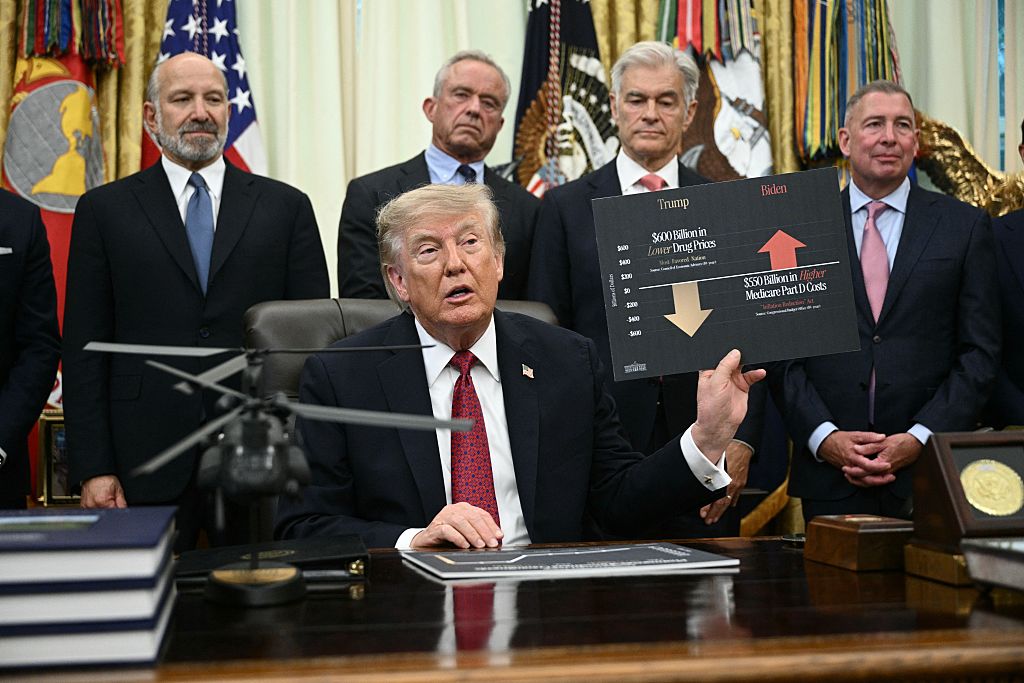
Trump Unveils New Drug Pricing Deals With 9 Pharmaceutical Companies
President Donald Trump on Aug. 31 announced agreements with nine midsize pharmaceutical...



Delcy Rodrguez Says Venezuelas Vast Oil Reserves Must Be Turned Into Prosperity
Oil rigs are pictured in Cabimas, south of Lake Maracaibo, Zulia State,...
