
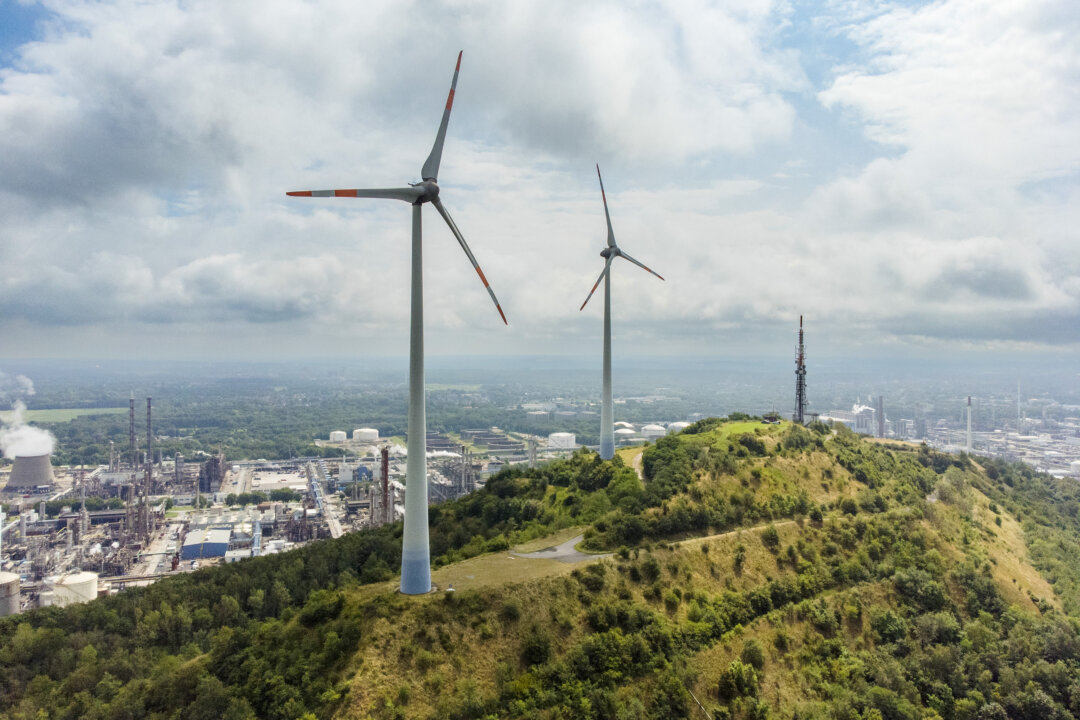
The U.S. Department of the Interior (DOI) has agreed to pay a U.S. subsidiary of a German company $1.22 billion to cancel three offshore wind leases in the United States.RWE U.S. Offshore reached a settlement agreement with the DOI to relinquish its offshore wind leases off the coasts of California, Louisiana, and New York, while also resolving all claims against the federal government on this issue, RWE Americas said in an Aug. 6 statement. RWE Americas is owned by RWE Group, a renewable energy company based in Germany.According to the company, it had already invested more than $1 billion toward these leases and related project development. However, “after careful consideration, it was determined there is no path forward to permit these projects in the U.S. for the foreseeable future,” RWE Americas said.The company determined that this course of action was in the best interest of its stakeholders. The resolution also allows it to “direct resources toward energy projects that can be advanced with certainty,” the company said.Despite canceling the offshore wind lease agreements, RWE Americas said it was committed to deploying capital across the United States.For instance, the company plans to use proceeds from the settlement to fund the construction of an LNG terminal in Louisiana. RWE Americas aims to invest $900 million to secure a 16 percent stake in the project.Moreover, the company aims to invest roughly 17 billion euros (about $19.6 billion) over the next six years in the United States to increase its power generation capacity from roughly 13 gigawatts to 22 gigawatts by 2031.In an Aug. 6 statement, Sen. Chuck Schumer (D-N.Y.) criticized the Trump administration for spending taxpayer dollars to end clean energy initiatives, including RWE’s offshore projects.According to the statement, the Trump administration has spent $3.918 billion in taxpayer funds across 12 projects in settlement agreements with companies involved in clean energy agreements.Trump is “cancelling projects that provide unlimited free energy once online, redirecting billions in taxpayer money to expensive dirty energy sources that pad the pockets of his Big Oil donors while polluting your community,” Schumer said in the statement.In addition to RWE, the administration has paid $928 million to TotalEnergies, $885 million to Ocean Winds, $765 million to Invenergy, and $129 million to Duke to cancel clean energy projects, according to the statement.TotalEnergies, Invenergy CancellationsThe cancellation of the TotalEnergies project was announced in March. At the time, Interior Secretary Doug Burgum said during a press conference that the company’s wind projects were tied to “green energy” subsidies provided by the previous administration, which forced U.S. taxpayers to pay twice for the same energy sources.“They were paying for it in terms of high utility bills, but they were all paying for it in terms of the taxpayer subsidies,” Burgum said.TotalEnergies agreed to redirect the investment into a Texas LNG project.In June, DOI announced the settlement agreement with Invenergy affiliates to terminate four offshore wind leases and reinvest the roughly $765 million in proceeds in other energy initiatives, including geothermal and natural gas generation.“The offshore wind leases were sold under the assumptions that taxpayers would indefinitely subsidize costly, unreliable projects and that no national security concerns were implicated,” Burgum said at the time. “Under President Trump, companies are shifting investment back toward dependable, secure energy infrastructure.”In July 2025, President Donald Trump signed an executive order ending federal subsidies for wind and solar energy facilities. In the order, Trump cited the unreliability of such energy sources and the risk of dependence on foreign supply chains.The order enforced provisions in the One Big Beautiful Bill Act, which ended renewable energy tax credits after 2026 for wind and solar projects that have not yet begun construction.The One Big Beautiful Bill Act’s deadline for ending federal subsidies for such solar and wind projects officially ended on July 4 this year, according to the Department of Energy.Secretary of Energy Chris Wright said he was “thrilled” with ending the subsidies, highlighting that wind and solar projects “take a lot of land, 100 times more land for a similar amount of energy.”These projects also use enormous amounts of energy-intensive materials and additional transmission lines.“And what do we get for all that is a relatively small amount of low value energy. It’s low value because the wind doesn’t always blow and the sun doesn’t always shine,” Wright said.










Ohio State Agrees to $2.1 Million Federal Settlement Over Undisclosed China Research Ties
Ohio State University has agreed to pay $2.1 million to resolve federal...

USDA Unveils New Support for Ranchers to Rebuild Cattle Herds
The U.S. Department of Agriculture has unveiled a new package of measures...

How Major US Stock Indexes Fared Aug. 31
Oil prices rose and U.S. stocks fell after American forces struck Iranian...
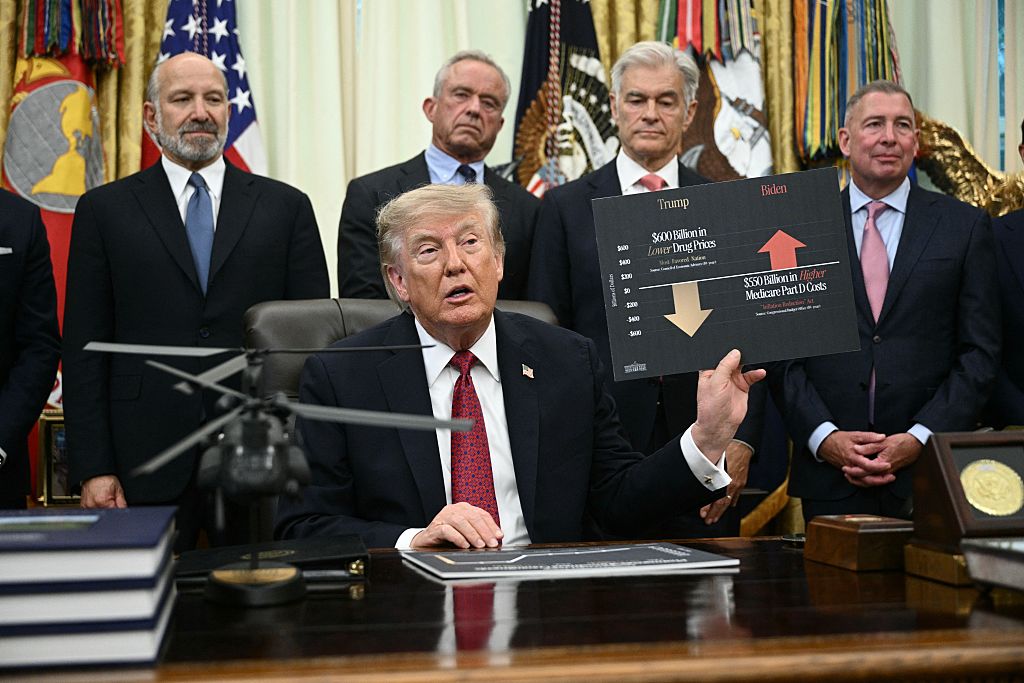


Trump Unveils New Drug Pricing Deals With 9 Pharmaceutical Companies
President Donald Trump on Aug. 31 announced agreements with nine midsize pharmaceutical...
