
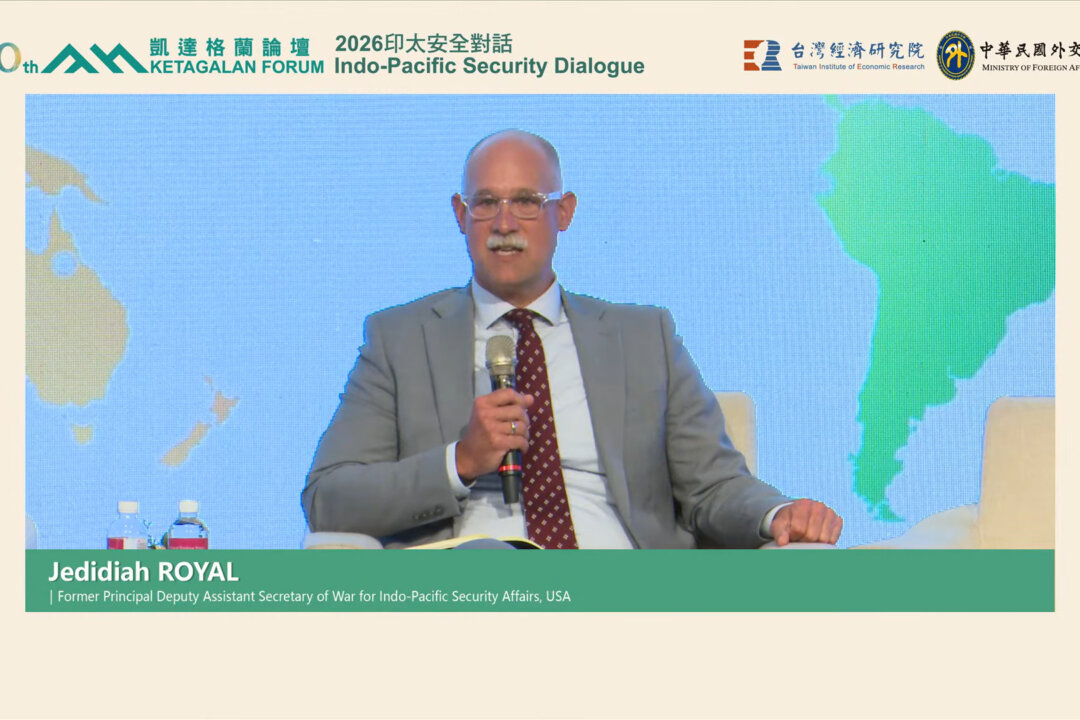
Former senior Pentagon official Jed Royal said modeling conducted in the United States with allies and partners indicates that Taiwan’s defense strategy can work—but only if the island funds the necessary capabilities and repeatedly exercises the plans needed to carry it out.“Now, that strategy of erosion can work. I want to be very clear,” Royal said during an Aug. 4 address at the Ketagalan Forum in Taipei.“All of the modeling that we have done in the United States with allies and partners—that’s a strategy that can work,” he said.Royal did not identify the models, participating countries, scenarios, or assumptions behind the assessment. He spoke as a former official, not on behalf of the Trump administration.Royal recently left the Pentagon after serving as principal deputy assistant secretary of defense for Indo–Pacific security affairs. In that position, he oversaw a portfolio spanning China, Taiwan, East Asia, South Asia, and Southeast Asia, according to his official biography.Royal, the Pentagon, and Taiwan’s Ministry of National Defense did not respond to requests for comment by publication time.Strategy of ErosionAt the forum, Royal described a strategy intended to weaken an attacking force progressively rather than depend on stopping it in a single battle.Taiwan would target Chinese forces as they crossed the Taiwan Strait, continue weakening them as they approached and attempted to land, and then resist their movement inland and into populated areas.Royal identified five military challenges Taiwan should be prepared to address: countering a joint island landing campaign, helping reopen sea and air routes, protecting critical infrastructure, maintaining communications, and supporting civilians during a conflict.He called for stronger air and missile defenses, more resilient communications and cyber capabilities, protection for critical infrastructure, and sufficient stockpiles to sustain those missions.Defense ProductionRoyal also used his forum address to call on Taiwan to expand its domestic defense production, particularly for unmanned systems.He said Taiwan should establish production capacity both on and outside the island and disperse its weapons and supplies in hardened facilities.In a separate interview with Taiwan’s Central News Agency after the forum, Royal described regional defense manufacturing as an urgent priority.“We have to rely on the defense industrial capacity that exists in the region. We can’t create that on the spot,” he told the news agency.Royal said in the interview that U.S. forces would probably deploy first to countries in the region during a crisis, before Washington determined its next steps. He named Japan, the Philippines, South Korea, and Australia as possible initial destinations.Taiwan’s legislature approved 780 billion New Taiwan Dollars (about $25 billion) for U.S. weapons in May but excluded domestic programs from the Lai administration’s larger proposal. The administration later introduced a separate 210 billion New Taiwan Dollars (about $6.7 billion) unmanned-systems bill, which remains pending.Royal told Central News Agency that many in Washington were disappointed when Taiwanese lawmakers removed domestic production funding from the earlier proposal.The decision suggested that some in Taiwan did not share “the same urgency that I feel right now of the importance of developing Taiwan’s domestic defense manufacturing capacity,” he said in the interview.“But hopefully, we can see that rectified in the coming months.”Plans Must Be ExercisedAt the forum, Royal said Taiwan must routinely test how its civilian and military institutions would operate together during a crisis.He called for exercises covering decision-making and transfers of authority across the civilian and military sectors.Royal delivered the remarks one day before Taiwan began its 10-day annual Han Kuang military exercise on Aug. 5.Taiwanese President Lai Ching-te inspects coastal-strike and nearshore-defense drills during the Han Kuang 42 military exercise in Kaohsiung, Taiwan, on Aug. 8, 2026. Courtesy of Liu Shu fu/Office of the ROC PresidentTaiwan’s Ministry of National Defense said the exercise includes mobilization, responses to a Chinese blockade and attempted landing, critical infrastructure protection, dispersed logistics, wartime production, and coordination between military units and civilian agencies.In his subsequent Central News Agency interview, Royal linked Taiwan’s ability to delay an attacking force to the time other countries had to respond.“So long as Taiwan is focused on that,” he said, “then I do think that you’ve given the rest of the world every opportunity to come and cooperate alongside you in that most challenging scenario.”









Ohio State Agrees to $2.1 Million Federal Settlement Over Undisclosed China Research Ties
Ohio State University has agreed to pay $2.1 million to resolve federal...
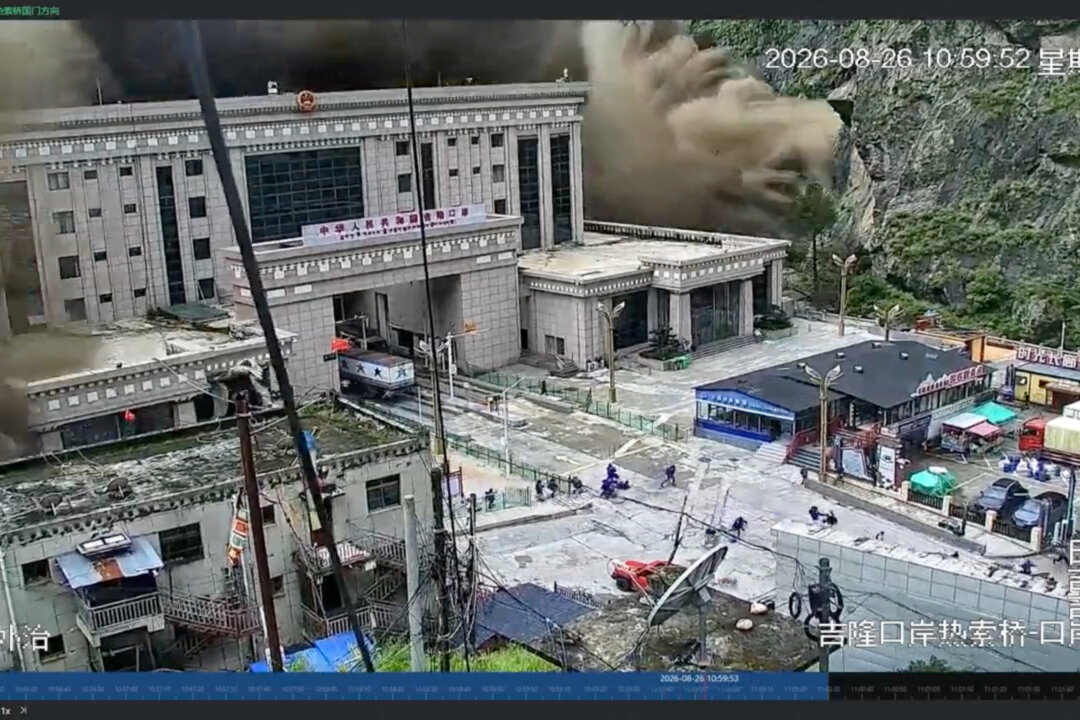
Chinese Scientists Flagged Glacial Flood Danger One Year Before Nepal Catastrophe
More than a year before the catastrophic flash flood devastated the China–Nepal...
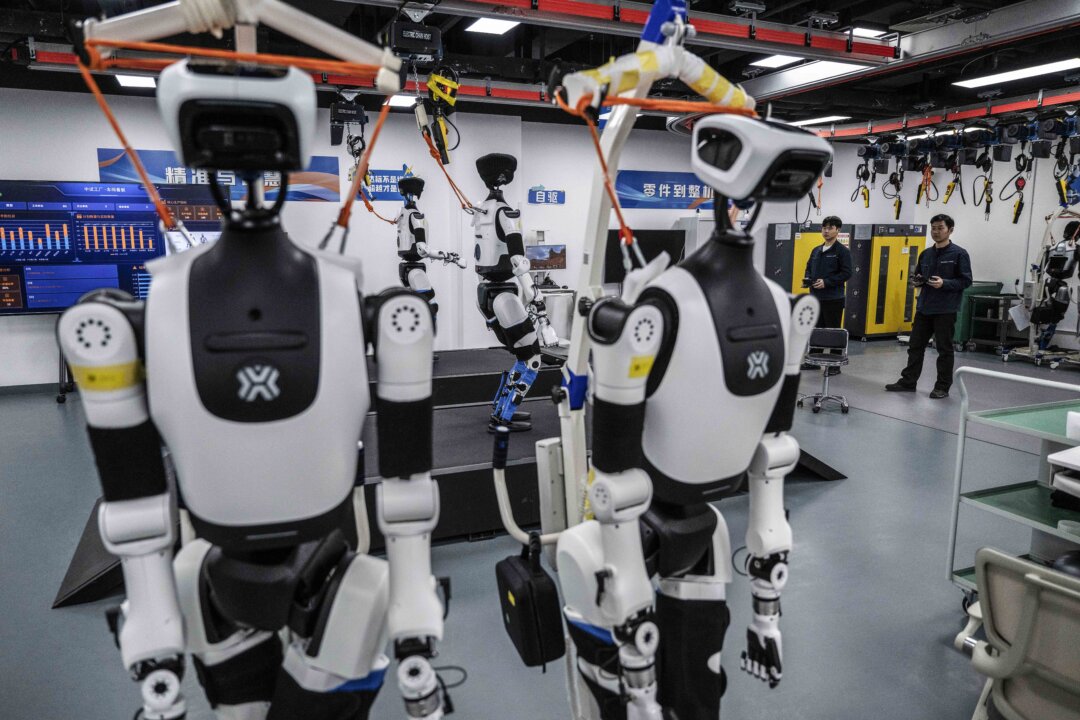
Chinas Humanoid Robot Companies Face Reality Check
China is showcasing humanoid robots as symbols of its technological ambitions. However,...


USDA Unveils New Support for Ranchers to Rebuild Cattle Herds
The U.S. Department of Agriculture has unveiled a new package of measures...
