
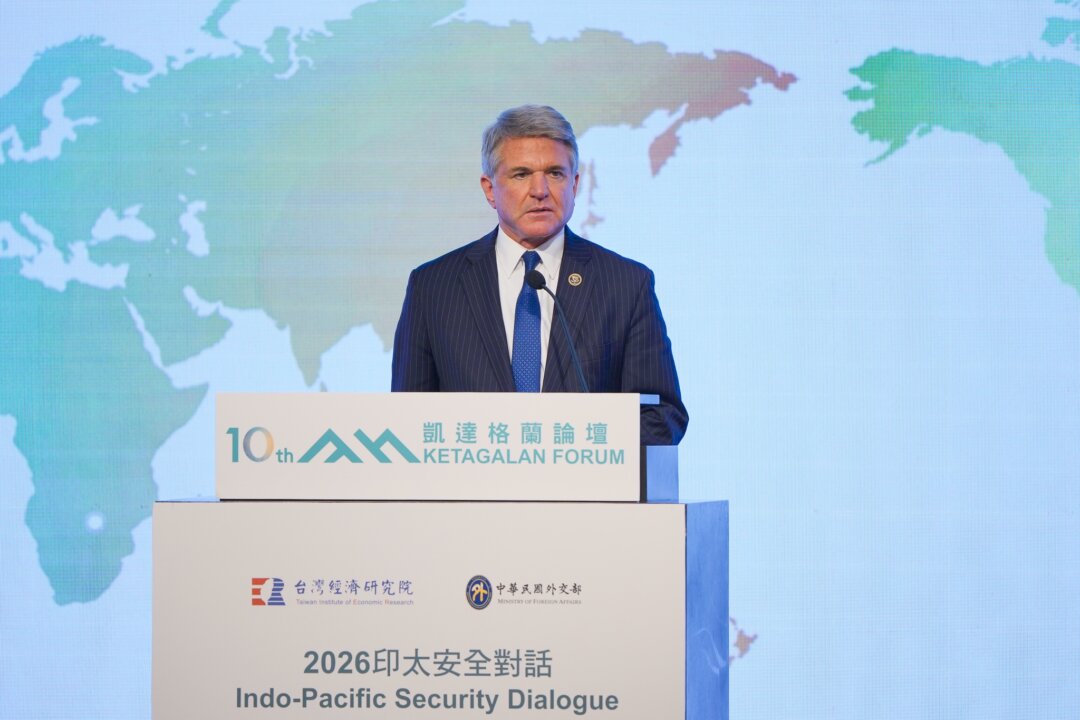
Rep. Michael McCaul (R-Texas) said he expects President Donald Trump to soon send Congress a delayed $14 billion package of defensive weapons for Taiwan, while urging the island to fund domestic drone production and deepen defense industrial cooperation with the United States.“I’m confident the president will forward another package to the Congress soon with an additional $14 billion in critical military defense articles,” McCaul said during an Aug. 4 address at the Ketagalan Forum in Taipei.McCaul, former chairman of the House Foreign Affairs Committee, did not identify the weapons included in the package or say when it would be formally submitted.The package has awaited administrative action for months, despite repeated appeals from lawmakers to formally notify Congress.Eight senators urged Trump in May to allow the sales to proceed, saying Congress had pre-approved them in January 2025. The package, however, was not formally notified to Congress.Sen. Jeanne Shaheen (D-N.H.), ranking member of the Senate Foreign Relations Committee, again called for action during a June committee meeting, saying the administration should move forward with the $14 billion in arms sales.Questions about the delay intensified after Trump said in May that the package was being held “in abeyance.” He called it a “very good negotiating chip” in talks with Beijing and said his decision depended on China.Acting Navy Secretary Hung Cao later told a Senate hearing that foreign arms sales were being delayed to preserve munitions for U.S. military operations involving Iran.Secretary of State Marco Rubio disputed the suggestion that the package was being withheld when lawmakers questioned him in June.“We’re not withholding,” Rubio told the House Foreign Affairs Committee. “It’s just under review still.”Rubio said the review included the near-term availability of weapons and the need to balance the proposed sale against U.S. procurement requirements.Assistant Secretary of State Michael DeSombre told lawmakers on June 25 that the package remained under review by Trump but gave no timetable for a decision.The State Department separately notified Congress in December 2025 of eight possible Foreign Military Sales cases for Taiwan valued at up to $11.1 billion. They included M109A7 self-propelled howitzers, High Mobility Artillery Rocket Systems, anti-armor missiles, unmanned systems, and military communications equipment.“Last December, Congress signed off on $11 billion in a foreign military sales package directed to Taiwan, the largest in history,” McCaul said.Drone ProductionMcCaul also called on Taiwan’s legislature to approve funding for the island’s domestic drone industry.“It is critical that Taiwan pass this budget to advance funding for its domestic drone production,” he said at the forum. “Passing this bill will reiterate Taiwan’s commitment to its own self-defense and signal a great leap of faith in Washington.”Taiwan’s legislature passed a special act in May authorizing up to NT$780 billion (about $25 billion) for weapons purchased from the United States through the Foreign Military Sales program.The measure was narrower than the Lai administration’s original NT$1.25 trillion (about $40 billion) proposal, which also included commercially purchased and domestically developed weapons.The administration subsequently proposed a separate NT$210 billion (about $6.7 billion) special act for domestically produced unmanned aircraft and maritime systems. The proposal would authorize spending from 2026 through 2031 and remains before Taiwan’s legislature.McCaul linked the effort to lessons from Russia’s war with Ukraine, where drones have become central to surveillance, targeting, and attacks.“I just came back from the region just recently, and I hope to see the U.S.–Taiwan partnership involved in drone co-production and technology,” he said.Such cooperation, McCaul said, could help create “truly a hornet’s nest in defense of Taiwan.”“Our ultimate goal must be deterrence, which leads to peace,” he added.Taiwanese President Lai Ching-te made a similar proposal earlier that day while awarding McCaul its Order of Brilliant Star with Grand Cordon, an award given in recognition of significant contributions to bilateral relations, economic cooperation, and diplomatic ties.Lai said Taiwan would continue strengthening asymmetric capabilities, developing drone and counter-drone systems, and building broader civil-defense resilience.Taiwan also hopes to expand its relationship with the United States from military procurement into “joint research and development and joint production,” Lai said.Taiwanese President Lai Ching-te presents Rep. Michael McCaul (R-Texas), chairman emeritus of the House Foreign Affairs Committee, with the Order of Brilliant Star with Grand Cordon in Taipei on Aug. 4, 2026. Courtesy of the Office of the ROC PresidentArms Sales and BeijingMcCaul also addressed concerns that Washington’s efforts to manage relations with Beijing could affect arms sales to Taiwan.Citing one of the Six Assurances issued to Taiwan during the Reagan administration, he said, “The United States does not consult with [China] on its arms sales to Taiwan.”“And that still holds as the policy of the United States today,” McCaul said.He described the Chinese Communist Party’s increasingly aggressive conduct as a threat to Taiwan and the regional balance of power.Beijing has expanded military operations around Taiwan in recent years, including large-scale exercises and regular deployments of military aircraft and vessels.McCaul also pointed to cybersecurity as a central part of Taiwan’s defense alongside missiles and drones.Congress authorized up to $1 billion for the Taiwan Security Cooperation Initiative under the fiscal year 2026 National Defense Authorization Act. The initiative supports defense equipment, services, training, medical supplies, and combat casualty care capabilities for Taiwan, according to the Senate Armed Services Committee’s official summary.The $14 billion package remains under administrative review as of Aug. 7. A formal State Department notification would disclose the proposed systems, their maximum estimated value, and the principal contractors.









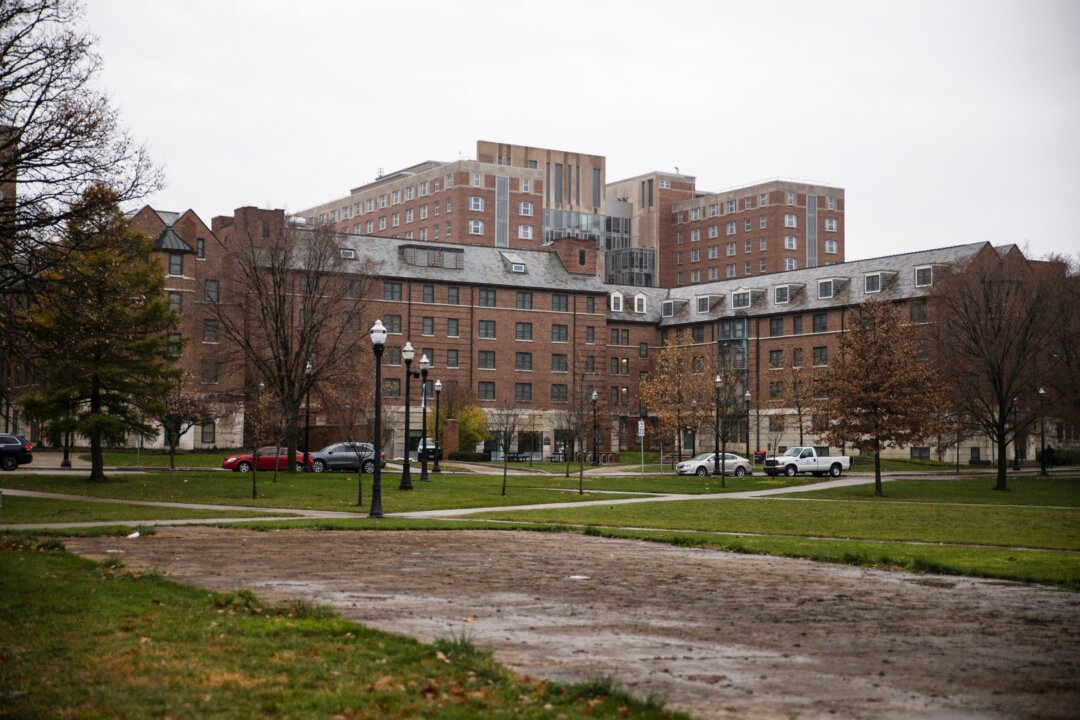
Ohio State Agrees to $2.1 Million Federal Settlement Over Undisclosed China Research Ties
Ohio State University has agreed to pay $2.1 million to resolve federal...
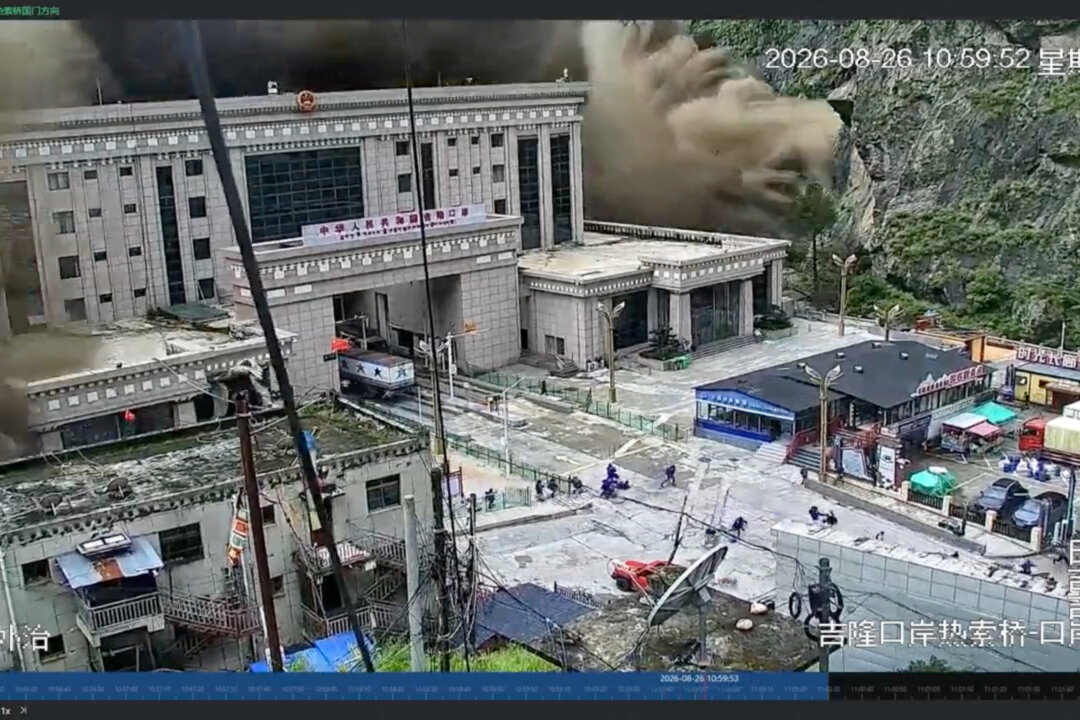
Chinese Scientists Flagged Glacial Flood Danger One Year Before Nepal Catastrophe
More than a year before the catastrophic flash flood devastated the China–Nepal...
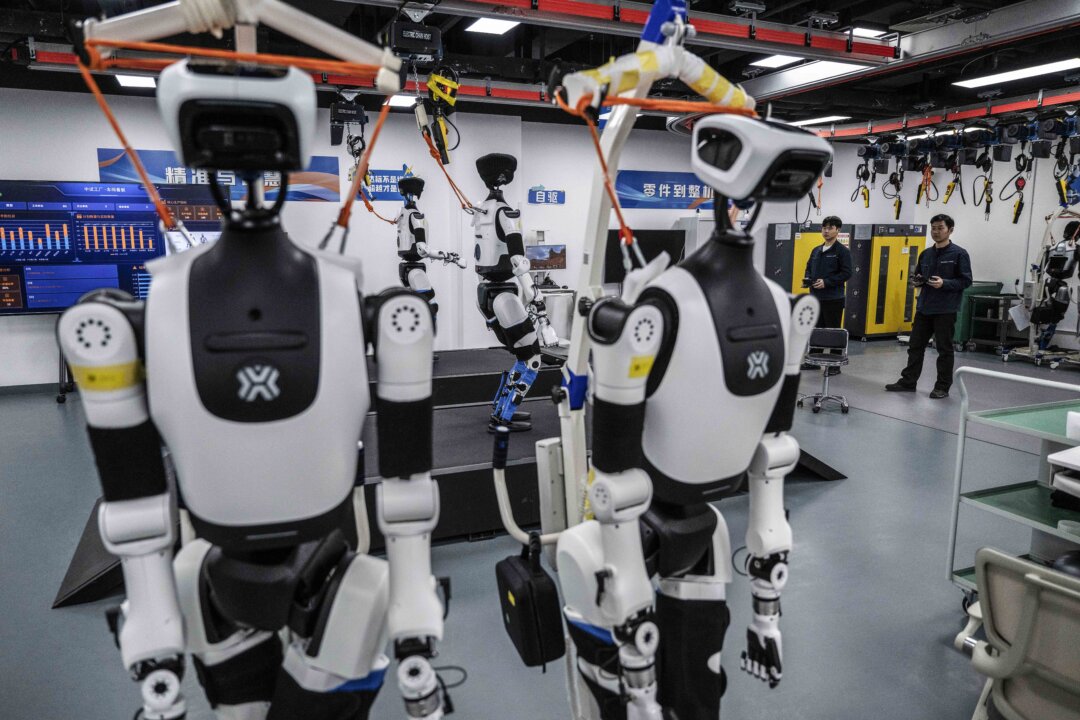
Chinas Humanoid Robot Companies Face Reality Check
China is showcasing humanoid robots as symbols of its technological ambitions. However,...
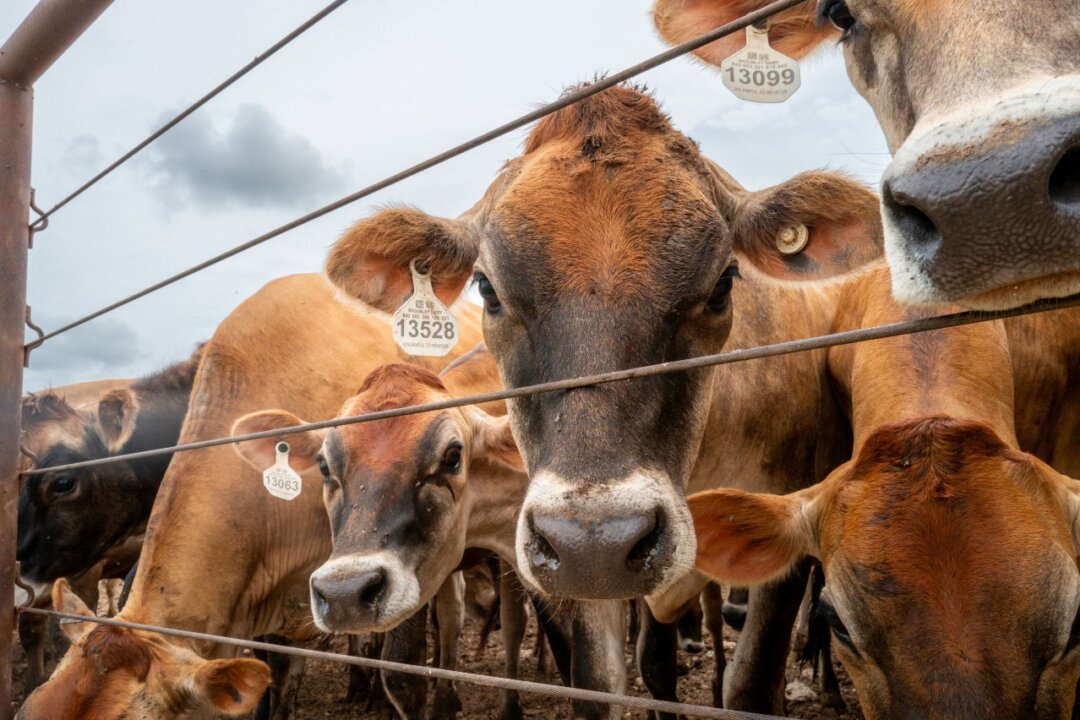


USDA Unveils New Support for Ranchers to Rebuild Cattle Herds
The U.S. Department of Agriculture has unveiled a new package of measures...
