
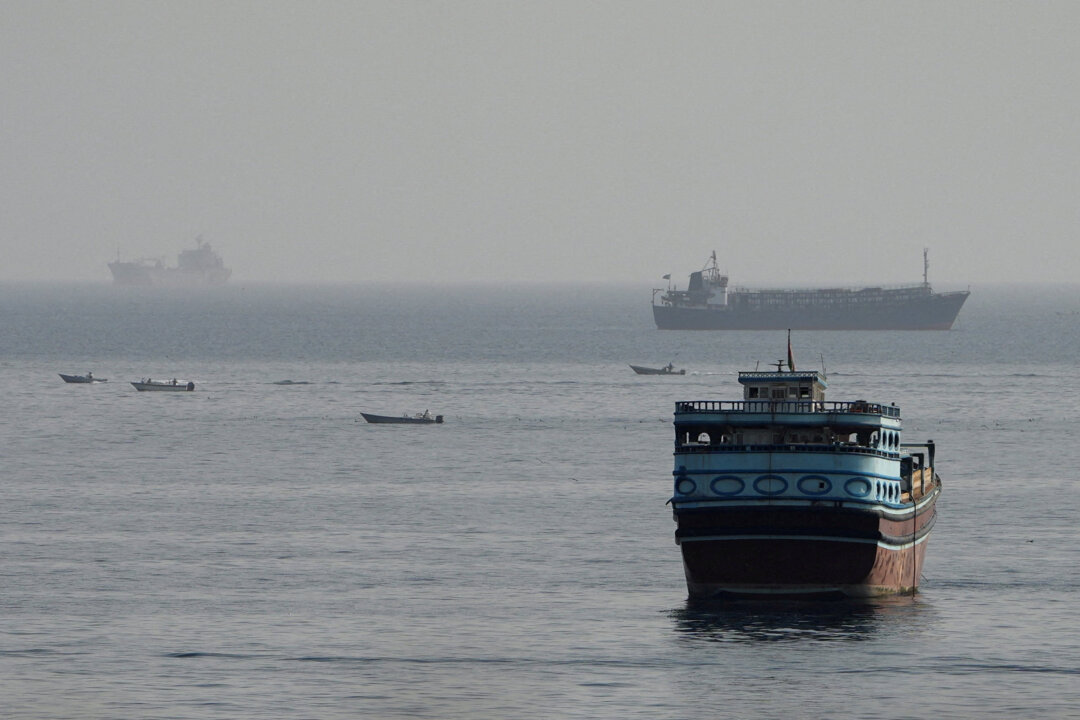
The ultimate solution to resuming and ensuring unfettered transit through the Strait of Hormuz—and other vital waterways across the globe—may be to compensate coastal countries for maintaining and managing commercial chokepoints and shipping lanes, a former U.S. Navy Fifth Fleet commander and the nation’s “dean of Middle East scholars” suggests.A working example of such an arrangement cited during an Aug. 4 Middle East Institute webinar is the voluntary “Aids to Navigation Fund” shipping companies pay to Singapore, Indonesia, and Malaysia for supporting “navigational safety and environmental protection” in the Strait of Malacca, which links the Pacific and Indian oceans.Under the United Nations Convention on the Law of the Sea, commercial shipping is guaranteed toll-free passage through vital straits, and that must remain sacrosanct, retired Vice Adm. Kevin Donegan said. But the ease with which Iran closed the Strait of Hormuz and continues to threaten to the waterway’s sharply reduced commercial traffic portends “this is going to change not just [decades-long] norms but international laws related to the flow of commerce.”Iran’s shutdown of the strait, where one-quarter of the world’s oil and gas, among other key commodities, is shipped from the Persian Gulf, “has ramifications far beyond just the Strait of Hormuz,” said Donegan, who commanded the U.S. Navy’s Fifth Fleet and the 32-nation Combined Maritime Forces in the Middle East.“We have a whole bunch of other places like this that are critical chokepoints for flow of commerce.”Texas A&M University’s Bush School of Government and Public Service Professor Emeritus Dr. F. Gregory Gause III said there needs to be “a multilateral approach” and called for ”an international agreement, convention, treaty, whatever you want to call it, on the management of the strait.”A unilateral agreement between the United States and Iran to end hostilities and reopen the strait while negotiating to end Tehran’s nuclear weapons ambitions would be a welcome start, he said, but must be followed by a more formal framework.“The solution here has to involve more nations,” Gause said, noting it shouldn’t be difficult to put pressure on Iran in this context because the free flow of commerce is a “common denominator where you can bring nations together. If the United States wants to return as much as possible to ‘normal’ [in the strait], it will require a whole range of countries who have interest. That includes China.”If not, the Gulf States may not only negotiate a separate peace with Iran but also bargain with Tehran over control of the strait, he said, which may already be happening.“Gulf states are going to have to deal with the realities that they face,” Gause said. “We already see indications that a number of the smaller Gulf states are in touch with Iran. It’s interesting that Qatar, UAE, and Oman have not been hit” in the most recent round of U.S.–Iran drone and missile exchanges.Gulf Cooperation Council members meet in Kuwait in June 2025. (L-R) Secretary-General Jassim al-Budaiwi; Kuwaiti Deputy Minister of Foreign Affairs Sheikh Jarrah Jaber Al-Ahmad Al-Sabah; Qatari Prime Minister and Foreign Minister Mohammed bin Abdulrahman al-Thani; Kuwaiti Foreign Minister Abdullah Ali al-Yahya; Omani Foreign Minister Badr al-Busaidi; Saudi Foreign Minister Faisal bin Farhan; Bahraini Foreign Ministry Undersecretary for Political Affairs Khalid Yousef Al-Jalahma; and UAE Minister of State at the Ministry of Foreign Affairs Khalifa Bin Shaheen Al-Marar. Yasser Al-Zayyat/AFP via Getty ImagesDubious DealIt’s not news that there’s behind-the-scenes discussions between members of the Gulf Cooperation Council—Bahrain, Kuwait, Oman, Qatar, Saudi Arabia, United Arab Emirates—and Iran, including from the lobby of the Hilton Americas–Houston during March’s CERAWeek by S&P Global conference, attended by energy officials from 89 nations.“I think that we’re going to see the smaller Gulf states try to find some kind of modus vivendi [mode of living] with an Iran that’s more assertive,” Gause said. “And if that means paying to get their shipping through the strait, they’ll do it. Maybe not officially through some kind of official tolls, but they’ll pay.”Saudi Arabia “is different,” he said. “The Saudis have more options to get their energy out than the strait and are already planning on expanding the pipeline infrastructure to get to the Red Sea.”But Saudi Arabia’s 746-mile East-West Pipeline remains vulnerable to Iranian drone and missile attacks, and the 189-mile SUMED pipeline carrying Saudi oil from Ain Sokhna, Egypt, on the Red Sea to Sidi Kerir on the Mediterranean Sea was damaged in late-July drone attacks either by Iran or the Houthis—a demonstration that Iran and its Yemeni ally can threaten not only the Hormuz and Bab el-Mandeb straits but also the Suez Canal.“So in many ways, I think the Saudis are more exposed in this latest round of fighting. They were exposed quite a bit at the beginning, but they’re exposed in different ways now, particularly with the Houthis involved,” Gause said. “I assume that any kind of ceasefire will involve the Houthis, but I certainly think the Saudis will be the least willing of the Gulf Cooperation Council states to find that deal with Iran that acknowledges Iran’s new power in the strait.”Apparently, Oman is not. According to multiple reports and an Aug. 4 statement by Iran’s Foreign Ministry, Tehran and Muscat are in the final stages of sealing a pact to jointly manage the Strait of Hormuz that would cede control on inbound traffic to Iran.“I think the Omanis want a piece of the strait,” Gause said. “They’re more than willing to push back against the Iranians on the more direct and egregious notions of setting up a toll gate, but if there is going to be some kind of deal where Iran gets some role in the management of the strait, and perhaps some kind of financial resources as a result, I think Oman wants to have a piece of that.”It’s uncertain if the purported Oman–Iran deal is related to President Donald Trump’s assurances that an agreement with Iran to cease hostilities in the strait is pending, perhaps as soon as this week.Donegan doesn’t think so.“I think the U.S. will be very reluctant to agree. Even though Oman and the Iranians are having the discussion, the U.S. kind of holds the cards on whether that’s going to be acceptable or not,” he said. “So we’ll see what this is.”










Chinese Scientists Flagged Glacial Flood Danger One Year Before Nepal Catastrophe
More than a year before the catastrophic flash flood devastated the China–Nepal...

USDA Unveils New Support for Ranchers to Rebuild Cattle Herds
The U.S. Department of Agriculture has unveiled a new package of measures...

How Major US Stock Indexes Fared Aug. 31
Oil prices rose and U.S. stocks fell after American forces struck Iranian...
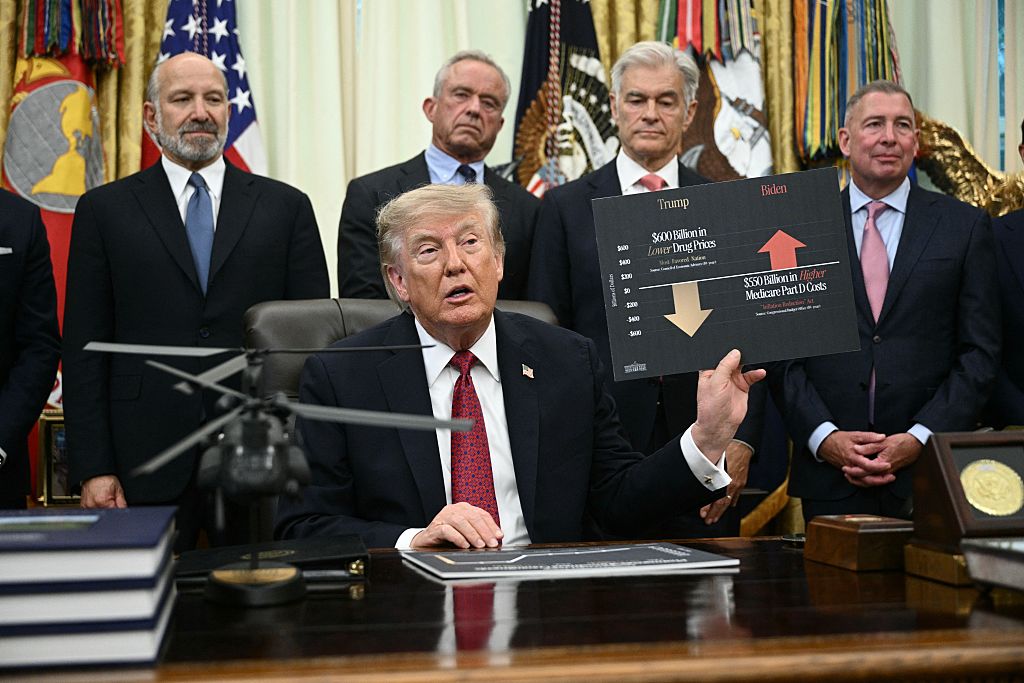


Trump Unveils New Drug Pricing Deals With 9 Pharmaceutical Companies
President Donald Trump on Aug. 31 announced agreements with nine midsize pharmaceutical...
