

A peak building body has raised the alarm over soaring insurance costs for small businesses in the housing industry, with some builders reporting premium increases of up to 300 percent.Housing Industry Association (HIA) Chief Executive of Industry and Policy Simon Croft told a parliamentary inquiry on Aug. 4 that small businesses were facing difficulties accessing insurance, with flow-on effects for housing supply, competition, business viability and productivity across the sector.“Insurance is no longer simply a business cost. For many builders it has become a major barrier to operating, growing and, in some cases, remaining in business,” he said.“It is not uncommon to hear examples of businesses that were paying $15,000 to $20,000 annually for a package of construction-related insurances now facing renewal costs of $40,000, $60,000 or more.“In some cases, builders report premium increases of 100 to 300 percent over relatively short periods, despite having no claims history and no change in business operations.”Amid the premium hikes, accessing insurance is another significant hurdle for businesses in the sector, Croft said.“A small business owner may be required to provide detailed financial statements, tax returns, work-in-progress reports, cash flow forecasts, project pipelines, subcontractor information, quality assurance processes and detailed histories of past projects, often every year and sometimes multiple times per year,” he told the Parliamentary Joint Committee on Corporations and Financial Services.“For a large construction company, this administrative burden can be absorbed by dedicated finance, legal and compliance teams.“For a small builder employing five, ten or twenty people, it is often the owner completing this work late at night after managing projects during the day.”Croft said the burden of insurance was just one of many challenges faced by small businesses, which were also grappling with broader issues like labour shortages and more expensive materials.“The consequence is that some builders choose not to expand, some decline work that carries higher insurance requirements, and some leave the industry altogether,” he said.“Ultimately, this reduces competition, constrains housing supply and places further upward pressure on construction costs.”Croft then called for insurance markets to remain accessible, affordable and appropriately risk-based.HIA’s concerns come as the AMP Bank released findings that show Australia small business costs have jumped by 25 percent since the COVID-19 pandemic, with more increases expected.The largest cost increase among those studied was insurance, which was up 52 percent on pre-pandemic levels, followed by fuel (38 percent), interest (36 percent), electricity (26 percent), rent (23 percent) and wages (over 20 percent).AMP deputy chief economist Diana Mousina said inflation had come down from its peak, but many of the nation’s 2.7 million active small businesses were still struggling.“That creates a difficult balancing act, especially when margins are already tight and consumers are feeling their own inflationary pressure and are increasingly price sensitive,” she said.AMP Bank GO director John Arnott said many consumers never see the hidden costs behind every haircut or cup of coffee.“The pressures we’re seeing in AMP Bank GO’s Small Business Cost Pressure Index aren’t isolated—they’re being felt by businesses right across the country,” he said.










Chinese Scientists Flagged Glacial Flood Danger One Year Before Nepal Catastrophe
More than a year before the catastrophic flash flood devastated the China–Nepal...
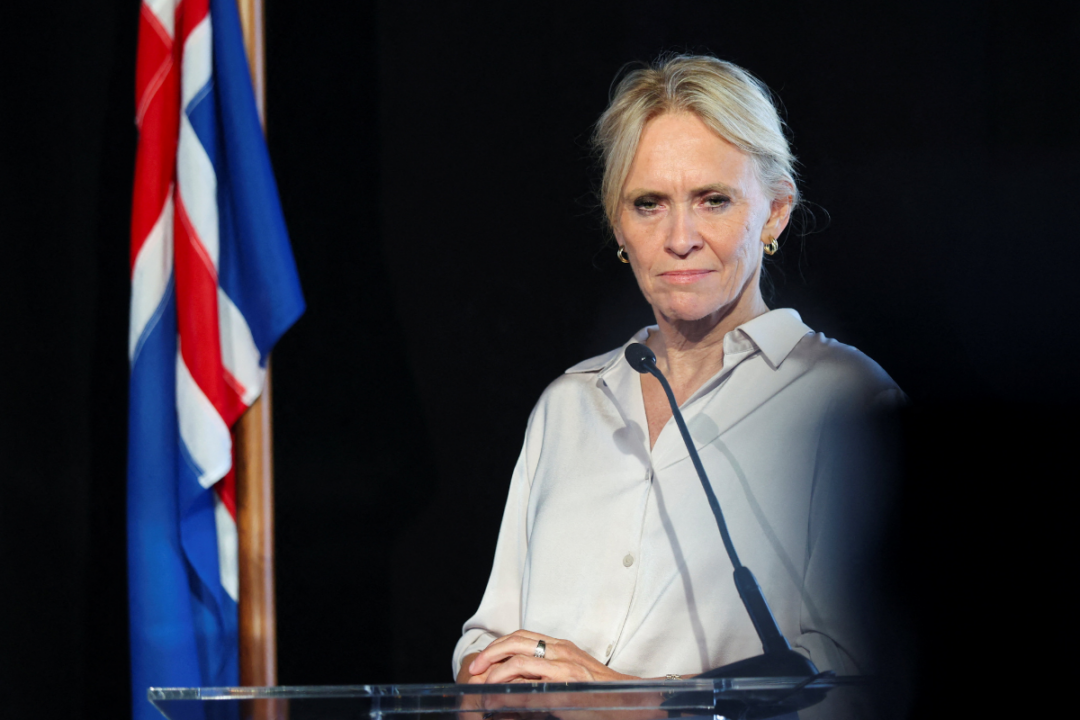
Iceland Focuses on Security Partnerships After Voters Reject Opening EU Membership Talks
Icelandic Minister for Foreign Affairs Thorgerdur Katrin Gunnarsdottir attends a press conference...

Italy, Spain Extend Tit-for-Tat Border Curbs After Ceuta Illegal Immigrant Crisis
Immigrants gather on a hill as they attempt crossing from the border...



Vaccine Maker Halts Trial on mRNA Cancer Shot
A pharmacist administers the Pfizer-BioNTech vaccine in Los Angeles, Calif., on October...
