
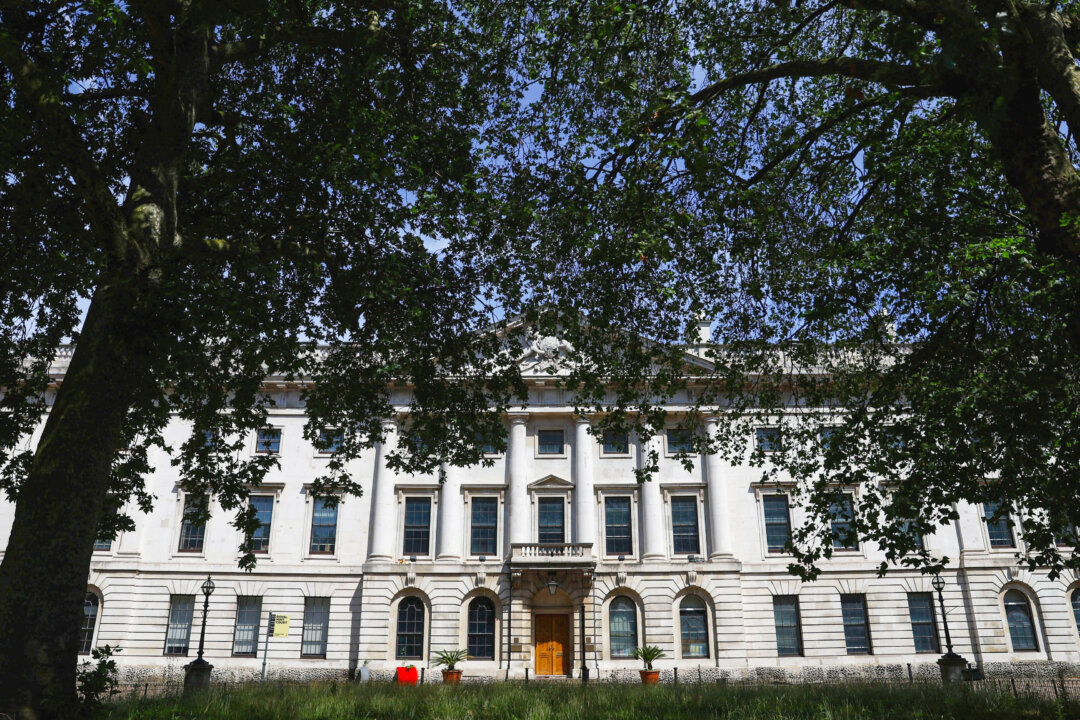
Campaigners have vowed to appeal after the High Court ruled on July 31 that the UK’s approval for China to build a vast new embassy in London was lawful and rejected a legal challenge brought by a group of local residents.Beijing’s plan to build an expanded embassy on the site of the historic Royal Mint Court in the city’s financial district was approved in January amid multiple objections from the local authority and from lawmakers across the political spectrum. Both British and U.S. politicians have warned that the embassy could be used as a base for spying activities.Approval was granted just before then-Prime Minister Keir Starmer paid a visit to China at the end of January, the first visit by a British leader since 2018.The Royal Mint Court Residents’ Association (RMCRA) brought legal action against the Ministry of Housing, Communities and Local Government (MHCLG) and the London Borough of Tower Hamlets in March this year. The residents argued the decision was unlawful, on grounds that included officials failing to take into account the risk of the new embassy curtailing protests or being used to monitor those considered dissidents by the Chinese Communist Party (CCP). They also argued that the embassy placed them at risk because it could potentially lead to terrorist attacks.Spying Risks ‘Mitigated’Residents expressed further concerns about the Chinese regime creating a fire risk by ignoring safety obligations, which it said would not be enforceable because of diplomatic immunity.A protester holds a placard during a demonstration against the proposed site of the new Chinese Embassy, outside Royal Mint Court, in London, on Feb. 8, 2025. Carlos Jasso/ReutersThe UK’s domestic and foreign intelligence agencies said in a letter to the government in January that security risks linked to the new embassy could not be fully eliminated but could be managed through mitigation measures.In the court’s ruling, two judges said the residents’ association had failed to produce “reasonable and convincing evidence of the likelihood that a violation of human rights affecting them personally would occur.”The RMCRA’s grounds relating to the enforcement of planning conditions and an alleged failure to disclose relevant documents during an earlier inquiry into the plans were also dismissed.Plans Rejected by Local AuthorityThe Chinese regime purchased the Royal Mint Court site, close to the Tower of London and Tower Bridge, in 2018, and plans to convert it into a much larger embassy than its existing building in Portland Place in the borough of Westminster.Tower Hamlets Council rejected China’s initial planning application in December 2022, citing concerns about security, scale, and local impact. A revised application was submitted in July 2024, shortly after Labour came to power.The revised application was again rejected by Tower Hamlets in December 2024, but the decision was called in by then-Secretary of State for Housing and Local Government Angela Rayner, who has recently returned to the role.The secretary of state can take over planning applications where they consider that local decisions may involve issues of national significance.The site for the proposed embassy lies close to major data cables and financial infrastructure that underpin the UK’s banking and communications systems, a factor that featured heavily in parliamentary objections.Chloe Cheung, junior manager at the Committee for Freedom in Hong Kong Foundation, in an interview with NTD in London in August 2025. NTDLuke de Pulford, director of the Interparliamentary Alliance on China (IPAC), said outside the court on Friday afternoon that solicitors acting for the claimants will seek permission to appeal.“The fight continues,” de Pulford said, noting that through the crowdfunded legal campaign, “We have together already prevented the Chinese Communist Party from breaking ground at Royal Mint Court for more than seven months.”‘David Versus Two Goliaths’Mark Nygate, representing the residents, said the legal battle went “far beyond the local community.”Nygate said he believed the residents’ arguments would “stand a greater chance of success at appeal,” or if the case goes as far as the Supreme Court, vowing they would “go all the way,” if necessary.“This is a huge case with consequences that go far beyond planning law, far beyond the residents, far beyond the local community, “ he said. “It’s about our country. It isn’t just a David and Goliath battle. It’s David versus two Goliaths, it’s the residents versus the Chinese and UK governments.”Chloe Cheung, who has a one million Hong Kong dollar arrest bounty placed on her by the CCP for her role in the Hong Kong protests as a teenager, vowed this would not be the end of the fight.“For many people, this is not just about a building; it is about whether people can truly feel safe here in Britain,” she said outside the High Court.“As someone targeted by the Chinese Communist Party, I know why it is important that Britain protects itself from foreign intimidation. I came to Britain to find safety, and I do not want to spend the rest of my life looking over my shoulder.”Iain Duncan Smith speaks during a press conference at Victoria Tower Gardens in London on July 31, 2026. Alishia Abodunde/Getty ImagesMeeting With PM Burnham SoughtConservative lawmaker Iain Duncan Smith, IPAC’s co-chair, said he would seek a meeting with British Prime Minister Andy Burnham on the court’s decision and believed there were strong grounds to appeal.Describing the decision to approve the embassy as “a very murky arrangement,” he said much of the evidence should “set pulses racing over just exactly how this all came about.”He said the CCP has “trashed” the Sino-British Agreement on the handover of Hong Kong to China, and accused it of “carrying out a genocide” of the Uyghur minority in Xinjiang, as well as threatening neighbors including the Philippines, Vietnam, and Taiwan, with its claims over the South China Sea.Duncan Smith, a prominent former minister, accused CCP leader Xi Jinping of refusing to negotiate properly with the UK unless the embassy was agreed to, adding: “I think it’s important for Britain to recognize that actually doing business with China is very difficult, very dangerous, and comes with all sorts of problems, as you’ve seen for many of the transnational repression that goes down on individuals.”He said he intended to speak to Burnham whenever he could on China policy, adding, “I’ve known him for a long, long time, and I do believe he’s a fair individual.”“So I will be speaking to him and this newly reshuffled cabinet, in the hope that they will understand that the price we pay when we kowtow to China is in human lives. Millions are dying, and the transnational oppression today in Britain will only increase if this embassy is agreed to.”










The EUs repair policies are changing the way tech is designed
In the late 1970s, concerned by resource use and scarcity, German industrial...
Ohio State Agrees to $2.1 Million Federal Settlement Over Undisclosed China Research Ties
Ohio State University has agreed to pay $2.1 million to resolve federal...
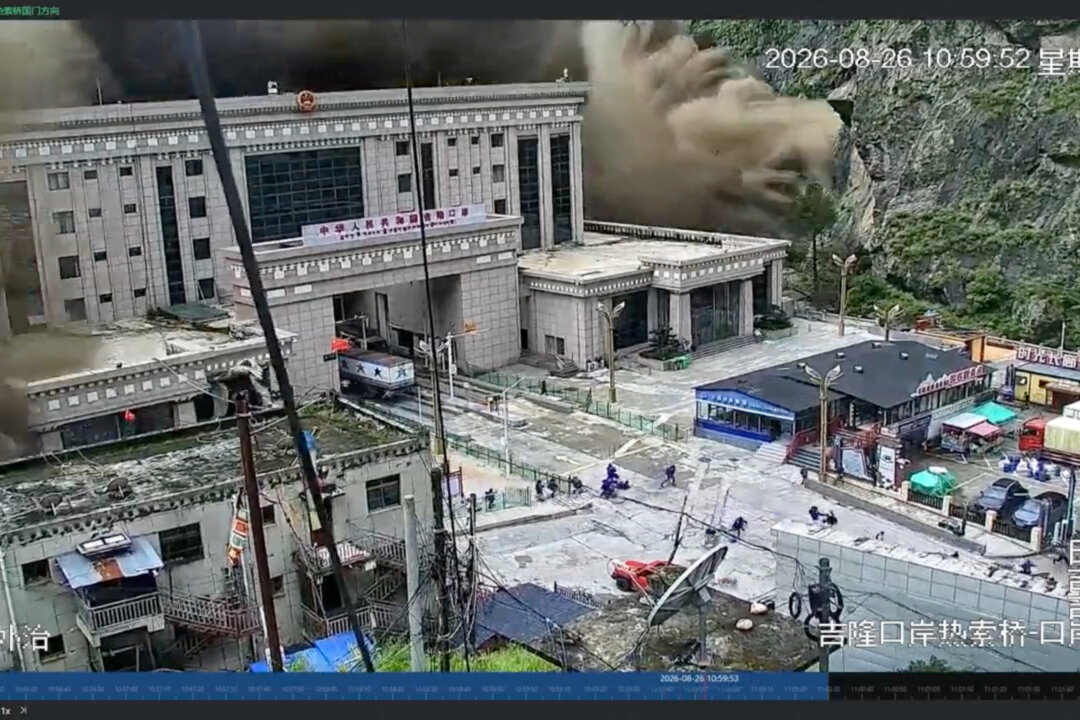
Chinese Scientists Flagged Glacial Flood Danger One Year Before Nepal Catastrophe
More than a year before the catastrophic flash flood devastated the China–Nepal...



Chinas Humanoid Robot Companies Face Reality Check
China is showcasing humanoid robots as symbols of its technological ambitions. However,...
