

Americans are feeling better about the economy despite pocketbook issues weighing on households across the country, according to the University of Michigan’s widely watched survey.July’s consumer sentiment index rebounded almost 12 percent from June to 55.2, the university said on July 31. This was higher than the preliminary estimate of 54.4 released earlier this month.The consensus forecast was 54.The indexes for current economic conditions and consumer expectations also jumped 15 percent and 9 percent, respectively, from the previous month.“We remain reassured that the strong foundations offered by solid household balance sheets are enough to offset the persistent weakness in sentiment and help keep the overall U.S. economy resilient to emerging negative shocks,” Christian Floro, market strategist at Principal Asset Management, said in a note emailed to The Epoch Times.But sentiment remains down more than 10 percent from a year ago, and a chorus of economists had anticipated downward revisions due to the resumption of U.S.–Iran hostilities and higher gasoline prices.Washington and Tehran are ostensibly at a stalemate, with both sides carrying out attacks against each other.This has sent global energy prices higher. A barrel of West Texas Intermediate—the U.S. benchmark for crude oil prices—rose 2 percent on July 31 to above $85 on the New York Mercantile Exchange.Motorists are feeling pain at the pump. The national average for a gallon of gasoline is $4.10, according to the American Automobile Association.Still, as five-year expected business conditions climbed to a 12-month high, researchers uncovered broad-based improvements across ages, education, income, and political affiliations.“Consumers remain focused on pocketbook issues like purchasing power, while political or military developments remain more in the background,” Joanne Hsu, director of consumer surveys at the University of Michigan, said in a news release.Survey interviews were conducted between June 23 and July 27.But while the University of Michigan reported a more upbeat mood, The Conference Board reported consumer confidence heading in the other direction in July.The board’s consumer confidence index fell 1.4 points to 90.8, from an upwardly adjusted 92.2 in June. Softer assessments of current business and employment conditions contributed to the drop.“Consumer confidence moderated slightly in July, continuing a general downward sloping trajectory since late 2021,” Dana Peterson, chief economist at The Conference Board, said in a statement.Inflation HorizonsAs reflected in the latest tranche of economic data, consumers continue to power the U.S. economy.Second-quarter GDP growth was 1.5 percent—falling short of market estimates—and Americans opening their wallets contributed sizably to the final reading.The public also saw relief from inflation in June. The annual personal consumption expenditures (PCE) price index, the central bank’s preferred inflation measure, slowed to 3.7 percent from 4.1 percent in May, according to Bureau of Economic Analysis figures published on July 30.“The U.S. economic expansion found its footing in the second quarter as robust consumer and business spending drove a surge in domestic demand,” Scott Anderson, chief U.S. economist at BMO Economics, said in a July 30 research note.“At a 3.2% real consumer spending pace, the U.S. consumer did not disappoint, spending more on motor vehicles, furnishings and household equipment, and recreational goods.”The near-term inflation outlook slightly improved this month.Consumers’ one-year inflation expectations eased to 4.2 percent from 4.6 percent in June, according to Hsu. The five-year outlook was unchanged at 3.3 percent.“The current reading substantially exceeds the 3.4% seen in February before the Iran conflict began, along with all 2024 readings,” Hsu said.Back-to-School ShoppingThe back-to-school shopping season represents the second-largest spending event of the year, behind Christmas. How shoppers participate in the back-to-school festivities could influence the broader economy in the third quarter.So far, 62 percent of consumers have begun their shopping for the upcoming school year, according to the National Retail Federation. This is down from last year’s 67 percent but is higher than the 55 percent recorded in 2024.Overall, the group projects this year’s back-to-school tally will surge to a record high of almost $147 billion—$43.3 billion for K-12 and $103.5 billion for college.“The headline total is being driven by broader participation and higher prices, not by a consumer who feels flush,” Peter Ramer, senior analyst at consulting firm RSM, said in a July 31 research note. “Back-to-school is one of the last purchases families cut, staying resilient even amid headwinds.”What happens in the coming months could also foreshadow the 2026 holiday season, Ramer added.









Ohio State Agrees to $2.1 Million Federal Settlement Over Undisclosed China Research Ties
Ohio State University has agreed to pay $2.1 million to resolve federal...

USDA Unveils New Support for Ranchers to Rebuild Cattle Herds
The U.S. Department of Agriculture has unveiled a new package of measures...
How Major US Stock Indexes Fared Aug. 31
Oil prices rose and U.S. stocks fell after American forces struck Iranian...
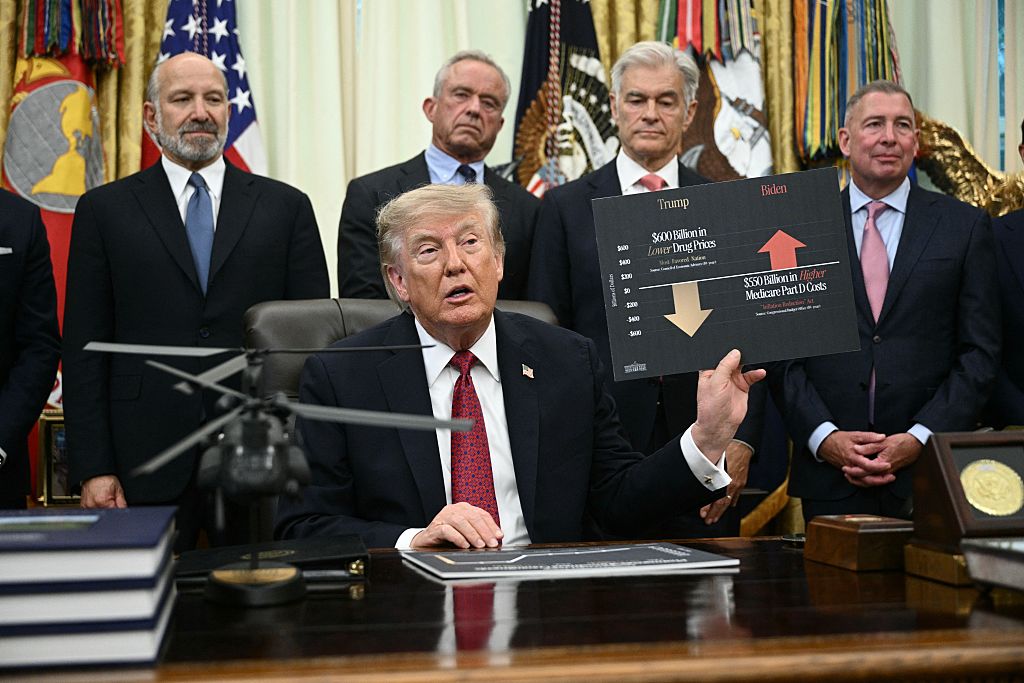


Trump Unveils New Drug Pricing Deals With 9 Pharmaceutical Companies
President Donald Trump on Aug. 31 announced agreements with nine midsize pharmaceutical...
