Venezuelan interim leader Delcy Rodriguez has formally initiated Venezuela’s withdrawal from the U.N.’s International Criminal Court, alleging bias against nations in the Global South.Rodriguez’s foreign minister, Felix Plasencia, said in a statement on social media on July 24 that Caracas has formally notified U.N. Secretary-General Antonio Guterres of its “firm and irrevocable decision.”“Venezuela considers that the Court’s actions reflect a demonstrated geographical bias, which has disproportionately concentrated its work on African and Latin American countries, to the detriment of the Global South,” Plasencia wrote.“This pattern reveals an international justice system that, far from being applied equitably, has been instrumentalized to deepen inequalities among peoples and disregard their right to self-determination and sovereignty.”Under the Rome Statute—the international treaty that established the International Criminal Court—a withdrawal becomes legally effective one year after written notice is received by the U.N. secretary-general.The U.S. State Department launched a campaign on July 13 to “dismantle the threat posed by the International Criminal Court to U.S. sovereignty.”The United States, which has never ratified the Rome Statute and is not an International Criminal Court member state, praised Venezuela’s decision.The United States welcomes “the new Venezuelan government’s partnership on American-led efforts to dismantle the corrupt and worthless ICC [International Criminal Court],” the State Department’s Office of the Spokesperson said in a statement on July 25.“The so-called court has been ‘investigating’ Nicolas Maduro since 2018 with no result,” the State Department said.“The ICC has instead wasted its resources on investigating and charging persons from countries that have competent, independent judicial systems and which never submitted to the jurisdiction of the court. This is blatant overreach, political bias and selective enforcement,” it said, referring to the court’s arrest warrants related to Israeli Prime Minister Benjamin Netanyahu and former defense minister Yoav Gallant, and Hamas terrorist leader Mohammed Diab Ibrahim Al-Masri.The court in March 2020 opened an investigation in Afghanistan that included looking into possible crimes by U.S. military personnel. However, since 2021, it has deprioritized the United States’ role, focusing on alleged crimes committed by Taliban forces and the Afghan government.Operating out of The Hague, the court was formally established in 2002 to allow any of the member states, the U.N. Security Council, or its prosecutor with allegations of war crimes, crimes against humanity, genocide, and crimes of aggression to refer individuals to the court when national courts are unwilling or unable to do so.Court ‘Heavily Politicized’The International Criminal Court recently completed a multi-year investigation into members of Venezuela’s armed forces and other officials for alleged crimes against humanity in Venezuela.Venezuela’s announcement has been expected since December 2025, when Venezuela’s national assembly voted—a month before the United States arrested former leader Nicolás Maduro—to repeal a law ratifying the Rome Statute, paving the way for the withdrawal.Rodriguez said during a public event after the announcement that the International Criminal Court had been used to target Venezuela.“The International Criminal Court has been so heavily politicized to attack the Venezuelan people and the Venezuelan state that we do not believe in that type of organization or institution,” she said.The court began an investigation of Venezuela in 2020, when it said there was reasonable basis to believe that civilian officials, members of the armed forces, and pro-regime individuals had committed crimes against humanity since at least 2017.Karim Khan, who became International Criminal Court prosecutor in 2021, opened a formal investigation later that year. On July 24 this year, the court removed Khan from office after “having found that he has committed serious misconduct and serious breach of duty,” the court said in a statement. Khan denies the allegations.In January 2025, the International Criminal Court closed its office in Caracas, citing a lack of cooperation from the Venezuelan regime, then led by Maduro. Rodriguez replaced Maduro early this year as interim leader after Maduro was flown to New York to face U.S. federal charges on drug trafficking and narco-terrorism.As the head of Venezuela’s transition regime—appointed by Venezuela’s Supreme Tribunal of Justice on Jan. 3 to replace Maduro during his “temporary absence”—Rodriguez’s extended 180-day window as acting leader expired on July 3.However, elections have been delayed following the devastating twin earthquakes near Caracas on June 24 that have killed at least 5,500 people, with more than 16,700 injured. Tens of thousands are also still listed as missing, unchanged since June, and damage from the quakes has been estimated by the World Bank at $19.6 billion.According to its July 23 assessment, the World Bank said residential buildings account for 47 percent of total damage, followed by infrastructure (27 percent), and non-residential buildings (26 percent).Trump praised Rodriguez’s leadership on July 24.“As far as the elections in Venezuela, they’re not really ready for them yet. But boy, a lot of progress has been made. Delcy’s been doing a fantastic job,” Trump told reporters at the White House.“But at some point they will be, and we’re going to be standing right on top of it,” he said.Chris Summers, Victoria Friedman, and Reuters contributed to this report.

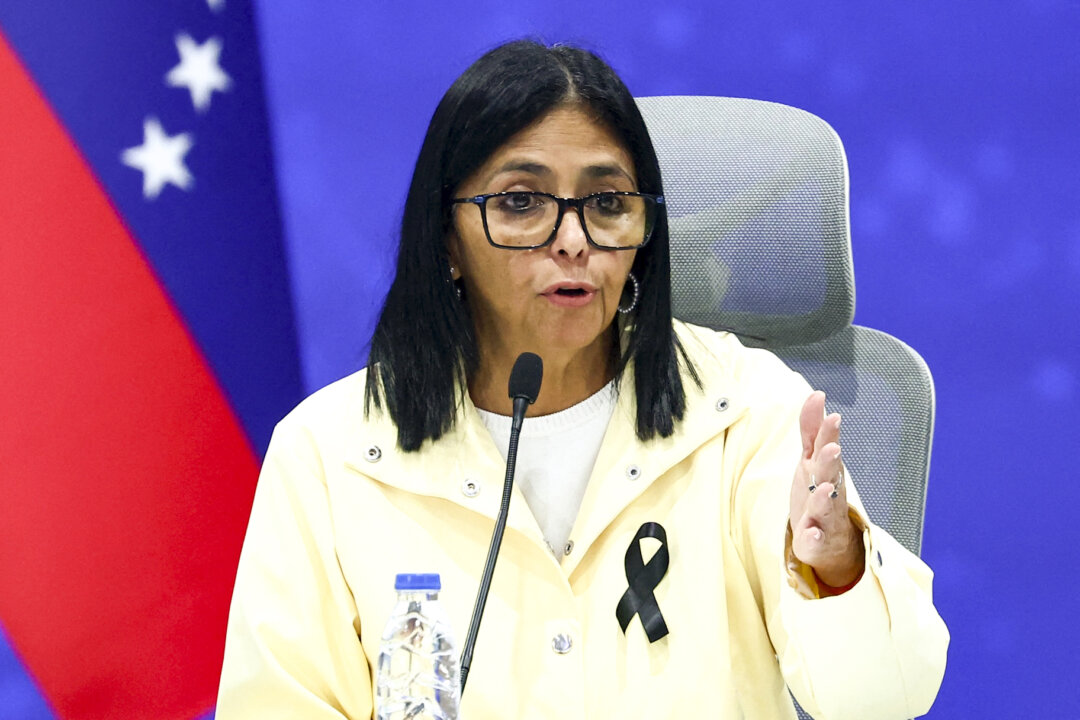
Venezuela Initiates Withdrawal From UNs International Criminal Court, Citing Bias









Related Articles
China NewsEuropeGlobalUK NewsWorld News
UK Must Be Ready for War in 1,000 Days, Says British Defense Secretary
British Defense Secretary Wes Streeting has said the country must be ready...
China NewsEuropeGlobalUK NewsUK Top NewsWorld News
UK Prime Minister Says He Agrees With Principle of Migration Reform
British Prime Minister Andy Burnham said on Oct. 26 that he agreed...

China NewsEuropeGlobalWorld News
Serbian President Concedes Election Defeat to Student-Led Coalition
Serbian President Aleksandar Vucic has conceded defeat in the Oct. 25 election...


Asia & PacificChina NewsEuropeInternational RelationsNational SecurityPolicies & ImpactsUSUS NewsUS-China RelationsWorld News
Japan Defense Academy Chief Calls for 3 Red Lines in Competition With China
Japan’s former top uniformed military officer has called for establishing three “red...
