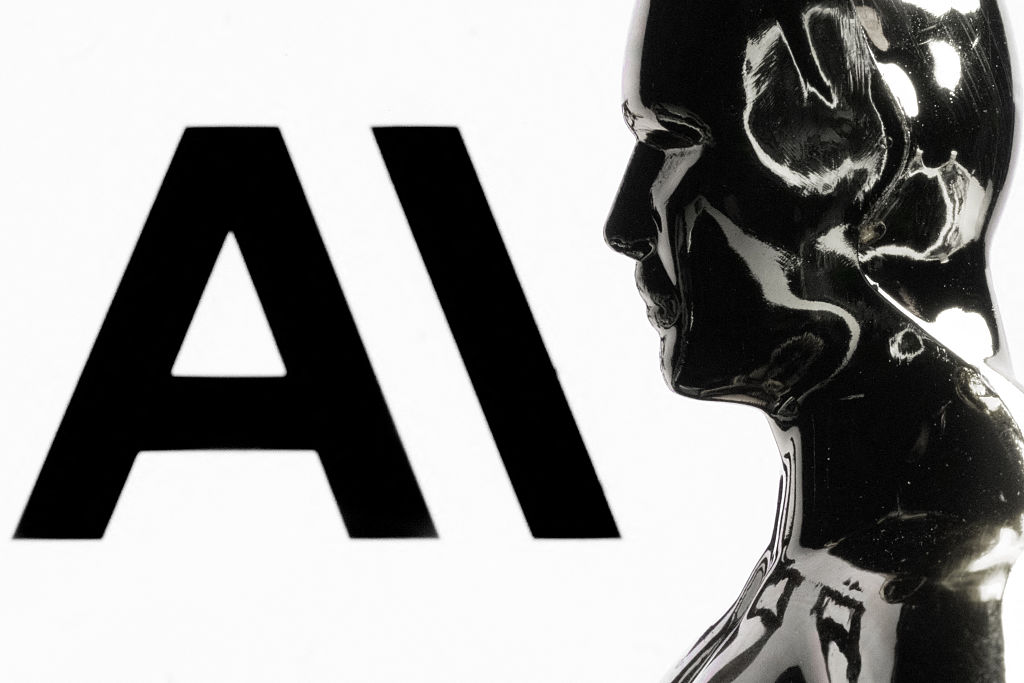
This photograph shows a figurine in front of the logo of the U.S. artificial intelligence safety and research company Anthropic during a photo session in Paris on Feb. 13, 2026. Joel Saget/AFP via Getty ImagesA federal judge in San Francisco on July 21 approved a $1.5 billion settlement in a copyright lawsuit against AI giant Anthropic by a group of authors that alleged the company used pirated copies of their books to train its AI model Claude.“We reached this settlement in 2025, after the court’s landmark ruling that training AI on books is fair use under copyright law—which remains the law today,” Anthropic attorney Aparna Sridhar said in a statement.She added that the company was “looking forward to bringing this matter to a close.”U.S. District Judge Araceli Martinez-Olguin issued a ruling approving the settlement, the largest of its kind in U.S. history.The judge dismissed objections from some plaintiffs that the amount was too small, saying those claims didn’t reflect “a realistic assessment of the overall risks and rewards of a trial.”But she also refused to grant the plaintiffs’ attorneys the full amount of fees they requested; they wanted more than $180 million, but she granted $101,561,111.If Anthropic had lost at trial, the judge could have imposed a penalty of up to $150,000 per violation under U.S. copyright law.Since the judge admitted more than 480,000 books as part of the plaintiffs’ claim, the potential award could poentially have cost Anthropic tens of billions of dollars.Some plaintiffs opted out of the settlement ahead of time and filed separate lawsuits. The judge on Tuesday rejected opt-out requests from several others who made the request too late.But she allowed two other plaintiffs to exit the settlement due to extenuating circumstances.In one case, an author was not notified of the settlement in time, and in another the plaintiff was recovering from a stroke.Anthropic “intentionally downloaded known pirated copies of books from the internet, made unlicensed copies of them, and then used those unlicensed copies to digest and analyze the copyrighted expression—all for its own commercial gain,” the authors’ 2024 complaint said.Last June, U.S. District Judge William Alsup ruled that Anthropic could utilize purchased copyrighted books to train its AI models under so-called “fair use.”That’s a legal doctrine that allows the use of copyrighted material without getting permission from the copyright owner.But since Anthropic had also initially used some pirated copies, that was not fair use, and he ordered the case to go to trial in December.“That Anthropic later bought a copy of a book it earlier stole off the internet will not absolve it of liability for the theft, but it may affect the extent of statutory damages,” Alsup said in his ruling.Reuters contributed to this report.

Judge Approves $1.5 Billion Settlement in Anthropic Copyright Case








Related Articles

BusinessCompaniesEnergy
EQT to Buy Range Resources, Creating Largest US Natural Gas Producer
EQT Corp. has agreed to acquire rival Appalachian shale driller Range Resources...
BrightBusinessInvestingPersonal FinanceStocks
Wall Street Is Very NervousShould You Worry? Can You Repair Your Losses?
On Oct. 23, the Dow Jones Industrial Average fell 652.82 points, or...

BusinessMarkets
Nearly 3 in 10 New-Car Trade-Ins Are Underwater, Edmunds Finds
Almost three in 10 vehicles traded toward a new car are worth...



Asia & PacificChina NewsEuropeInternational RelationsNational SecurityPolicies & ImpactsUSUS NewsUS-China RelationsWorld News
Japan Defense Academy Chief Calls for 3 Red Lines in Competition With China
Japan’s former top uniformed military officer has called for establishing three “red...
