President Donald Trump said on July 20 that he will impose a 50 percent tariff on certain Canadian goods in retaliation for discrimination against U.S. alcohol, cars, and dairy.It comes as the administration has been pushing for substantive reforms to the U.S.-Mexico-Canada Agreement, also known as the USMCA, and opted not to renew the deal beyond 2036 earlier this month.Here is what to know about Trump’s 50 percent tariff on America’s neighbor to the north.Inside the New TariffsThe president signed three orders that will impose a 50 percent levy on almost $20 billion in Canadian goods, covering hundreds of products.This will represent about 0.5 percent of goods exports to the United States, and about 0.8 percent of Canadian GDP.It will be enforced under Section 338 of the Tariff Act of 1930, which permits tariffs of up to 50 percent on imports from countries that discriminate against the United States.This would be in addition to the current 10 percent blanket tariff on all goods from Canada, and USMCA-compliant goods would not be exempt.Some of the items that will face higher import duties include natural honey, vinyl tile floor coverings, sandblasting machines, and ice skates.They are set to take effect at 12:01 a.m. ET on Aug. 19.Canadian exports of crude oil, critical minerals, and potash are exempted from the tariff. Motor vehicles and auto parts are also omitted from the list of levies.Washington has maintained various active tariffs, ranging from 15 to 50 percent on Canadian aluminum, copper, softwood lumber, and steel.Trump threatened last week to slap new tariffs on Canada over the wildfire smoke that blanketed parts of the Midwest and the East Coast.The president said smoke from Canada had cost the United States billions of dollars over the years, and the “cost of this pollution must of necessity be added to the tariffs Canada is currently paying.”Canadian PoliciesThese levies are in response to actions taken by the federal government and several provinces, according to Trade Representative Jamieson Greer.“Canada has taken U.S. alcohol products off Canadian shelves, given better market access to dairy products from the European Union, and has put a cap on U.S. vehicle exports to Canada from companies reshoring to the United States,” Greer said in a statement.Shortly after Trump unveiled the contours of his sweeping tariff agenda in April 2025, Canada was one of two nations—the other being China—to retaliate.Ottawa implemented a 25 percent counter-tariff on non-USMCA-compliant aluminum, steel, and vehicles imported from the United States.In several Canadian provinces, excluding Alberta and Saskatchewan, U.S. liquor sales were prohibited.In total, Canadian imports of American alcohol declined by 81 percent, from approximately $718 million to approximately $137 million, the White House said.Canada’s supply management system, which implements limits on foreign imports, has been a source of contention for the U.S. administration.Under this structure, foreign imports that exceed Ottawa’s caps are charged a tariff of up to 300 percent.But the United States argues that Canada “treats the commerce of certain foreign countries more favorably than commerce of the United States with respect to dairy.”“Specifically, Canada denies the commerce of the United States benefits that Canada affords to materially similar dairy commerce from certain other foreign countries and thus unreasonably burdens and disadvantages U.S. commerce compared to the commerce of certain other foreign countries,” Trump’s proclamation stated.‘Firm but Moderate’Canadian Prime Minister Mark Carney slammed the new tariff as being in “direct violation” of the trilateral trade pact.“This trade dispute has raised costs for families, particularly in the United States,” Carney said in a statement shared on X.“Canada stands ready to engage intensively to address outstanding issues with the United States to the mutual benefit of our citizens.”Ottawa has regularly drafted proposals to update the USMCA over the past 18 months, the prime minister added.Greer pushed back against the “firm but moderate” letter, noting that Canada likes to talk but “not actually change things.”“The Canadians have always been ready to engage, if engagement means ‘talking’ and ‘meeting,” the trade ambassador said in a July 21 interview with CNBC’s “Squawk Box.”“The proposals are generally for promises to discuss these issues, which we’re already doing, not to actually change these things.”Ontario Premier Doug Ford, writing on X, said Canada will not “roll over.”“As premiers assemble in PEI this week, Team Canada is coming together, and there’s never been a better time to do so. Together, we’ll stand united. We’ll never back down. We’ll never roll over,” he said in a statement posted on X.Economic Impact“This, unfortunately, would come at a time when the Canadian economy is showing signs of breaking out of its slump and returning to decent growth into 2027,” Kavcic said in a July 21 research note.Canada is currently in a technical recession—back-to-back quarters of negative GDP growth—and faces elevated inflation and an unemployment rate of almost 7 percent.Monthly data suggest Canada will likely exit the recession in the second quarter.But scores of market watchers have revised their growth forecasts lower for the rest of the year.“Our overall view is that while Canada is in a technical recession, the economy still looks more stalled than broken,” Ashish Dewan, senior investment strategist at Vanguard Investments Canada, said in a July 3 note.Vanguard now expects 2026 growth to come in at 1.5 percent, with 1.6 percent next year.Omid Ghoreishi and Jill McLaughlin contributed to this report.

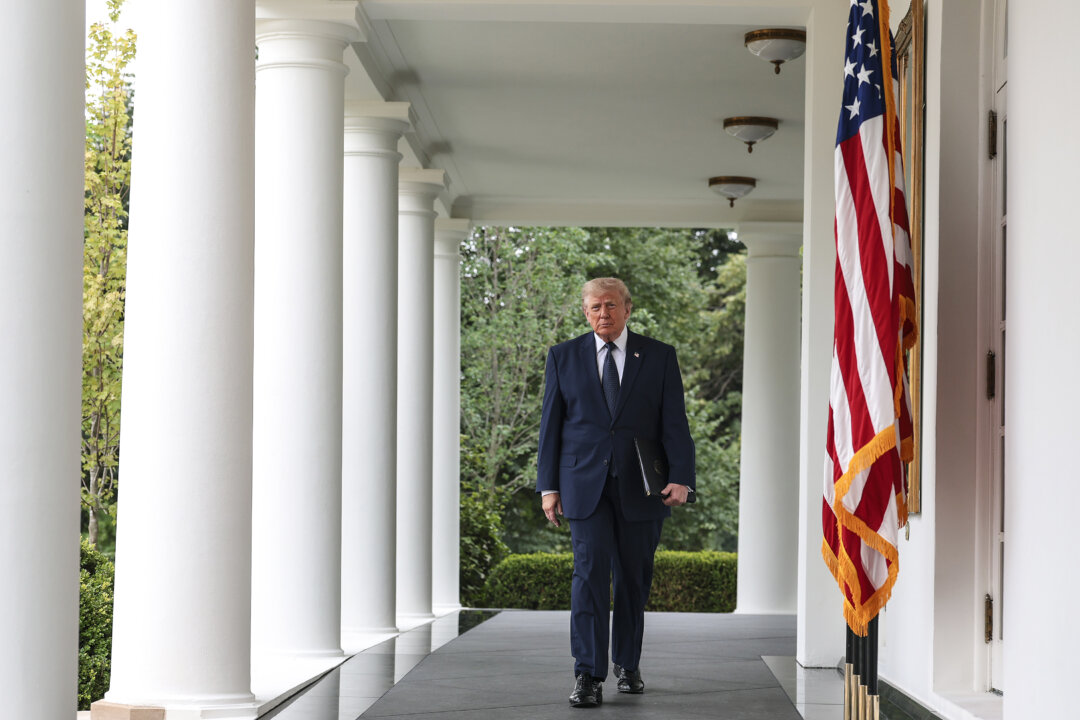
Trump to Impose Additional 50 Percent Tariff on CanadaWhat to Know









Related Articles
BusinessCompaniesEnergy
EQT to Buy Range Resources, Creating Largest US Natural Gas Producer
EQT Corp. has agreed to acquire rival Appalachian shale driller Range Resources...

BrightBusinessInvestingPersonal FinanceStocks
Wall Street Is Very NervousShould You Worry? Can You Repair Your Losses?
On Oct. 23, the Dow Jones Industrial Average fell 652.82 points, or...

BusinessMarkets
Nearly 3 in 10 New-Car Trade-Ins Are Underwater, Edmunds Finds
Almost three in 10 vehicles traded toward a new car are worth...



Asia & PacificChina NewsEuropeInternational RelationsNational SecurityPolicies & ImpactsUSUS NewsUS-China RelationsWorld News
Japan Defense Academy Chief Calls for 3 Red Lines in Competition With China
Japan’s former top uniformed military officer has called for establishing three “red...
