Nicaragua’s long-serving communist president, Daniel Ortega, said the Central American country will no longer hold elections.Ortega has continuously held power with the Sandinistas since 2007, following an earlier presidential term in the 1980s, and said the move will close off any path to the opposition.“There won’t be any more elections. There won’t be no more elections where they try to seize the government, to seize power,” Ortega said in a speech on Sunday evening to commemorate the 1979 Sandinista revolution.“The days when parties backed by the Yankees [United States] and the Somocistas would return to power are over, never again,” he added.“Somocistas” are supporters of the Somoza family dictatorship that ruled Nicaragua from the 1930s until 1979, when the Sandinistas overthrew it.The Trump administration has described the ruling Sandinista National Liberation Front (FSLN) Ortega government as a dictatorship.The U.N. Human Rights Council has accused Ortega of running one of the “oppressive regimes” in the region.In 2018, Ortega responded to widespread anti-government protests with a clampdown in which more than 300 people were killed, hundreds illegally detained and tortured, and more than 52,000 exiled in neighboring countries.“When a communist dictator knows the people would vote him out, he takes away their vote,” U.S. Rep. María Elvira Salazar (R-Fla.) said in a July 21 post on X. “Repression, fear, and force become the only way to stay in power. The Ortega-Murillo regime has declared war on the Nicaraguan people’s right to choose their own future.”Ortega’s declaration comes as Latin America swings to the right.A conservative wave is sweeping Latin America, with recent elections in Peru, Argentina, Chile, Ecuador, Costa Rica, and Colombia.In June, conservative Keiko Fujimori defeated progressive Congressman Roberto Sánchez.Fujimori is the daughter of former President Alberto Fujimori, who ruled from 1990 to 2000.Supporters credit Alberto Fujimori with crushing the Maoist Shining Path communist insurgency and stabilizing the country, while critics accuse him of authoritarian rule and human rights abuses.Argentina elected self-proclaimed anarcho-capitalist Javier Milei in 2023 on a promise to slash the state and reduce astronomical inflation, backed by a chainsaw-wielding image.Chile elected conservative José Antonio Kast in 2025 against a communist candidate, in the same year that Bolivia’s election ended two decades of socialist dominance. Ecuador’s center-right President Daniel Noboa won reelection in April this year on a tough-on-crime platform.Colombian presidential candidate Abelardo de la Espriella beat leftist Sen. Iván Cepeda Castro in a runoff election on June 22.NicaraguaIn the 1980s, during the Cold War, the Soviet Union was concentrating political power in Latin American countries to spread communist ideals.Ortega’s political party, the Sandinista National Liberation Front (FSLN), is a Marxist-Leninist guerrilla group that overthrew the U.S.-backed Somoza dictatorship in 1979. It has controlled the Nicaraguan government since Ortega’s return to power in 2007, following a previous term from 1979 to 1990.Workers install a billboard supporting Nicaragua’s President Daniel Ortega along a street in Managua, Nicaragua, on Dec. 21, 2015. AP Photo/Esteban FelixAccording to CIA documents, when FSLN came to power, the Carter administration provided Nicaragua with “massive financial assistance in efforts to win their friendship,” and by the end of 1980, the United States had become Nicaragua’s “single largest financial supporter.”However, the Sandinistas remained “hostile” to the United States, with the CIA saying that “most alarming” was that they “actively” armed and trained Marxist-Leninist guerrillas in El Salvador and Guatemala.“The Sandinistas have created the largest military force in Central America, and now poses a military threat to its neighbors,” the agency said at the time.In 1981, U.S. President Ronald Reagan signed off on a top-secret directive that gave the CIA the power to recruit and support a force of Nicaraguan rebels to conduct covert actions against the leftist Sandinista regime.These rebels came to be known collectively as Contras.In 1989, Human Rights Watch said that Contras themselves were major and systematic violators of the most basic standards of the laws of armed conflict.Ortega’s army ballooned “from approximately 5,000 soldiers in 1978 to more than 119,000 by early 1985,” bolstered by Soviet tanks and helicopters, according to a 2024 study published by the U.S. Army War College’s Strategic Studies Institute (SSI), hosted on media.defense.gov, an official U.S. Department of War content platform.The Sandinista revolution and the Contra civil war caused between 45,000 and 65,000 deaths between 1978 and 1990. The conflict ended with a 1990 peace agreement.Power in Nicaragua was then peacefully transferred through free and fair elections for the first time in 1990.However, the FSLN won the 2006 elections under Ortega.The Bertelsmann Transformation Index, a German-run governance research project, said by 2016 Ortega had secured control “over all branches of government” and extended his hold on power through rigged elections and placed his family, most notably his wife, now Vice President Rosario Murillo, in “positions of authority.”Reuters contributed to this report.

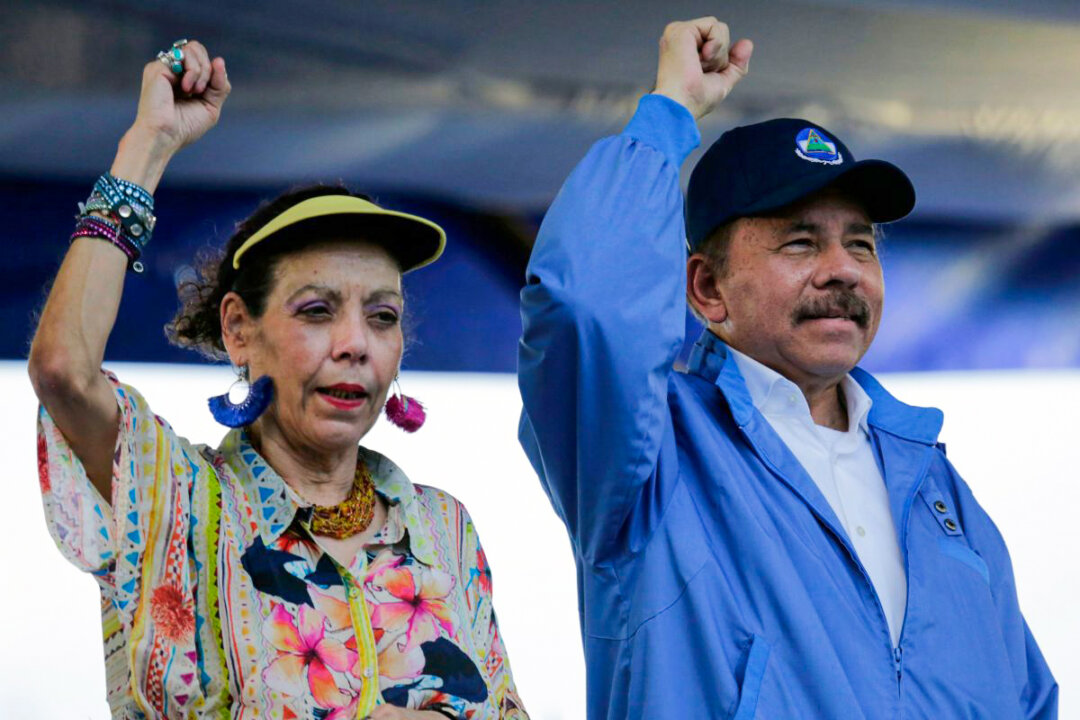
Nicaraguas Communist President Ortega Declares End to Elections





Related Articles
China NewsEuropeGlobalUK NewsWorld News
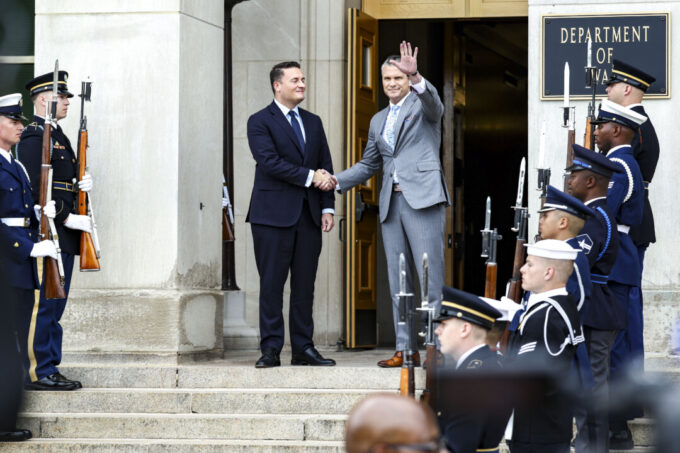
UK Must Be Ready for War in 1,000 Days, Says British Defense Secretary
British Defense Secretary Wes Streeting has said the country must be ready...
China NewsEuropeGlobalUK NewsUK Top NewsWorld News
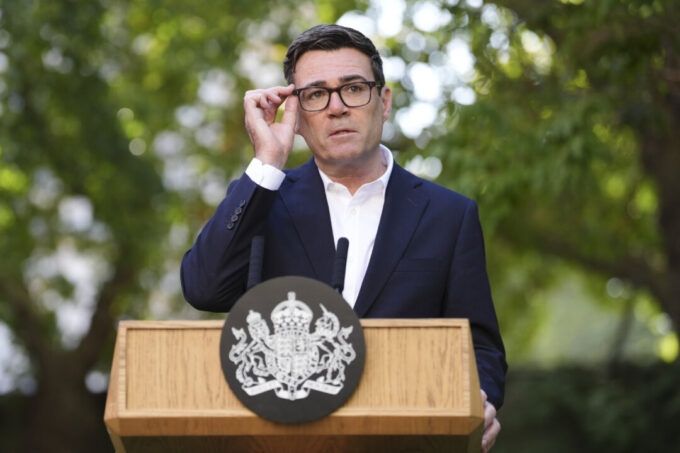
UK Prime Minister Says He Agrees With Principle of Migration Reform
British Prime Minister Andy Burnham said on Oct. 26 that he agreed...

China NewsEuropeGlobalWorld News
Serbian President Concedes Election Defeat to Student-Led Coalition
Serbian President Aleksandar Vucic has conceded defeat in the Oct. 25 election...


Asia & PacificChina NewsEuropeInternational RelationsNational SecurityPolicies & ImpactsUSUS NewsUS-China RelationsWorld News
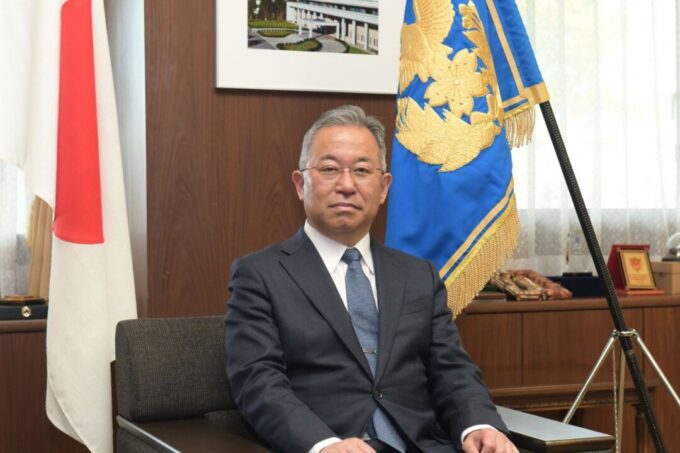
Japan Defense Academy Chief Calls for 3 Red Lines in Competition With China
Japan’s former top uniformed military officer has called for establishing three “red...
