A budget manipulation scandal in the southern Chinese city of Nanning has drawn rare public condemnation from provincial authorities, highlighting growing strains on local government finances as China’s prolonged property downturn erodes a key source of public revenue.Officials in Guangxi Province convened a special meeting on July 3 to address the case after investigators found that its capital city, Nanning, had inflated its 2024 fiscal revenue by 2.83 billion yuan ($420 million), according to Chinese state media Xinhua News Agency.China-based analysts told The Epoch Times the case illustrates how mounting fiscal pressure has fueled accounting manipulation and exposed the collapse of the land finance model that for years underpinned local government budgets. They say it also suggests that financial distress, once concentrated in smaller counties and cities, is spreading to provincial capitals. The individuals spoke on condition of anonymity out of fear of reprisal.The revelations come as Beijing intensifies scrutiny of local governments accused of manipulating fiscal data. The Chinese regime has increasingly publicized such cases to deter officials from falsifying financial figures amid mounting budgetary stress.A Chinese official familiar with the matter told The Epoch Times that senior Chinese Communist Party (CCP) leaders have long been dissatisfied with inaccurate fiscal reporting from local governments but have struggled to curb the practice.“Almost every official is involved in corruption in one way or another,” the official said. “Many local officials divert public funds for personal gain, leaving government coffers depleted. When revenues fall short, they inflate the numbers or rely on fines to fill the gaps. Public resentment toward these officials is growing.”Land Deals Recycled to Inflate RevenueChinese financial outlet Caixin reported on July 6 that Nanning inflated its fiscal revenue by repeatedly recycling payments associated with government land transfers.According to the report, the city retroactively converted land that had originally been allocated free of charge to three state-owned enterprises into paid land transfers. Provincial authorities then recorded the newly imposed land-transfer fees as fiscal revenue before returning the same money to the companies under the guise of land acquisition compensation.The scheme involved 15 parcels of land that had already been assigned for public infrastructure and other public-interest projects. Local authorities amended official land allocation documents, changing the transfer price from zero to amounts ranging from hundreds of thousands to hundreds of millions of yuan.One parcel was reportedly cycled through the accounting process as many as 18 times.The Guangxi regional CCP committee described the case as “extremely egregious,” saying it seriously violated China’s fiscal discipline and regulations.A Guangxi-based online writer told The Epoch Times the case reflects increasingly common accounting practices among cash-strapped local governments.“Local governments no longer have genuine sources of revenue, but they’re still expected to meet growth targets,” he said. “So they use state-owned enterprises as financial conduits and land as a bookkeeping prop. Money simply circulates within the government system several times before it’s recorded as new revenue.”China’s National Audit Office has documented similar practices elsewhere.In its 2025 annual audit report, the agency said tax authorities and customs offices over-collected or collected corporate income tax and value-added tax ahead of schedule from 1,954 companies, generating 40.43 billion yuan ($5.95 billion) in additional revenue. It also found that authorities in 21 provincial-level regions inflated fiscal revenue by 59.65 billion yuan ($8.78 billion) through accounting maneuvers, including temporarily disbursing and then returning treasury funds.The report further found that 4,976 companies evaded 10.94 billion yuan ($1.61 billion) in taxes through fraudulent invoicing and other illegal practices.The Nanning case is not an isolated incident.A 2023 report by Chinese financial media Yicai cited audit findings showing that seven counties in Hunan Province inflated revenue through circular land transactions in which government entities effectively sold land to themselves. Auditors in Hebei Province uncovered similar schemes involving repeated transactions of non-commercial state-owned assets to boost reported fiscal income.A Chinese financial professional in Hunan familiar with local government debt issues, surnamed Li, told The Epoch Times that such practices have become widespread as local governments struggle with shrinking land-sale income.“Nanning is only the latest case to become public,” Li said. “Many prefecture-level and county-level cities in Hunan have used similar methods.”Local Governments ScramblingThe accounting maneuvers reflect a deeper structural problem. China’s prolonged property downturn has sharply reduced land-sale revenue, undermining a financing model that for years relied on land sales, borrowing, and infrastructure investment to sustain local budgets.According to Li, pressure to meet official performance targets has encouraged local governments to manufacture fiscal income, making accounting fraud an increasingly visible symptom of broader financial distress within China’s governance system.The National Audit Office has also identified other forms of fiscal manipulation. It previously reported that authorities in 49 regions illegally accumulated 41.52 billion yuan in hidden debt through guaranteed buyback commitments and state-owned enterprise financing. Another 20 regions overstated project revenue and understated costs to qualify for the issuance of 19.82 billion yuan in special-purpose bonds.Like the Nanning case, those practices relied on accounting techniques to conceal worsening fiscal conditions rather than generate genuine economic growth, Li said.“The fiscal black hole isn’t simply an accounting problem, nor is it just the result of declining land-sale revenue,” he said. “It’s the consequence of a system that has hollowed out the real economy.”Sun Chen contributed to this report.


China Budget Fraud Scandal Exposes Mounting Fiscal Strains Beyond Smaller Cities









Related Articles
China Business & EconomyChina NewsChina Technology
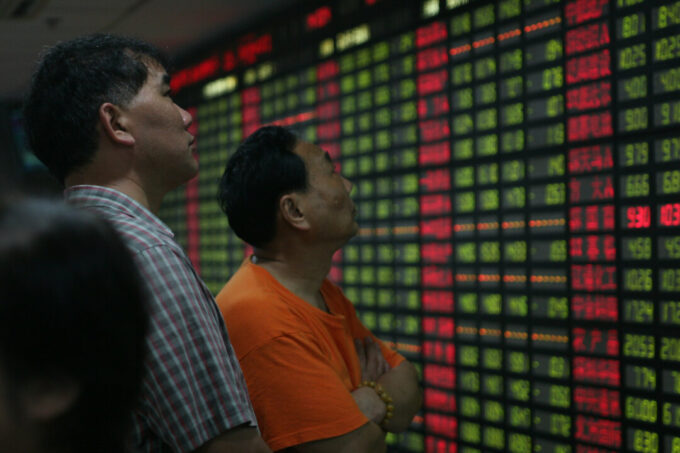
China Tech Index Plunges More Than 40 Percent From July Peak
China’s technology-heavy STAR 50 index has fallen by more than 40 percent...
China Military NewsChina NewsChinese RegimeInside CCP OfficialdomSpecial TopicsZhang Youxia
Xi Opens CCP Plenum Amid Sweeping Purges, Record-Low Attendance Forecast
Chinese Communist Party leader Xi Jinping opened a four-day meeting of senior...

China Business & EconomyChina NewsChinese RegimeFinance & Business TiesInside CCP OfficialdomSpecial Topics
Chinas Economic Woes Deepen as CCP Plenum Focuses on Political Control
The Chinese Communist Party (CCP) opened a four-day leadership meeting in Beijing...



China NewsEuropeGlobalUK NewsWorld News
UK Must Be Ready for War in 1,000 Days, Says British Defense Secretary
British Defense Secretary Wes Streeting has said the country must be ready...
