With the annual Beidaihe meeting approaching, Beijing has accelerated a broad reshuffle of senior officials across both the civilian bureaucracy and the military, raising questions about Chinese leader Xi Jinping’s next moves.According to analysts who spoke to The Epoch Times, the appointments reflect more than routine personnel rotation. In China’s highly centralized political system, repeated purges, frequent leadership changes, and constant testing of political loyalty have become mechanisms for maintaining power under the guise of “anti-corruption” campaigns.The reshuffle comes as Beijing has yet to announce the date of the Chinese Communist Party’s (CCP) 20th Central Committee Fifth Plenum, a key Party meeting where major policy priorities and personnel arrangements are often finalized ahead of the next Party Congress. Attention is already turning to the 21st Party Congress in 2027, when the CCP is expected to decide its next round of top leadership appointments, making this year’s Beidaihe meeting especially significant.The Beidaihe meeting is the CCP’s annual informal leadership gathering, traditionally held between late July and early August at the seaside resort of Beidaihe in Hebei Province in northern China. Current and retired senior Party leaders typically discuss major policy issues, personnel arrangements, and other political matters behind closed doors. Although Beijing rarely discloses details of the meeting, it is widely regarded as an important venue where major political decisions are shaped.Xi recently reiterated his call to “resolutely wage the battle against corruption,” a campaign he launched shortly after taking power in 2012. After nearly 14 years with no sign of ending, the campaign is widely seen by China experts as having evolved into a broader instrument of political control.A New Round of Senior Leadership AppointmentsAccording to Chinese state-censored media Caixin, at least nine ministerial-level Party and government posts changed hands during the first half of 2026. The reshuffle spans central ministries, financial regulators, provincial Party leadership, and key CCP policy bodies, underscoring a broad overhaul of senior officials across China’s political system.At a Politburo meeting late last month, Party leaders approved another round of senior appointments, including the heads of three influential Party and state institutions: the State-owned Assets Supervision and Administration Commission, the Ministry of Civil Affairs, and the All-China Federation of Trade Unions.Military Leadership Continues to Be RebuiltThe People’s Liberation Army (PLA) has been undergoing a prolonged leadership shake-up since sweeping purges began in 2023. A number of senior positions have remained vacant or have been temporarily filled by lieutenant generals serving in an acting capacity, raising questions about the stability of the military’s command structure.Recent appointments suggest Beijing is now moving to fill many of those vacancies.At a promotion ceremony held at the Central Military Commission (CMC) headquarters on July 3, lieutenant generals Zhang Shuguang and Wang Gang were promoted to the rank of general. Zhang was simultaneously appointed secretary of the CMC Discipline Inspection Commission, the military’s top anti-corruption body, while Wang became commander of the Air Force.Meanwhile, Air Force Political Commissar Guo Puxiao was recently stripped of his status as a deputy to China’s National People’s Congress, adding to speculation that further leadership changes may be underway within the Air Force.Who Is Driving the Reshuffle?Arthur Shuh-fan Ding, professor emeritus at National Chengchi University’s Graduate Institute of East Asian Studies in Taiwan, told The Epoch Times that the recent personnel changes are likely part of preparations for leadership appointments ahead of the CCP’s 21st Party Congress, including within the military.In theory, he said, both Zhang Shuguang and Wang Gang would have undergone extensive political vetting before their promotions, with no apparent issues identified.“Xi Jinping may have initially hoped that a long-term anti-corruption campaign could gradually change the culture. However, the military is a largely self-contained institution that manages its own affairs, so it is unclear how far such efforts can ultimately go,” Ding said.Kung Shan-son, a research fellow at Taiwan’s Institute for National Defense and Security Research, told The Epoch Times that senior military vacancies are likely to be filled gradually, with the CMC’s top leadership expected to be fully rebuilt before the 21st Party Congress.However, he said, the PLA’s Rocket Force and the CMC’s Equipment Development Department are unlikely to quickly regain their political standing after the sweeping purges, given the significant loss of veteran officers with experience.Qin Jin, a Chinese democracy scholar at the University of Sydney, told The Epoch Times the CCP’s opaque political system makes it difficult to determine who is truly driving the latest personnel moves.If Xi himself is orchestrating the reshuffle, Qin said, that raises another question. Xi had already consolidated his power by the time of the 19th and 20th Party Congresses in 2017 and 2022, with long-term rule as his political objective. The need for another extensive round of political positioning is notable in itself, Qin said.Future Purge TargetsAround the CCP’s July 1 anniversary, Xi again stressed the need to sustain the anti-corruption campaign.According to China’s top anti-corruption agency, the Central Commission for Discipline Inspection (CCDI), 36 centrally managed officials came under investigation during the first half of 2026, including Politburo member Ma Xingrui and seven ministerial-level officials.Separately, China’s Ministry of National Defense announced in January that Politburo member and CMC Vice Chairman Zhang Youxia and CMC member Liu Zhenli were under investigation, although neither appeared on the CCDI’s published list.Feng Chongyi, an associate professor at the University of Technology Sydney, told The Epoch Times that the CCP operates as a highly centralized political system in which the top leader ultimately controls the political fate of officials. After the Cultural Revolution from 1966–76, the Party shifted toward collective leadership, but Xi has reasserted centralized personal authority.“In this type of political system, repeated purges, frequent personnel changes, and continual tests of political loyalty become part of the way the leadership maintains control,” he said. “Officials are replaced in wave after wave, and even newly promoted officials can eventually be removed, as loyalty is constantly reassessed.”Feng drew historical parallels with the Soviet Union under Joseph Stalin and the political campaigns of Mao Zedong, both of whom used violent and ruthless methods to eliminate rivals. He noted that Xi has adopted a similar political logic, but used anti-corruption campaigns as a justification for political purges.According to Feng, in terms of level of corruption, there is often little to distinguish newly promoted officials from those who later fall from power.“Most officials are somewhat corrupt,” he said. “If Xi wants to remove someone whom he distrusts, dislikes, or suspects of disloyalty, disciplinary investigators can collect evidence against that person and present them as a criminal. But if the same person is to be promoted, their achievements are highlighted and they are portrayed as model officials. Once they fall from favor, they are suddenly depicted as thoroughly corrupt.”In his view, this creates strong incentives for officials to avoid taking risks once they reach senior positions. Instead of pursuing ambitious policies, many focus on avoiding mistakes, preserving their positions, and surviving politically under an increasingly high-pressure system.Qin said that Xi’s anti-corruption campaign is bound to encounter what many Chinese describe as the paradox of “the harder the Party fights corruption, the more corruption persists.”“The CCP’s political system itself is a breeding ground for corruption,” Qin said.Kung offered a different explanation for the same outcome. He said that Xi may have genuinely hoped to curb corruption in order to preserve the Party’s rule. However, without fundamentally reforming the political system, that goal is unattainable. Since promotions depend primarily on demonstrating political loyalty to superiors rather than competence, Kung said the campaign risks reproducing the same contradiction: “fighting corruption while corruption continues to deepen.”Tang Bing and Luo Ya contributed to this report.

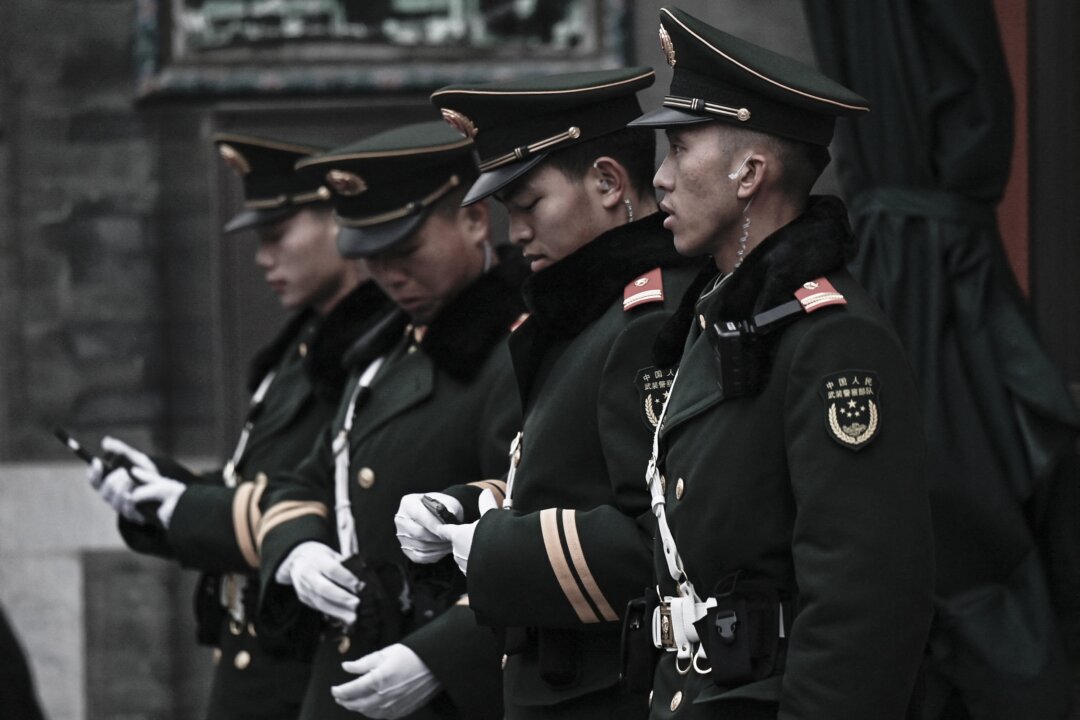
Chinas Latest Elite Reshuffle Raises New Questions About Xis Next Moves







Related Articles

EuropeThe Final wakeup call
Lula wins a miracle election in Brazil. Now comes the hard part: putting the country back on the right track
Three weeks ago, Brazilian President Luiz Inácio Lula da Silva’s political obituaries...

EuropeThe Final wakeup call
US midterms: what a new Congress could and could not change for Europe
US midterm elections traditionally attract fewer voters than presidential contests. But this...
EuropeThe Final wakeup call
Political power without balance leads to the erosion of democracy, what Montesquieu can teach modern-day France
KEY TAKEAWAYS Democratic erosion does not start by doing away with elections;...


China Business & EconomyChina NewsChina Technology
China Tech Index Plunges More Than 40 Percent From July Peak
China’s technology-heavy STAR 50 index has fallen by more than 40 percent...
