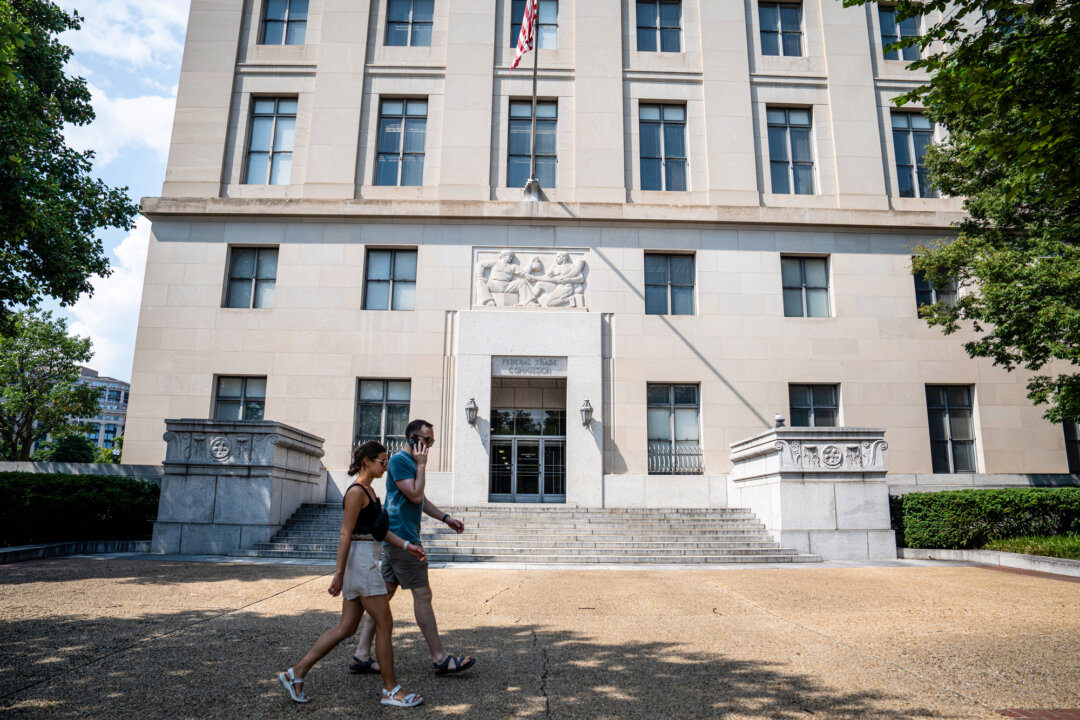
Travel app Hopper will pay $35 million to settle a lawsuit from the Federal Trade Commission (FTC) that accused the company of unfairly charging hidden fees and misrepresenting the total price of their offerings, the agency said in a July 2 statement.The lawsuit, filed in the U.S. District Court for the District of Massachusetts on Thursday, was filed against Hopper Inc. and Hopper (USA) Inc., both of which together operate the various Hopper apps, which enable people to book flights, rent cars, and reserve short-term rentals such as vacation homes and hotel rooms. Defendants have routinely advertised Hopper’s travel booking services using taglines such as “No Hidden Fees,” “Transparent Pricing Always,” and that “prices include all fees,” the lawsuit said.“Contrary to Defendants’ representations that Hopper’s prices have no hidden fees or ‘gotcha’ charges and include all fees, Defendants have routinely charged consumers hidden or ‘gotcha’ fees,” the complaint said.“Further, these fees have not been included in advertised prices. Thus, contrary to Defendants’ representations, the advertised prices do not ‘include all fees.’”The lawsuit accused the defendants of charging two specific types of fees without consumer consent—a Tip fee and a VIP Support customer service fee. These were allegedly never shown in Hopper’s advertised prices for air travel, car rentals, and short-term lodging bookings.For instance, between 2020 and late 2023, when a customer booked a service, like a flight, the app’s payment screen initially showed the price they had to pay. Once the customer clicked the “Continue” button, they were taken to a review screen and encouraged to swipe to book the flight. However, at the bottom of the screen, both Tip fees and VIP Support charges would allegedly be preselected.Only when a customer scrolled down the review screen would they see the two additional charges. If they chose to swipe instead, the final price they paid would include all charges, according to the complaint.In several instances, defendants allegedly charged the two fees even when the travel booking was not confirmed, the lawsuit said. The defendants also allegedly failed to refund fees on several occasions when customers canceled the booking within the permitted period.Additionally, defendants are accused of misrepresenting their “Price Freeze” service since at least 2019, claiming it allowed customers to retain an advertised price for a certain period of time and book the travel later at the same price, the complaint said.However, contrary to the claims, Price Freeze only protected a consumer against a price increase up to a certain limit, according to the lawsuit.In its statement, the FTC said the defendants generated millions of dollars in additional revenue from the optional Tip and VIP service fees. The accused received several complaints from consumers that they never consented to the extra charges. Besides customers, the company’s employees had also raised concerns about the pricing tactics, according to the FTC.FTC alleged that Hopper violated the Federal Trade Commission Act and the agency’s Unfair and Deceptive Fees Rule.Under the agreement, Hopper is banned from misrepresenting any fees and is obligated to “clearly and conspicuously” disclose all applicable fees and charges as well as the total price of their offering.“The Commission will continue to use all available tools to promote price transparency and to combat unfair and deceptive pricing, billing, and cancellation practices,” said Christopher Mufarrige, director of the FTC’s Bureau of Consumer Protection.‘No Issues’ With Current AppIn a July 2 statement, Hopper said it had decided to settle the lawsuit since the claims in the complaint are outdated and no longer have a bearing on its current business.The settlement amount the company is paying does not reflect the “merit of the claims” in the lawsuit but is a reflection of Hopper’s decision to move forward from the matter.“Upon receiving millions of files dating from the present back to 2021, the FTC’s allegations were narrow: primarily outdated display practices implemented during the pandemic, limited to the Hopper app, and discontinued by Hopper in mid-2023, prior to the start of the FTC’s inquiry,” the company said.“Importantly, the FTC raised no issues with the current Hopper app or website, other business divisions, current product offerings, or any other practices.”The Unfair and Deceptive Fees Rule, which the FTC said Hopper violated, came into effect in May last year.The regulation bans bait-and-switch and other pricing tactics used by businesses to hide the true final cost of an offering. It is applicable to businesses engaged in providing live-event tickets or short-term lodging.The rule “preserves flexibility for businesses by not prohibiting any type or amount of fee or specific pricing strategies,” the agency said. Instead, it only requires businesses to tell customers the “whole truth up-front” regarding the total price of an offering and other fees.

Travel Company to Pay $35 Million, Settle FTC Allegations of Customer Deception









Related Articles

BusinessCompaniesEnergy
EQT to Buy Range Resources, Creating Largest US Natural Gas Producer
EQT Corp. has agreed to acquire rival Appalachian shale driller Range Resources...

BrightBusinessInvestingPersonal FinanceStocks
Wall Street Is Very NervousShould You Worry? Can You Repair Your Losses?
On Oct. 23, the Dow Jones Industrial Average fell 652.82 points, or...

BusinessMarkets
Nearly 3 in 10 New-Car Trade-Ins Are Underwater, Edmunds Finds
Almost three in 10 vehicles traded toward a new car are worth...



Asia & PacificChina NewsEuropeInternational RelationsNational SecurityPolicies & ImpactsUSUS NewsUS-China RelationsWorld News
Japan Defense Academy Chief Calls for 3 Red Lines in Competition With China
Japan’s former top uniformed military officer has called for establishing three “red...
