CommentaryCanadians often wonder why food costs so much. Many economists are quick to blame U.S. President Donald Trump, climate change, global supply chains, exchange rates or other external forces. These are convenient explanations and, in some cases, legitimate ones. But while these factors matter, many of the reasons behind Canada’s persistent food affordability problem are far less visible. Some are buried deep within regulatory and administrative processes that rarely attract public attention.The Agri-Food Analytics Lab at Dalhousie University recently received privileged information regarding several cases involving delays in the importation of meat products into Canada. While the details remain confidential, the cases reveal a broader issue that deserves scrutiny.Importing meat into Canada is a highly regulated process. Before any shipment arrives, the exporting country must be recognized by the Canadian Food Inspection Agency (CFIA) as having food safety standards equivalent to Canada’s. Processing facilities must be approved, permits may be required, veterinary certificates must accompany shipments, and all documentation must satisfy Canadian requirements. Upon arrival, products may be subject to additional verification and inspection before entering the marketplace. These safeguards exist for good reason. Canadians expect a safe food supply, and maintaining high standards should never be compromised.The problem arises when administrative processes become inefficient.In several cases reviewed by the Lab, companies encountered lengthy delays despite products already being approved, shipped, and physically present in Canada. In one instance, imported meat remained detained for more than five weeks due to permit-related issues, generating thousands of dollars in additional costs while the shipment sat idle. Food products, unlike manufactured goods, lose value over time. Refrigerated containers continue to incur storage charges, refrigeration costs, financing expenses, and port penalty charges while shelf life steadily declines.Industry estimates suggest that delays involving refrigerated containers can cost between $700 and $2,000 per day, with a single week of delay often exceeding $10,000 in additional costs.These expenses do not remain with importers alone.They ripple throughout the supply chain. Processors face disruptions when expected ingredients or products fail to arrive on schedule. Retailers encounter supply uncertainty and inventory shortages. Food-service operators pay more to secure alternatives. Ultimately, consumers absorb many of these costs through higher prices at the checkout counter.This is how inflation often manifests itself: not through one dramatic event, but through countless inefficiencies that quietly increase costs at every stage of the food chain.The economic implications are significant. Canada imported approximately $6.7 billion worth of meat products in 2025. If only a modest share of shipments experience avoidable delays, annual costs to the industry can quickly reach tens of millions of dollars.More realistic assumptions suggest the burden could exceed $100 million annually. Unlike weather events, trade disputes or global commodity shocks, however, these costs are largely self-inflicted.Administrative delays represent an inefficiency that governments have the ability to address.None of this diminishes the important work performed by the CFIA. The agency remains one of the world’s most respected food safety regulators and plays a critical role in protecting public health. However, food safety and administrative efficiency should not be viewed as competing objectives. A modern food system requires both. If governments are serious about improving productivity, reducing costs, and enhancing food affordability, they should pay closer attention to the hidden expenses created by bureaucratic delays.Canadians are often told that food prices are rising because of forces beyond anyone’s control. Sometimes that is true. But sometimes the explanation is much simpler: a shipment is waiting for paperwork.For those trying to understand why food remains so expensive in Canada, this is Exhibit A.Dr. Sylvain Charlebois is senior director of the agri-food analytics lab and a professor in food distribution and policy at Dalhousie University. © Troy MediaViews expressed in this article are opinions of the author and do not necessarily reflect the views of The Epoch Times.

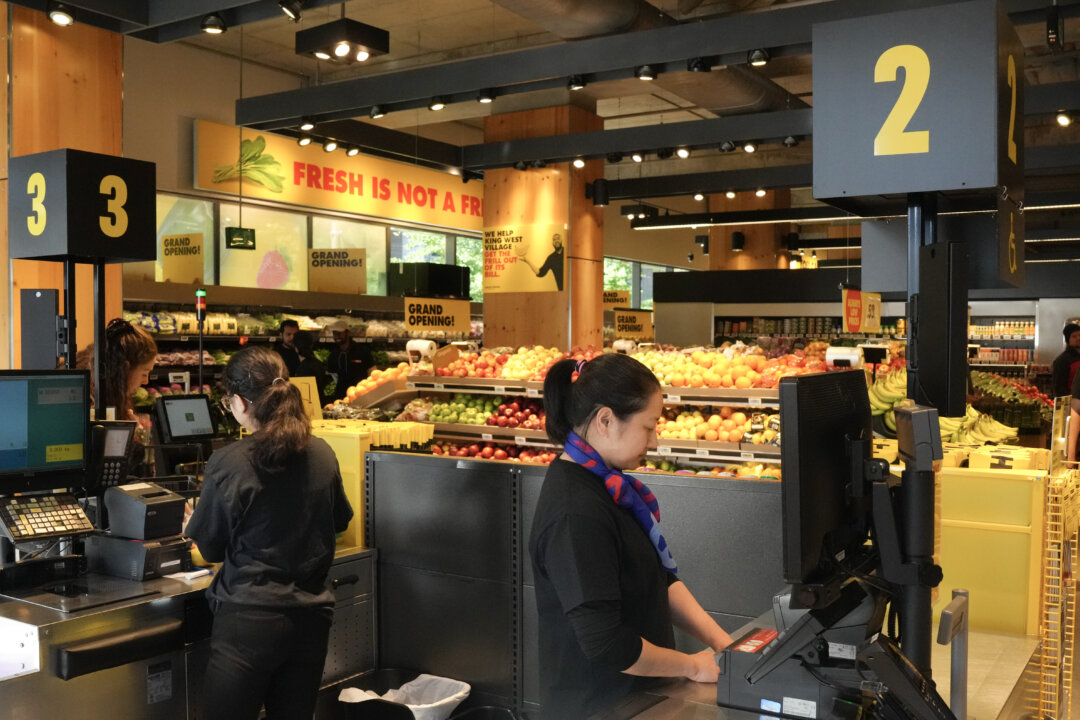
Government Red Tape Is Built Into Your Grocery Bill









Related Articles

China NewsEuropeGlobalUK NewsWorld News
UK Must Be Ready for War in 1,000 Days, Says British Defense Secretary
British Defense Secretary Wes Streeting has said the country must be ready...

China NewsEuropeGlobalUK NewsUK Top NewsWorld News
UK Prime Minister Says He Agrees With Principle of Migration Reform
British Prime Minister Andy Burnham said on Oct. 26 that he agreed...

China NewsEuropeGlobalWorld News
Serbian President Concedes Election Defeat to Student-Led Coalition
Serbian President Aleksandar Vucic has conceded defeat in the Oct. 25 election...



Asia & PacificChina NewsEuropeInternational RelationsNational SecurityPolicies & ImpactsUSUS NewsUS-China RelationsWorld News
Japan Defense Academy Chief Calls for 3 Red Lines in Competition With China
Japan’s former top uniformed military officer has called for establishing three “red...
