The UK economy grew in the first quarter of this year, official data confirmed on June 30.Economic output was up by 0.6 percent over the first three months of 2026, matching the initial estimate by the UK’s Office for National Statistics (ONS) in its GDP Quarterly National Accounts.“Services were the main driver of growth in the latest quarter, with strengths in computer programming, wholesale and advertising only offset by falls in rental companies and recruitment agencies,” Liz McKeown, director of economic statistics at the ONS, said.However, British households were still feeling the pinch, even before the harshest effects of the war between the United States and Iran began to bite.Real household disposable income per head decreased by 0.8 percent in the same period, following a rise of 1.2 percent in the last quarter of 2025, while the British household saving ratio also dropped by 0.7 points to 8.9 percent, driven by a fall in the contribution of non-pension saving, the figures showed.The household saving ratio represents the percentage of household gross disposable income, plus pension accumulations, that households opt to save rather than spend, meaning a higher ratio indicates people are putting more aside for the future through vehicles such as savings accounts, pensions, or investments.It is regarded as a key indicator of household financial health and economic resilience.The figures marked the third year running that the ONS has recorded notably strong growth in the first quarter, prompting some economists to express skepticism about its seasonal adjustment processes.Last month, ING Think analyst James Smith, based on what were then ONS predictions, wrote that “we just aren’t convinced by the UK’s first quarter growth performance. GDP rose by 0.6 percent, up from 0.2 percent in the fourth quarter of 2025.”“It follows a now-familiar pattern; since 2022, UK growth figures have come in much stronger in the first three months of the year than the rest. Growth has averaged 0.6% in Q1 over that period, a sharp contrast to Q3 where the economy has typically flatlined,” Smith wrote, adding that it is “hard to say exactly what’s happening,” but “it seems that something’s not quite right with the way the data is being seasonally-adjusted, a legacy we suspect of higher inflation and the timing of annual price hikes.”When the ONS released the June 30 report, it said that “based on our combined assessment from the suite of statistical tests, there is no statistically significant residual seasonality in our aggregate outputs from Quarter 1 1995 to Quarter 1 2026,“ adding that it will ”continue to monitor this closely.”At the same time, it also revised down growth in the final three months of 2025 to 0.1 percent.The growth figures have been released just under two weeks after the Bank of England (BoE) announced it had decided to hold interest rates steady at 3.75 percent on June 18.The central bank’s Monetary Policy Committee voted 7–2 to keep rates on hold on June 18.“Global energy prices have fallen since the previous meeting in response to events in the Middle East. But they remain higher than pre-conflict and have continued to be volatile. The impact of the energy shock on the UK economy remains uncertain,” BoE said.The BoE’s approach contrasts with that of the European Central Bank and the Bank of Japan, which have both raised rates in the past week, while the U.S. Fed left rates unchanged.British Political UpheavalThe moderately positive economic news comes at a time of political upheaval in Britain, with the country in the process of changing prime ministers, after Keir Starmer announced he would be leaving Downing Street earlier this month.On June 29, the man widely expected to replace Starmer in Number 10, former Manchester mayor Andy Burnham, delivered a speech outlining his vision for the country.During that speech, his first major event since he returned to the House of Commons after being elected in a byelection earlier on June 19, Burnham set out a 10-year mission to raise living standards across the UK.He said that the country is “stuck in a rut” after two decades of low growth and criticised what he called the over-centralised government, departmental turf wars, and the adversarial politics of Westminster for holding back progress.Burnham also rejected the “trickle-down” economic model and called for a more collaborative, “place-first” approach, which he dubbed “Manchesterism” after the northern English city he led for nine years.As part of this, he pledged “good growth in every postcode” through a major shift of power and resources from Whitehall to regions and mayor, with key proposals included creating a “No 10 North” in Manchester to coordinate long-term economic strategy, giving local leaders greater control over housing, welfare and education, launching a major council house-building programme, and pursuing reindustrialisation by making Britain a leading innovation nation.The prime ministerial hopeful said these changes would harness both public and private investment to deliver regeneration and opportunity beyond London and the South East.Burnham is currently the only Labour MP to have declared he will run for the party leadership and, therefore, the role of prime minister.If Labour lawmakers decide to unite behind the 56-year-old career politician who served in the governments of Tony Blair and Gordon Brown and in the shadow cabinets of Ed Miliband and Jeremy Corbyn, a leadership contest will not be necessary.Labour rules state that 20 percent of the party’s MPs have to nominate a candidate for the candidate to be able to stand to be leader. If no other candidate can secure the backing of enough lawmakers, Burnham could effectively be coronated as prime minister.Polling shows he is the most popular Labour politician to succeed as leader among the party members; however, nominations for the post do not formally open until July 9.Whoever succeeds Starmer will become the UK’s seventh prime minister in 10 years.

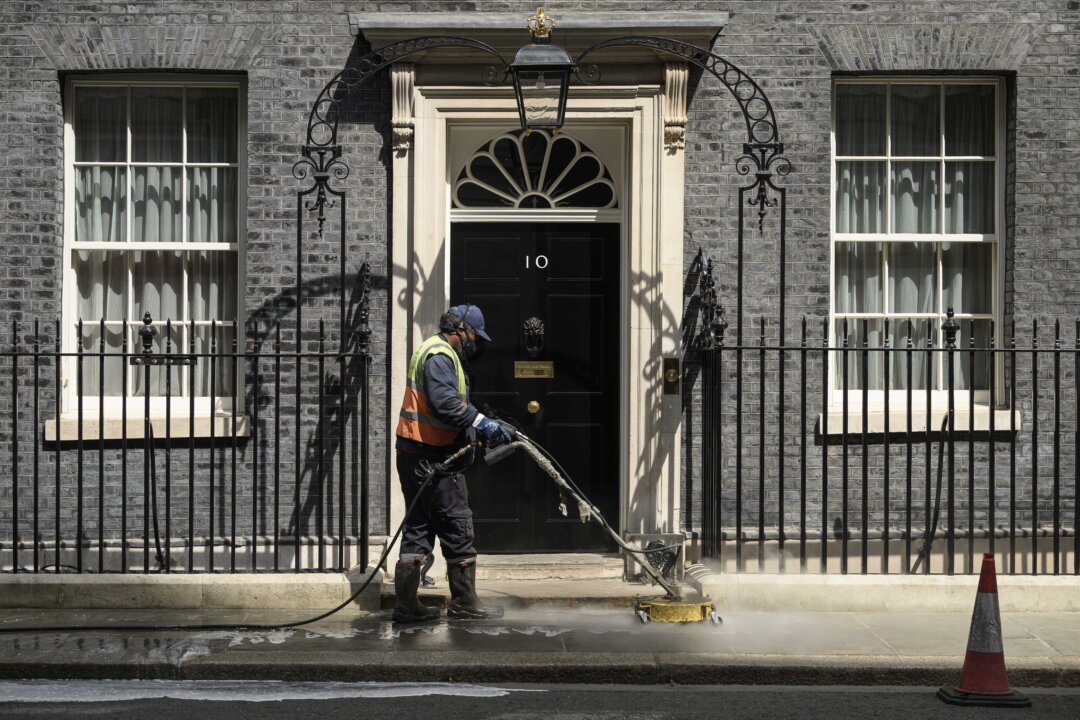
UK Economy Grew 0.6 Percent in 1st Quarter of 2026








Related Articles

EuropeThe Final wakeup call
Lula wins a miracle election in Brazil. Now comes the hard part: putting the country back on the right track
Three weeks ago, Brazilian President Luiz Inácio Lula da Silva’s political obituaries...
EuropeThe Final wakeup call
US midterms: what a new Congress could and could not change for Europe
US midterm elections traditionally attract fewer voters than presidential contests. But this...

EuropeThe Final wakeup call
Political power without balance leads to the erosion of democracy, what Montesquieu can teach modern-day France
KEY TAKEAWAYS Democratic erosion does not start by doing away with elections;...


China Business & EconomyChina NewsChina Technology
China Tech Index Plunges More Than 40 Percent From July Peak
China’s technology-heavy STAR 50 index has fallen by more than 40 percent...
